

Small Backyard Pump Tracks for Home Riding
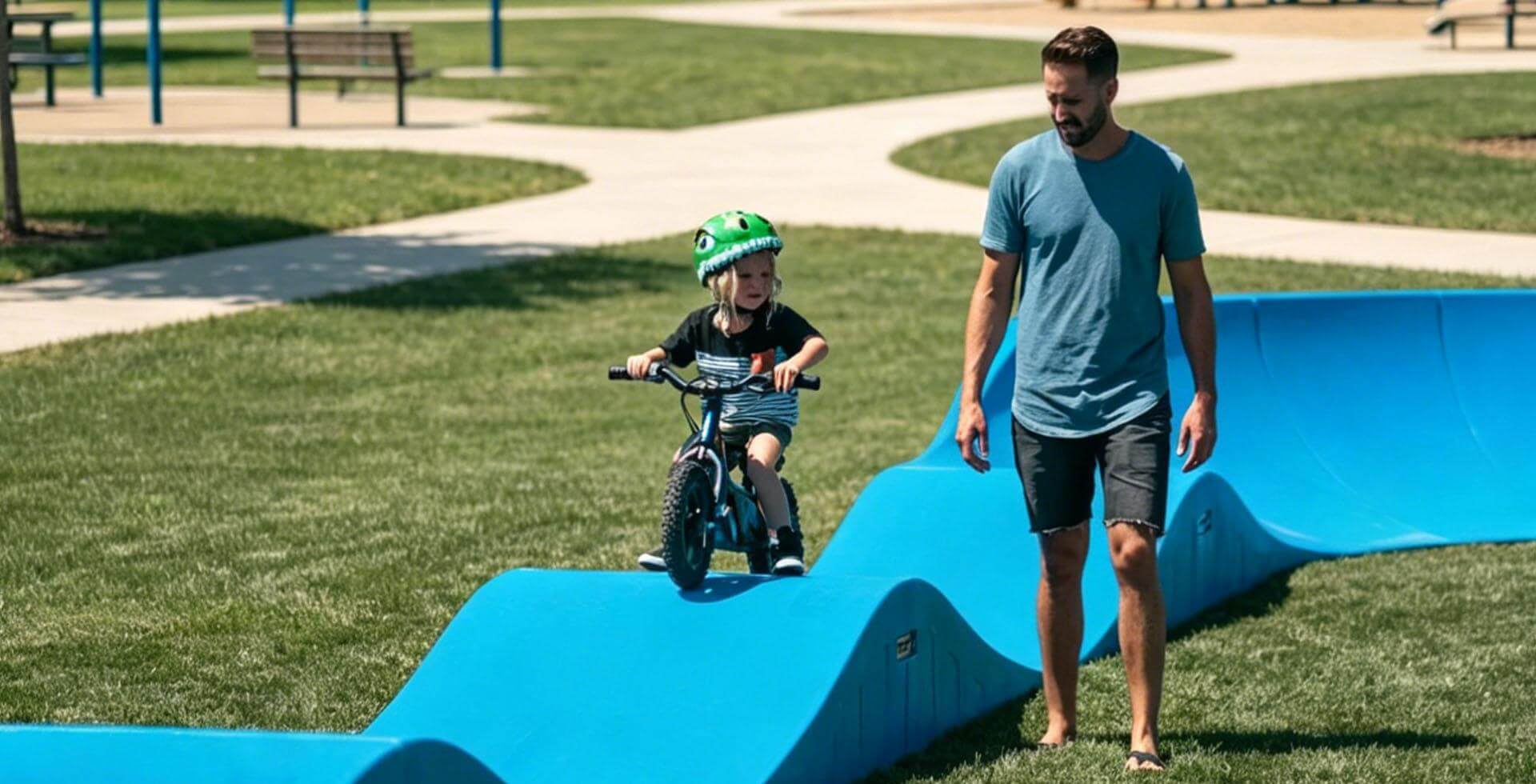
A backyard pump track can turn a quiet outdoor corner into a fantastic playground for kids. Instead of kids going straight to their play room after school, they now have a destination in their own back yard where they can ride their bikes, scooters, skateboards and even their balance bikes on a defined line instead of randomly riding all over the lawn. There are many company pump tracks that are great for small backyards. The best small pump track for home use is not the biggest one. It fits the yard, matches the riders, leaves safe space, and stays fun after the first week.
A Modular Pump Track is perfect for homeowners, campgrounds and small community properties. Real pump track flow in a small space – without the lengthy construction time of dirt, concrete or asphalt.
What Makes a Small Pump Track Work in a Backyard?
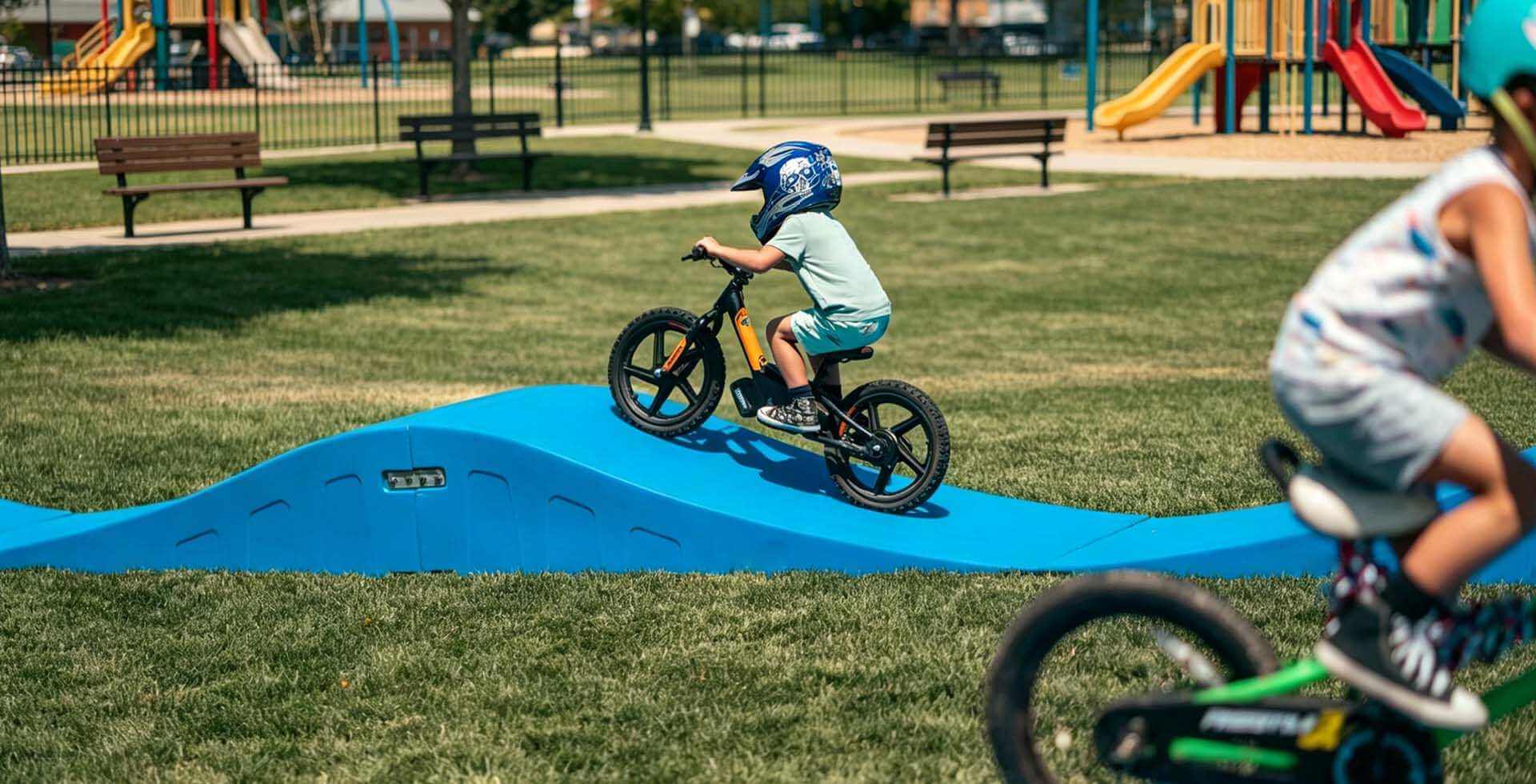
A good backyard pump track begins with the simple question of who is going to be riding the track most often. A pump track designed for a 6 year old riding a balance bike to develop balance and co-ordination skills will feel very different from a compact loop that can be ridden by teenagers on BMX’s and scooters for fitness or style.
When choosing a pump track design, it is very important to know the dimensions of your complete working space. Don’t measure the whole yard. Substract the space occupied by fences, trees, stairs, flower beds, pools, drains, outdoor furniture and walkways in your yard. In a lot of backyards there is only one long and narrow strip of space in which you can safely work.
The most suitable home designs have a number of common features.
- low riding height for beginners and children
- clear sight lines from a patio or window
- enough stopping room at entry and exit points
- anti-slip surface texture for better wheel control
- simple rollers and turns that teach rhythm, not fear
- room for later changes if riders improve
Just because something is small doesn’t have to mean it’s boring. A short straight can teach a driver the value of timing, a compact loop can give a driver confidence in their ability to maneuver turns, and a well laid out corner configuration can make use of a space previously used for storage bins.
Backyard Pump Track Options by Space Type
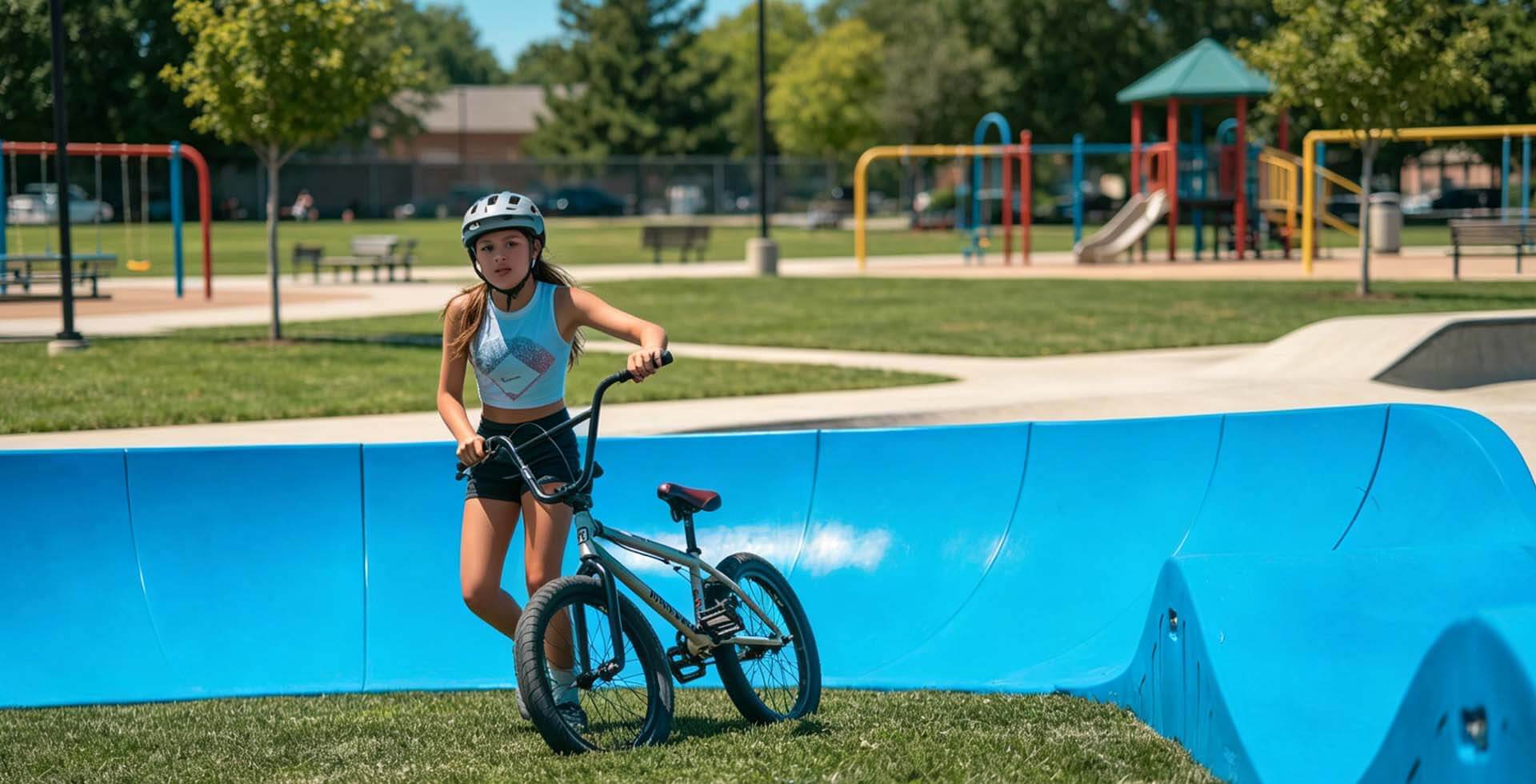
All backyards are different and therefore need different types of tracks and race courses. ULTRAPUMPTRACK believes that the ideal track for your backyard is determined by the dimensions and shape of your yard rather than the total square footage of your yard.
| Backyard space | Suitable pump track idea | Best users |
| Long side yard | Straight roller line | Young riders, balance bikes, scooters |
| Small rectangular yard | Compact loop | Families, mixed-age riders |
| Unused garden corner | L-shaped layout | Homes with tight open space |
| Paved courtyard | Portable modular track | Rentals, seasonal use, practice |
Long and Narrow Backyards
A long side yard is not a problem if it is running along a fence, garage or garden wall. A straight roller run is generally the safest and most sensible option. The riders learn to push down the back of each roller to maintain speed and come to a stop at the end of the run. Because there are no tight turns to negotiate.
Small Rectangular Backyards
A rectangular back yard can be very compact and still be a wonderful loop. It allows for good width for the turns, and it feels just like a pump track! A compact loop needs to be simple. Too many rollers in a very small area can make for a very uneven ride, and very sharp turns can cause new riders to fall.
For a family friendly backyard pump track, it is ideal to design the track with some gentle rollers and open corners. Also, it is best to keep all the corners going in one direction so that the kids can easily follow each other, one on a scooter and the other on a very small bike. This way, the session can still be controlled and enjoyable for all.
Garden Corners and Awkward Spaces
The little used outdoor corner in many backyards, behind a shed, a fence return, a paved out door terrace or play area can be turned into a fun compact feature where children can ride back and forth in a modular pump track.
Rather than digging up the yard to make a fixed dirt course, the connected components of the play structure can be sited along the natural edges of the property. So a circular backyard with existing landscaping can be fully protected and still be incredibly playful.
Why Modular Pump Tracks Fit Home Use
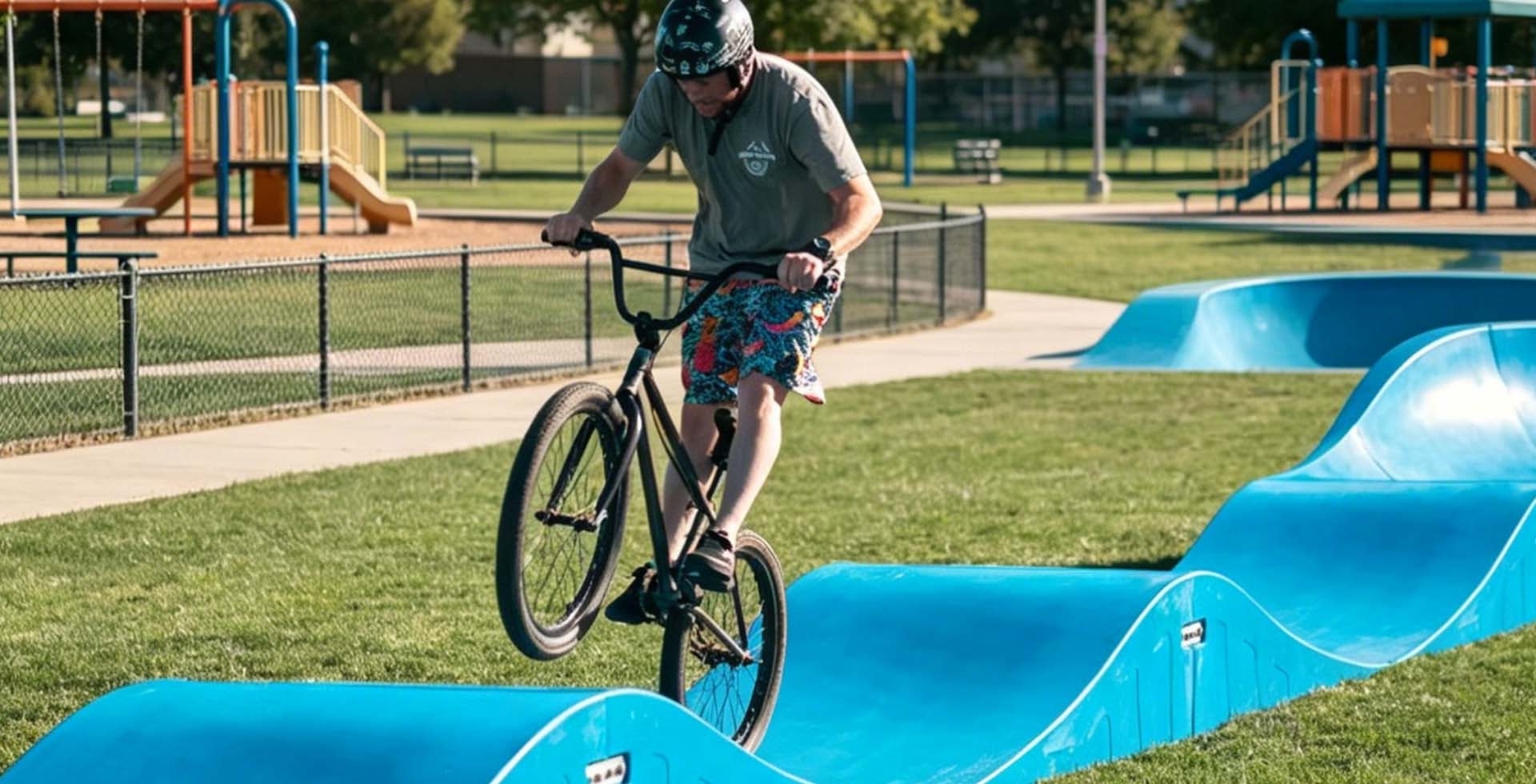
So a dirt backyard pump track sounds simple enough right? However dirt is not an inanimate object and it will change over time. Rain will carve channels in the surface, and prolonged dry weather will bring huge amounts of dust. Also prolonged use will eventually wear out the rollers and badly wear the berms. The use of wood is also a huge draw for aesthetics, but as something to be left outside of the house it becomes a real pain, especially when it’s wet.
A modular pump track is a much more predictable option for homeowners. Sections are simply connected together to form the planned riding line. The complete pump track can be moved, re-configured or even increased in size as required by the site over time.
For backyard buyers, the main benefits are practical:
- faster installation with less digging
- lower daily maintenance than dirt
- anti-slip riding surface, not a slick or glossy finish
- use by bikes, scooters, skateboards, and balance bikes
- suitable for compact outdoor areas
- easier removal or relocation if the property changes
The anti-slip point matters. A pump track surface should give wheels grip. It should not feel polished or slippery. That is important for children, beginners, wet shoes, scooter wheels, and family use.
How Much Space Do You Need for a Backyard Pump Track?
A straight practice line needs a much smaller area than a loop. For a pump track for shared use by the whole family as well as for practice you need more space for overtaking, for watching and for stopping. A bigger area of your own yard for example also means that the track is further away from windows, walls and your outdoor dining area.
One practical plan for your yard is to designate three zones: 1) the riding line, or track; 2) the safety buffer around the track; and 3) the family zone. The family zone would be where parents, and siblings and their guests would be standing or sitting in order to watch but not step in the riding path.
That safety buffer is often overlooked when designing a circuit. A route that is just about to fit on the plan looks fine until the child fails to make the turn & you are left scrambling to get out of the way. Make sure there is room to maneuver around the end of the circuit & avoid placing the fastest part of the route near any glass doors &/or steps. Also leave some space at the end of the circuit.
Choosing a Pump Track for Kids, Teens, and Mixed Wheels
A backyard pumptrack for kids should focus on control over speed. Using mellow rollers to develop the body movements required for riding will help kids get better faster. Wide open turns allow time to look ahead. Clearly defined entry points help manage large numbers of kids on the track.
Most teens want more challenge in their activities and enjoy more flow. This could mean riding their BMX, scooters or skateboards constantly performing the same line for tricks, for fitness or even just racing their friends. A compact skatepark with a variety of lines that change up direction often is more interesting to most teens than a simple straight line. A skatepark with a modular design can have many different variations to keep the interest for a longer period of time.
For mixed wheels on a pump track surface grip and adequate track width are more important than anything else. Small scooter wheels are much smaller than the individual tires on bikes. Skateboards need a defined line to follow and balance bikes need gentle rollers. As the skatepark moves to backyards, the perfect track will be stable, have good texture and be easy to read.
Installation and Maintenance Tips for Homeowners
Even a small Pump Track needs to be set up in a correct way. Before you start installing the modules, check out the ground, drainage, the access route and other nearby objects. A flat base is very important, so that the single modules can sit down properly. Also make sure that water can drain off in the riding line and not collect under or next to a single module.
Post installation routine maintenance is simple. Remove from the track from time to time any leaves, sand or small stones. Check connections after very heavy usage. Check the track surface after storms. If children from the neighborhood are going to use the track lay down simple rules for wearing helmets, for traveling around the track, and for single entry to the start of the track.
ULTRAPUMPTRACK as a Modular Pump Track Supplier
ULTRAPUMPTRACK is a local supplier of modular pump tracks. The company comes from a cycling background and has built many dirt and asphalt Pump Tracks around the country. These can be made into modular systems to be erected in Parks, Schools, Community Centers, Campgrounds, as a SkatePark add-on or even just in your Backyard.
The modular pump tracks are designed for bikes, scooters, BMX, skateboards and balance bikes. The main value for customers comparing a backyard pump track with a small community track, is the flexibility of design, the quick assembly, weather resistant materials, anti slip riding surface and the ability to change the design as space or budget changes. This system is for Homeowners, Developers, Dealers and Recreation Operators that want a active outdoor facility in a short amount of time.
Conclusion
The best small pump track for a backyard fits within the parameters of a typical daily life. A very narrow yard is best serviced by a straight roller with turns – essentially a short short slalom run. A compact rectangular yard can be setup as a singular loop and turned into a Pump Track. An unused corner of your yard can be repurposed into a clever smart modular riding zone. This type of feature gives the kids confidence to push themselves and also gives the teen enough flow to return to feature time and again, while giving the adults a fully featured low-maintenance area to “play” in that doesn’t totally take over the property.
Modular pump tracks offer a great balance of safety, flexibility, traction and long-term use for home and small sites. A good starting point is the site and then tailor the design to the intended users.
FAQs
What is the best pump track for a small backyard?
For a small backyard the best way to set up a pump track would be to set up a compact modular track that includes simple rollers as well as open turns and enough room to stop safely. For very narrow yards a straight roller line can be the best place to start.
Can scooters and skateboards use a backyard pump track?
Yes. A well-designed back yard pump track can support all of the above items including bikes, scooters, skateboards, BMX bikes and balance bikes. A good textured anti-slip surface, consistent radius turns and no sharp or tight turns are key.
Is a modular pump track better than a dirt pump track for home use?
Yes. A modular Pump Track requires less excavation and thus less re-shaping then a traditional dirt Pump Track. It also doesn’t require as much repair post rain and ongoing surface maintenance. Additionally, it can be relocated or expanded as the yard develops.


