

Modular Pump Track Warranty: What a 5-Year Cover Includes, What Voids It, and Why Coastal Sites Get Less
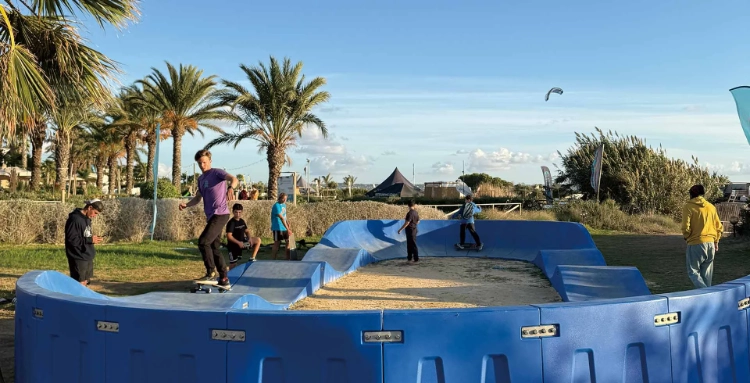
A five-year warranty reads like the easy line in a quote, right up until a corner chips and somebody files a claim. Then that line becomes a discussion. The cover on a modular pump track exists for quality faults inside the product, which means it was never written to absorb the chips and polish loss a busy season leaves behind. Distance bends it too — park the track near salt water and the term halves. When a claim finally lands, the outcome turns on three things few buyers check early: what kind of damage showed up, where the site sits, and how much paperwork the owner bothered to keep. Better to look at all three now than in the middle of an argument after signature.
What the Five-Year Cover Actually Includes

The purchase sheet calls it a five-year limited warranty for quality-related issues in the modular pump track. What does that mean on a working site? It points at the failures nobody can cause by riding. A connector that gives out. A riding surface that separates from its base. A structural fault that shows up although the track was assembled to the manual and ridden the way it was designed for.
Nobody can check the inside of a molded module at handover. That blind spot is the whole reason a warranty exists.
That split decides most claim arguments:
| Situation | How the warranty treats it |
| Connector or module fails under normal riding | Covered — the five years run from the purchase date |
| Minor chips, hairline cracks, efflorescence | Not covered; the terms file this under normal wear |
| Deterioration in a corrosive saltwater environment | Also normal wear, so no claim |
| Track within 500 yards of a saltwater shoreline | Two and a half years instead of five |
| Claim from anyone but the original buyer | Rejected — the warranty is non-transferable |
| Damage caused by external forces | Outside the cover |
Why the Line Sits Where It Sits
Wear sits on the operator’s side of the table. Cleaning the surface, repacking loose fasteners, keeping debris off the track — a maintenance schedule already covers that work, and no manufacturer can price a warranty around somebody else’s chores. Structural failure sits on the manufacturing side, so the cover takes it. Same term sheet, by the way, expects the track itself to run eight to ten years given the usage it sees, which is not a contradiction sitting next to a five-year cover. Modules survive weather and traffic for close to a decade; the warranty carries the risk that something inside that decade fails early.
Why a Coastal Site Gets Two and a Half Years
Of every environment out there, the terms pick out exactly one: salt air. Chemistry, not paperwork, is what drives that choice. Surface deterioration on outdoor plastics runs faster where salt spray gets to it, ultraviolet finishes the job, and two streets from the beach the same track ages ahead of its inland twin. The purchase sheet answers this with a distance rule. Installations within 500 yards — 457 metres — of a saltwater shoreline carry two and a half years of cover instead of five.
Drawing the Line on the Site Plan
The distance is measurable, which means it should be measured before anyone signs rather than after. Take the track position from a map, run the shortest line to the mean shoreline, and file the figure with the project papers. On paper a site at 460 metres keeps its full five years — and sits exactly one bad measurement away from a dispute. Readings near the boundary deserve a written confirmation from the supplier, with the site plan attached. Two minutes with a map is cheaper than a clause argument two years on.
A waterfront park changes the maths in another way as well, because asphalt in the same salt air brings corrosion and repair questions of its own. Neither surface wins by default. The public park planning checklist goes through site selection and drainage for plots like these.
What Voids the Cover or Weakens a Claim
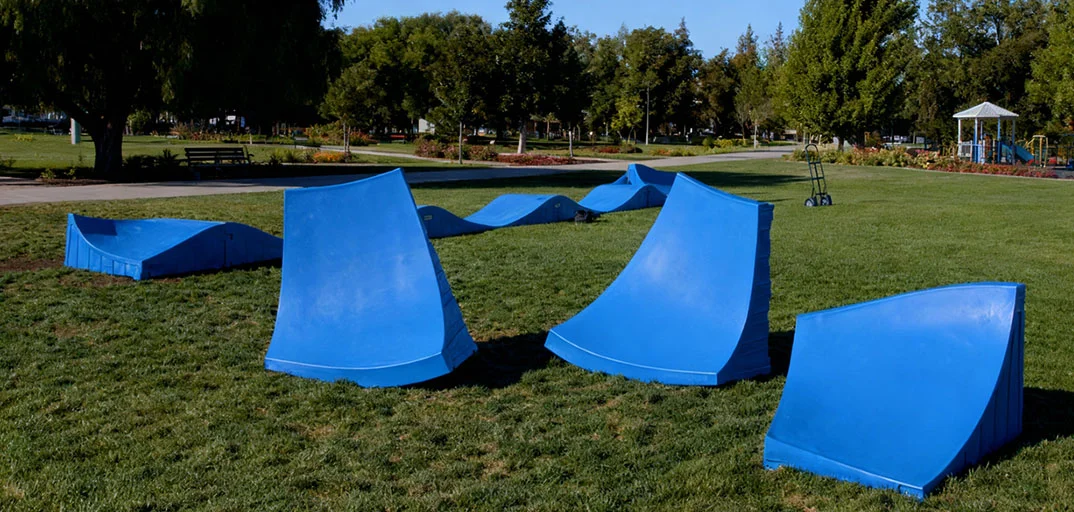
Plenty of value leaks out of a warranty without the product ever failing. Three leaks come up again and again.
Ownership change is the first. The cover runs exclusively with the original purchaser and doesn’t transfer. Sell the campsite, hand the school facility to the council, pass the track from one rental partner to another — the warranty ends the moment the track changes hands. Anyone expecting a transfer later should raise it while negotiating the purchase, because afterwards there is nothing left to negotiate with.
A thin paper trail is the second. Claims need proof of purchase with the date, a description of the quality issue, and photos or videos where they help. Send a claim without a dated receipt or images and the manufacturer has nothing to assess. Staying safe doesn’t take much: an invoice, a few dated photos each season, a short note whenever something odd happened on site.
The third leak comes from damage originating outside the product itself. External forces, misuse, accidents — a van parked on the track, a module prised loose with tools, impact damage from site equipment. The terms call those incidents rather than defects and treat them accordingly.
Contract Terms Worth Settling Before Signature

The standard sheet spells out the manufacturer’s side. Between seller and buyer there’s a grey zone, and every point left unwritten in it becomes an argument later. Writing them down is cheaper.
Start with the start date. The warranty runs from the date of purchase, yet a project offers several candidates — deposit, factory release, port arrival, final acceptance. Pin one down. Response time comes next, meaning how quickly the manufacturer confirms a claim and how quickly assessment follows. Freight on a replacement module is the third point, because the terms cap liability at repair or replacement and leave shipping plus labour unassigned, so those two need a home. Spare supply beyond the warranty period is fourth, otherwise a damaged section in year seven has nowhere to go. And since modular tracks tend to grow in batches, a section added in year three deserves a warranty clock of its own rather than inheriting the clock already running from the first delivery. Most of these points appear in the procurement checklist under supplier requirements, and the warranty clauses belong in the same folder.
ULTRAPUMPTRACK designed its system with these assumptions in mind. A mountain bike downhill club in 2012 is where it started; dirt and asphalt track builds followed from 2014, and by 2015 the first-generation modular plastic system was out. 2022 brought the third-generation ULTRA system to market, patents behind both the utility model and the appearance. For the material side, the company background and the built-to-last overview go deeper.
FAQ
One question settles most of this before any dispute: does the planned installation sit inside the standard cover? Send the draft terms with a site photo and the measured distance to the shoreline. Contact the ULTRAPUMPTRACK team and the answer comes back in writing, which is the version to keep in the project file.
Does the shorter coastal cover apply to every module equally?
The decision applies to the installation as a whole, judged by where that installation sits relative to the shoreline — not module by module. Put the whole thing inside the 457-metre band and every section runs on two and a half years. Which is precisely why the measurement belongs before signing.
Can a track keep its warranty after a change of owner?
No, and the terms don’t soften this. The warranty follows the original purchaser only. A sale, a handover to the council, a reorganisation — any of them ends the cover, so a transfer expectation has to be negotiated at purchase time and captured in writing.
What does a complete claim pack look like?
Three items. Proof of purchase with the date, a written description of the fault prepared for someone who has never seen the track, and photos or videos of the problem. The process starts with a message to customer support; assessment follows the evidence.

