

Kids Pump Track vs Adult Pump Track Key Design Differences
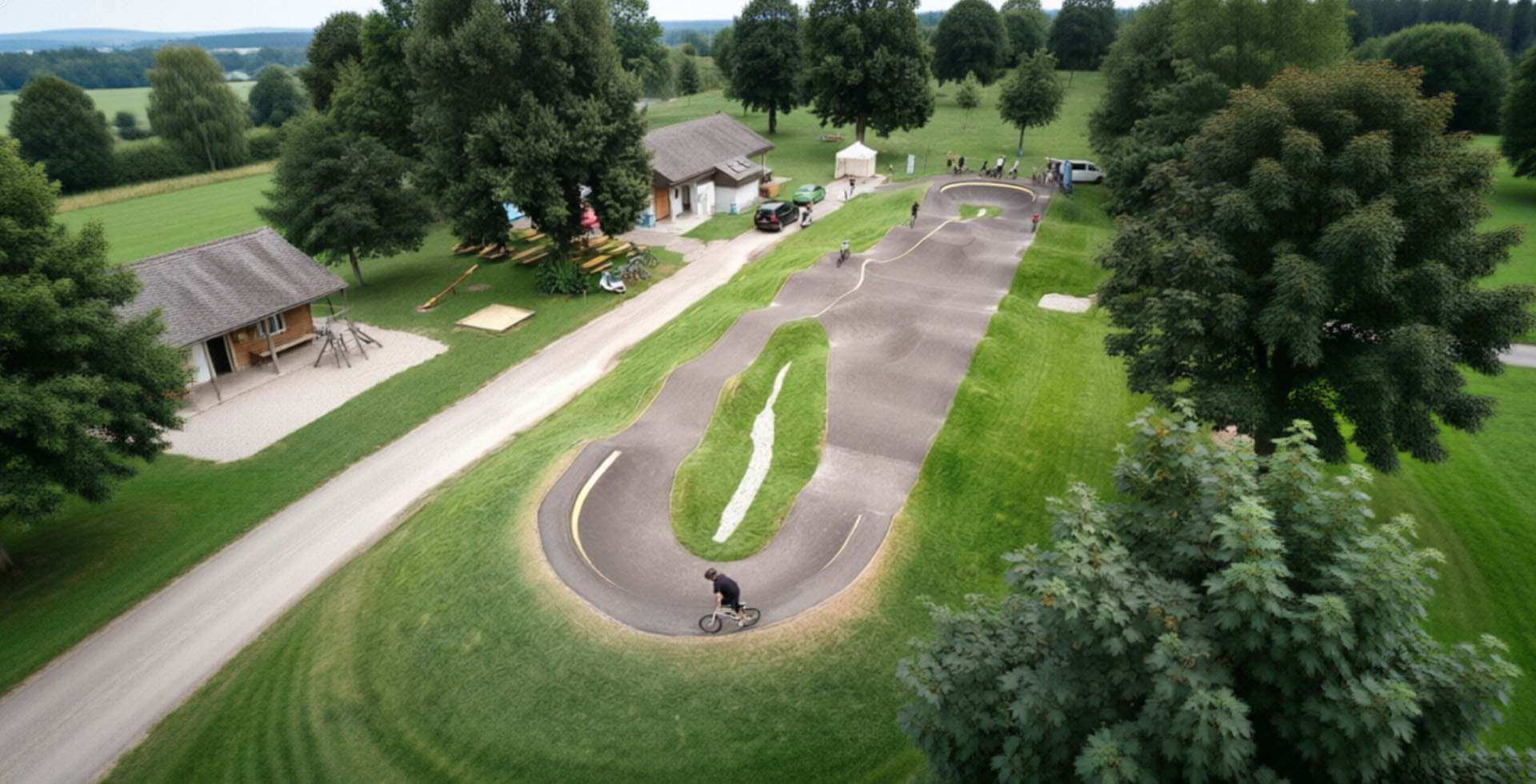
Kids and adult pump tracks differ in feature scale, speed build-up, sightlines, wheel types, progression and supervision. A kids track should provide a readable main line and gradual confidence building. An adult layout can add longer rhythm sections and technical choices. Buyers still need to design for real users rather than relying on age labels.
The Main Difference Is the Design Brief
A kids pump track should start with lower confidence, shorter reach, slower decision making and close adult supervision. An adult pump track can use longer feature spacing, stronger speed build-up and more demanding line choices. The distinction is not a strict age label. Height, wheel size, experience and session format matter just as much.
Buyers should define the youngest expected rider, common wheel types, busiest session and supervision model before accepting a drawing. A family park may need a broad beginner line and optional progression. A club site may need an adult-focused line with scheduled beginner access.
Feature Height and Transition Shape
Children generally benefit from readable rollers and transitions that allow them to maintain balance without a sudden change in pitch. Lower features can reduce intimidation, but they still need enough shape for riders to learn pumping. Adult layouts can use deeper transitions and taller berms when the approach speed, run-out and intended skill level support them.
Feature height should never be chosen in isolation. The distance between rollers, the entry slope and the next turn determine how the section feels. Ask the supplier to explain the complete sequence and how a first-time rider can leave the line safely.
Track Width and Riding Space
A children’s facility needs room for small steering corrections and occasional stops. Narrow pinch points can cause hesitation, especially when scooters, balance bikes and bicycles share the track. Adult riders may prefer a line that rewards accuracy, yet the external safety clearance must still reflect speed and likely fall direction.
Width also affects overtaking. A public family track should not rely on faster riders passing beginners in a tight section. Entry spacing, direction rules and separate session times may be more useful than simply making every part wider.
Speed Control Starts With Geometry
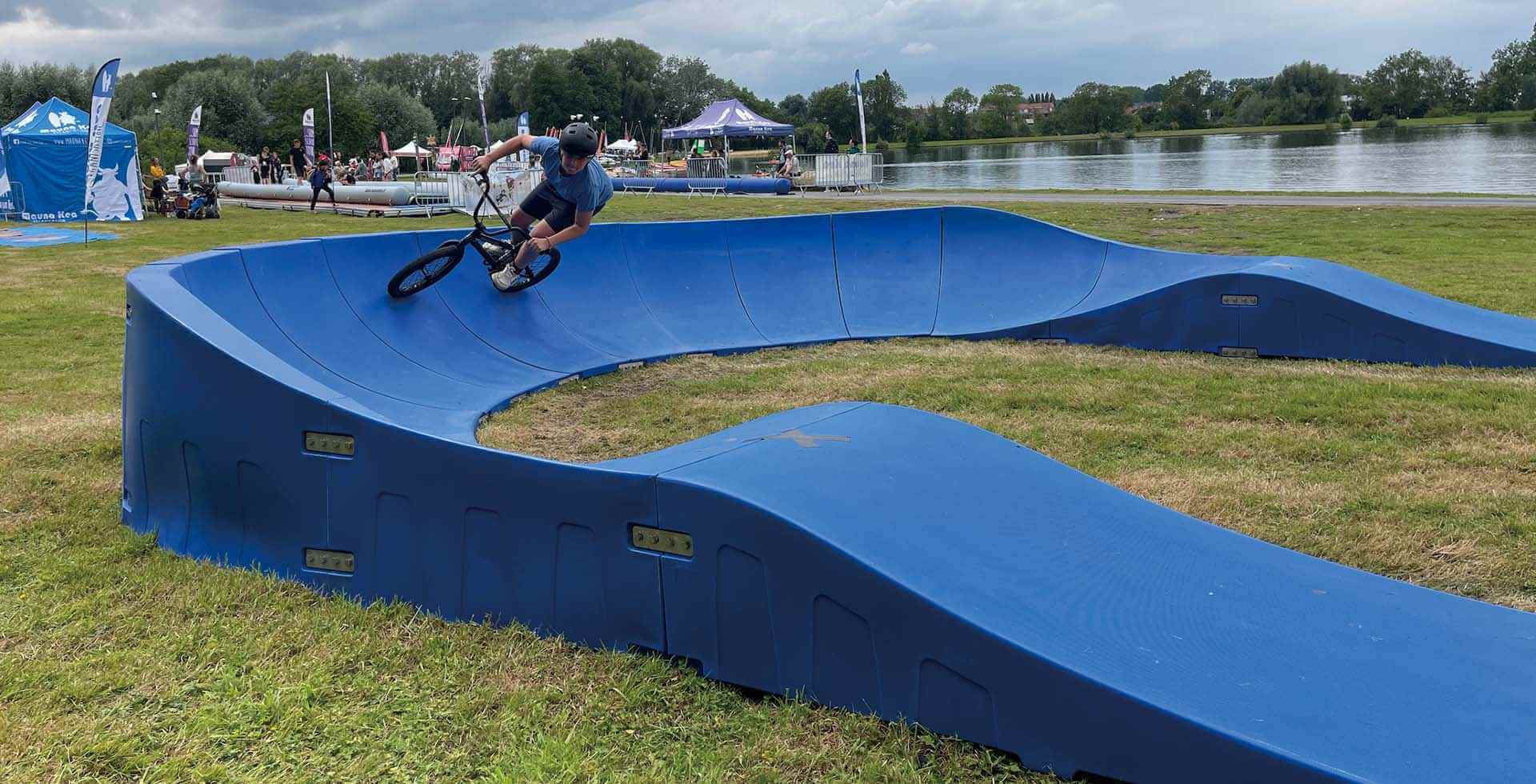
Kids layouts should build speed gradually. A clear entry, predictable rollers and open sightlines help supervisors see when a child is uncomfortable. Adult layouts may preserve more momentum through linked berms or optional technical lines, but speed should remain appropriate to the site and surrounding circulation.
There is no single safe speed for every pump track. Surface, wheel type, rider skill, weather and geometry all change the result. Buyers should ask how the design manages acceleration, stopping and re-entry instead of requesting a headline speed figure.
Sightlines and Supervision
Parents and teachers need to see entries, exits, likely stopping points and any place where riders merge. Seating should remain outside the active riding line and should not force adults to cross a return path. A children’s layout may benefit from a central viewing point with short walking access to several sections.
Adult facilities still need sightlines, especially during events or mixed sessions. Staff must be able to identify a stopped rider quickly. Planting, signs and storage should not block the view after the project is completed.
Progression Without Forced Difficulty
A strong kids pump track lets a rider repeat a simple line and build confidence. Optional features can sit beside the main route, but the only exit should not require a difficult transfer or tight turn. Adult layouts can offer more technical choices, provided each line has a clear entry and recovery area.
Progression can also come from coaching rather than larger features. Pumping smoothly, looking through a berm and maintaining safe spacing give new riders meaningful goals. The site plan should support instruction without closing the entire track.
Different Wheels Change the Brief
Balance bikes have short wheelbases and low speeds. Scooters use a small front wheel and a standing stance. BMX and mountain bikes carry momentum differently. A children’s track that welcomes several wheel types needs transitions and joints that work with the smallest permitted wheels, while an adult line may be designed around a narrower user group.
Write the permitted wheel types into the brief and signs. If skateboards or inline skates are expected, review surface continuity and entry behaviour. Do not assume one layout feels the same on every device.
School Park and Backyard Scenarios
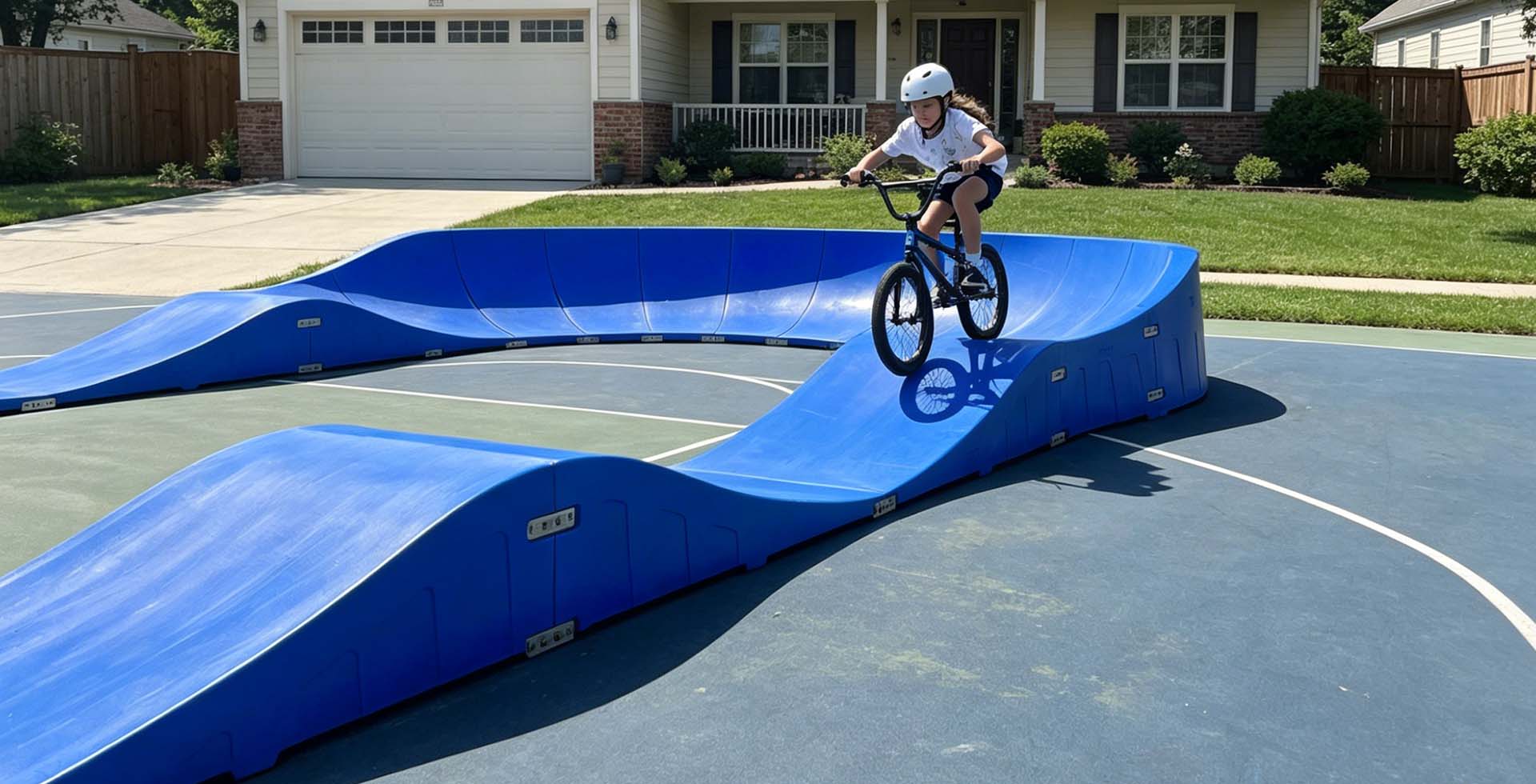
A school may need a compact track that fits a lesson structure, with a briefing point and space for pupils waiting their turn. A public park needs open access, durable signs and room for mixed groups. A residential backyard may serve only a few known riders but still needs drainage, clearance and a route for installation.
The buyer should test one normal session on paper. Count riders, supervisors and waiting users. Draw how equipment reaches the site and how a rider leaves after a fall or mechanical problem.
Cost and Future Growth
A kids track is not automatically cheaper. A compact footprint may reduce modules, but school access, fencing, drainage or surfacing can add cost. An adult layout may require more modules and a larger base, though site conditions remain the biggest unknown until surveys are complete.
Modular systems can support later expansion where connections, drainage and reserved land are planned. A first phase should be complete on its own and should not leave a tempting unfinished line.
How Buyers Should Compare Proposals
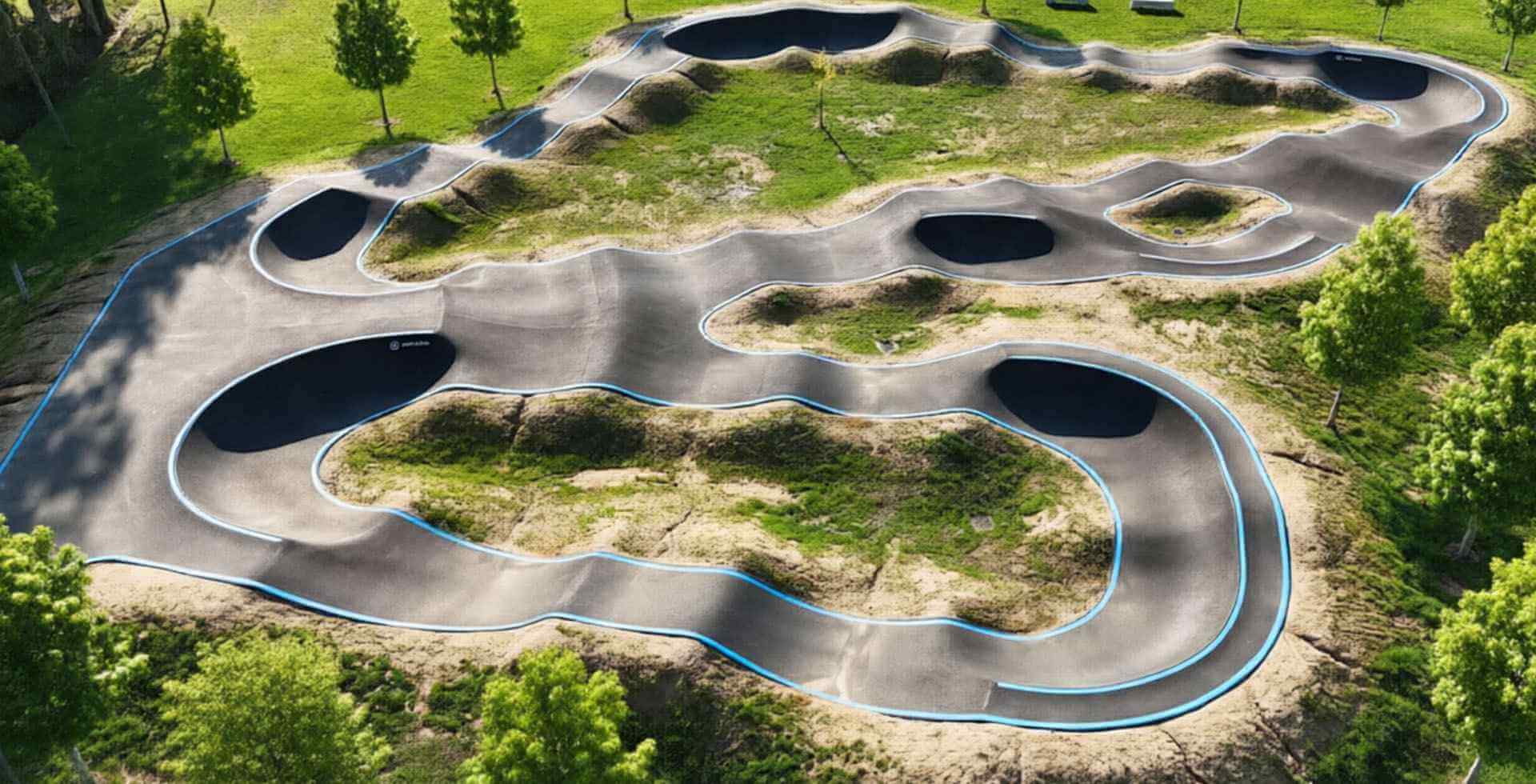
Give each supplier the same site plan, user profile, wheel types and operating assumptions. Ask for external clearances, entry and exit points, base requirements, drainage assumptions, delivery duties, inspection guidance and warranty terms.
Compare how each design handles beginners and progression, not just the number of features. The best proposal is the one the operator can supervise, maintain and explain after handover.
| Design factor | Kids pump track | Adult pump track |
| Geometry | Readable and gradual | Longer, faster or more technical |
| Sightlines | Close supervision | Broader event and session control |
| Progression | Easy main line with options | Multiple challenge lines |
| Wheel types | Often mixed and small wheels | May target specific bikes or boards |
| Operations | Classes and family sessions | Clubs, events and open riding |
Buyer Checklist
- Define rider height, experience and permitted wheel types.
- Show the easiest continuous route on the plan.
- Mark entry, exit, waiting and viewing areas.
- Review speed build-up and stopping points.
- Check drainage, access and external clearances.
- Plan a complete first phase and possible future expansion.
About ULTRAPUMPTRACK
ULTRAPUMPTRACK supplies LLDPE modular pump track systems for schools, parks, holiday venues, events and residential settings. Layouts can be configured for different user groups and several wheel types, with relocation or expansion possible where the site and selected components allow. Buyers should confirm geometry, base requirements, drainage, installation scope, inspection guidance and warranty terms for the specific project.
Conclusion
A kids pump track is not simply a smaller adult track. Start with riders, wheel types and supervision, then review geometry, speed, sightlines and progression. Adult projects can support more momentum and technical choice, but both layouts need a measured site, clear circulation and an operating plan.
FAQs
Can children and adults use the same pump track?
Yes, when the geometry provides a readable main line, progression options, suitable clearances and an operating plan for mixed users.
Is a kids pump track just a smaller adult track?
No. Feature sequence, visibility, wheel types, stopping behaviour and supervision should be designed around the users.
What age is suitable for a kids pump track?
Age alone is not enough. Buyers should consider height, wheel type, balance, experience and the level of supervision.
Can a modular kids track be expanded later?
Often, if compatible connections, drainage and reserved land are included in the first plan.

