

Pump Track, Skills Park or Jump Track? Choose the Right Facility
A practical guide for towns, resorts, schools and private operators planning a wheeled-sports facility.
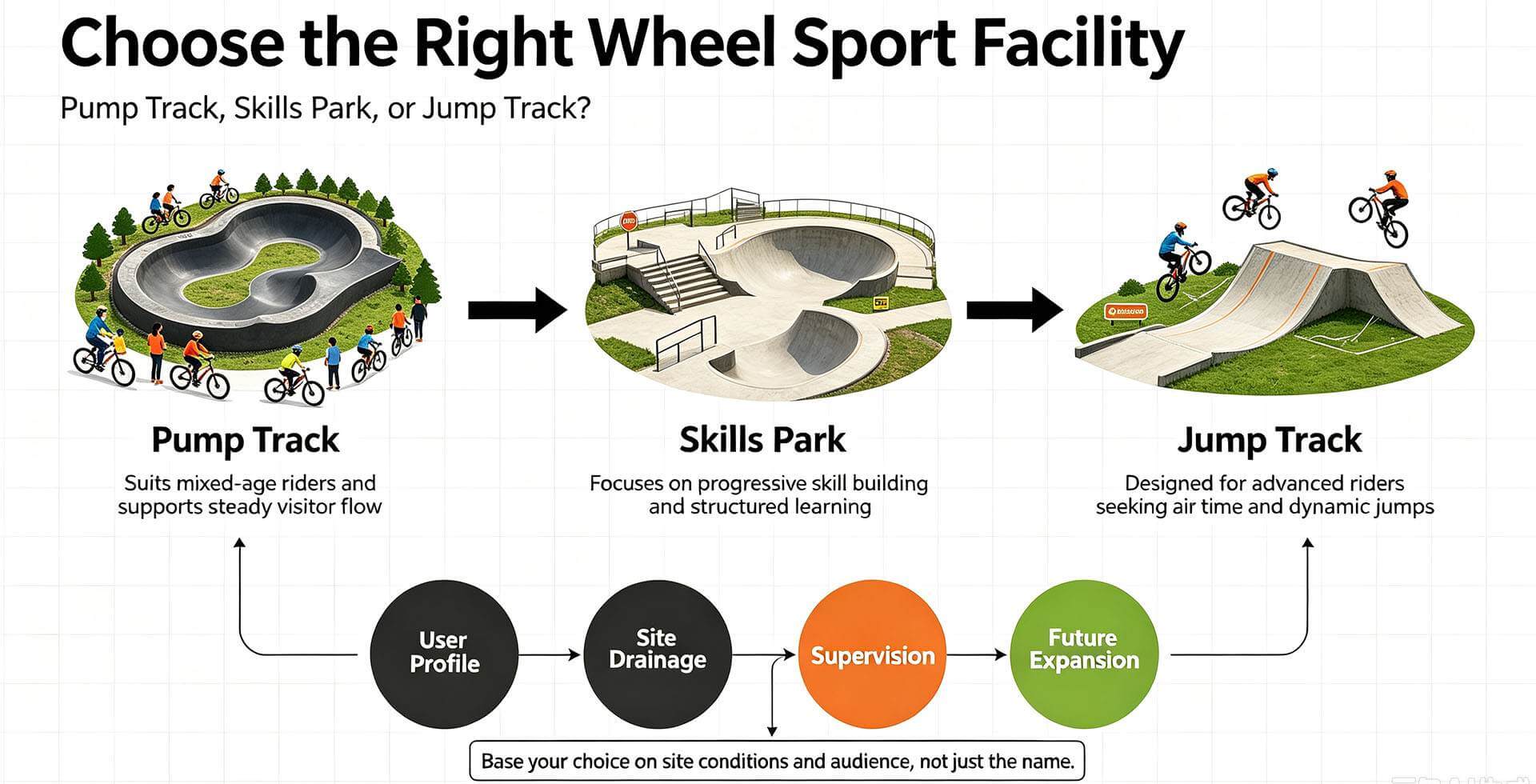
Choosing between a pump track, skills park and jump track is a site and audience decision, not a naming exercise. A pump track suits mixed ages and steady circulation; a skills park teaches controlled progression; a jump track serves riders who already want airtime. The right choice depends on who will visit, how the land drains, how staff will supervise use and how the facility must grow over time.
The Short Verdict
Choose a pump track when the goal is high daily use, inclusive riding and low reliance on coaching. Choose a skills park when beginners need visible learning steps, balance features and a place to practise safely. Choose a jump track when experienced riders are the core users and the project can support speed, landings, supervision and a stronger safety buffer. Hybrid zones work when each has a distinct job.
| Facility | Best for | Movement | Planning risk |
| ปั๊มแทร็ก | Families and mixed ages | Continuous laps | Drainage or sightlines |
| Skills park | Beginners and classes | Short drills | Features too hard |
| Jump track | Advanced riders | Speed and landings | Run-out space |
What Defines Each Facility?
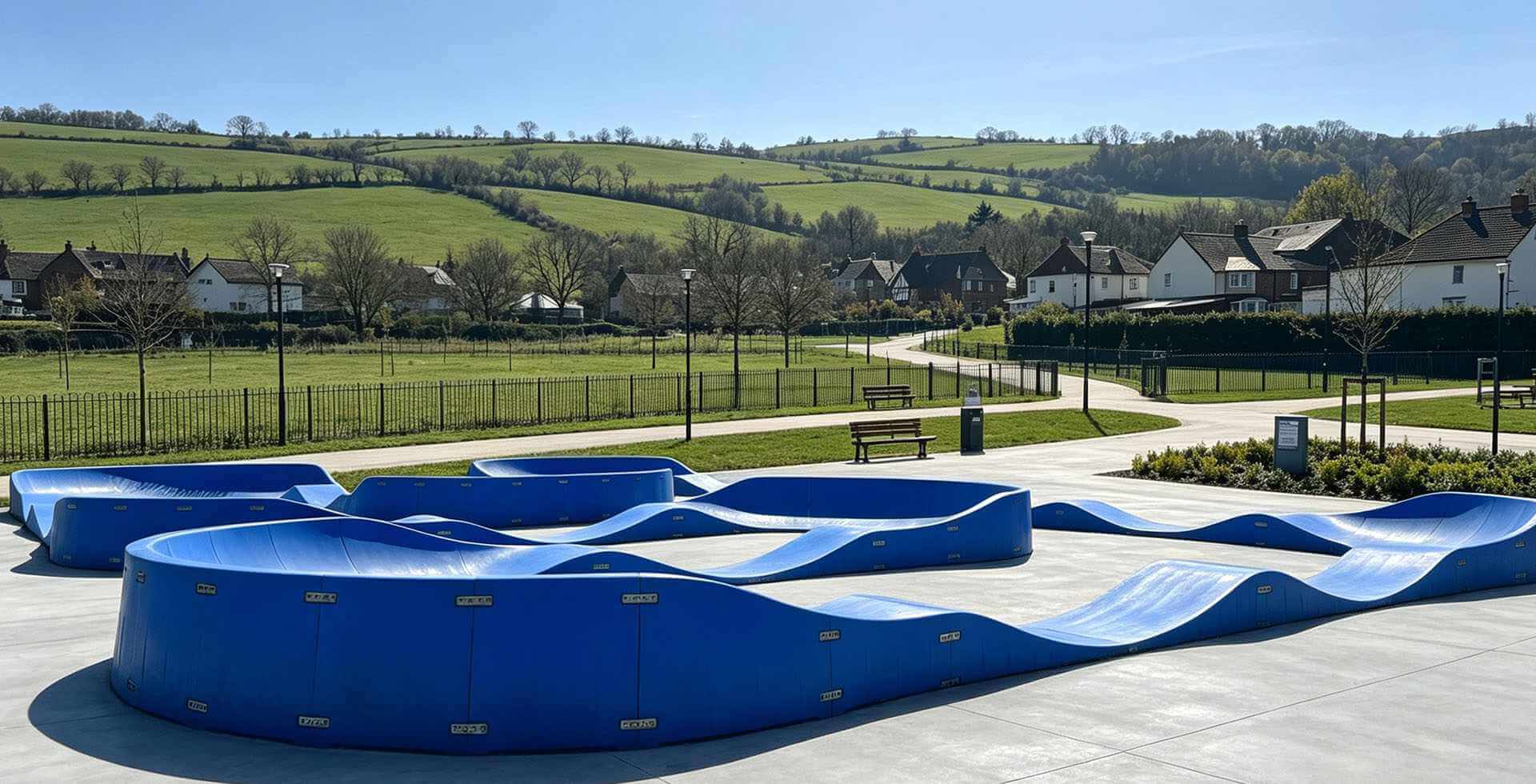
A pump track is a closed circuit of rollers, berms and transitions. Riders gain speed by shifting body weight instead of pedalling through every section. A parent on a scooter, a teenager on a bike and a first-time visitor can share the same loop at different speeds. A modular pump track can be extended or rearranged as attendance patterns change.
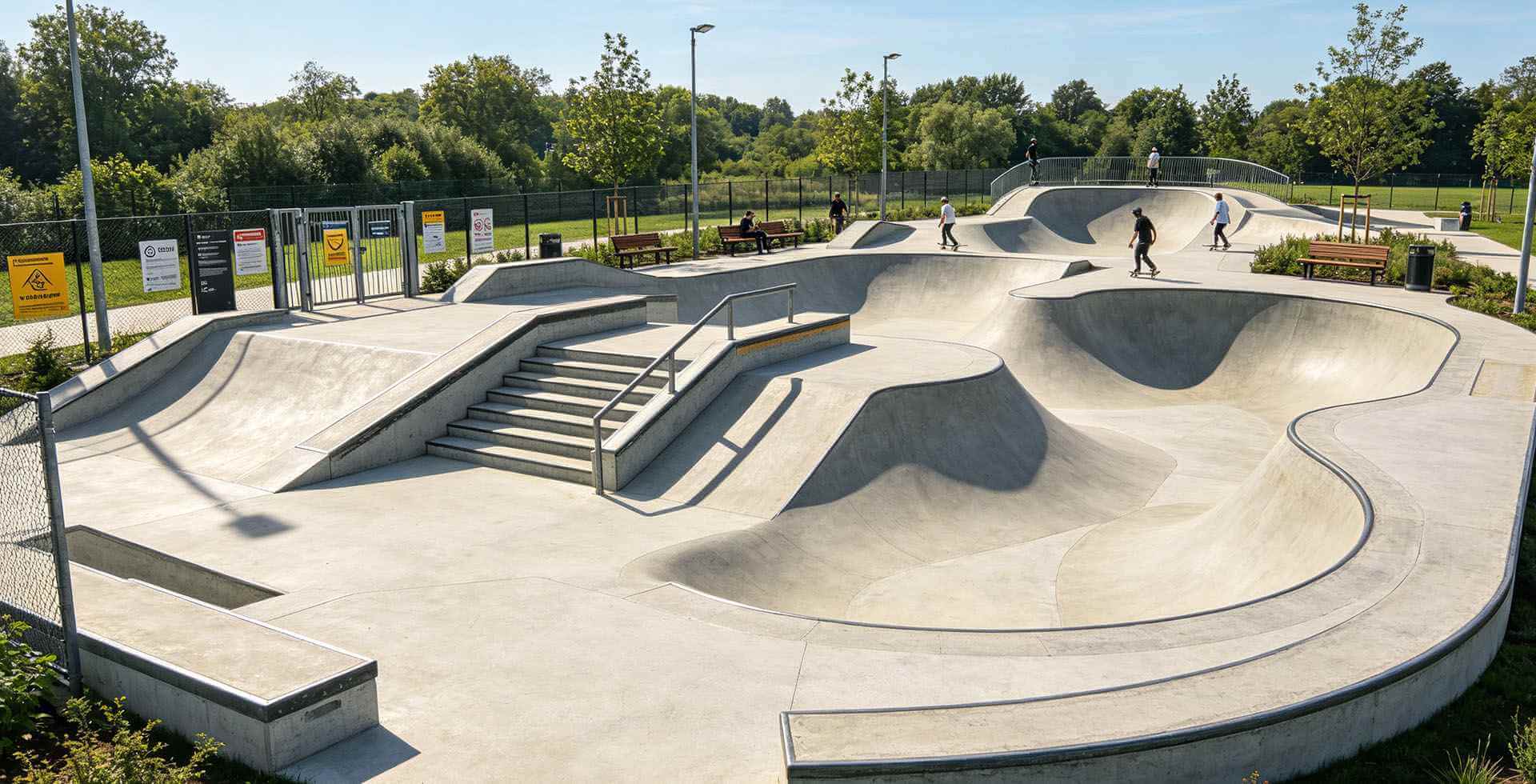
A skills park is a collection of smaller, separated features: low rollers, balance beams, banks, turning drills and short practice lanes. It breaks riding into repeatable tasks. A school can use one lane for a 30-minute class while casual users work elsewhere. Difficulty should be obvious from the approach.
A jump track is built around take-offs and dedicated landings. It needs speed control, consistent transitions and generous recovery space. Tabletop jumps reduce consequences for developing riders, while larger gap lines need separation. Jump tracks create visual energy but are rarely the best single facility for a broad public park.
Start With Users and Operating Hours
Write down the busiest two hours of a normal week, not the launch-day crowd. Beside a playground, visits are short and family-focused. Next to a club or resort, riders may stay two hours and seek progression. Ask local coaches, schools and maintenance teams about comparable facilities. Map users by confidence, wheel type, arrival mode and whether a guardian needs one clear viewing point.
Match the Facility to the Site
Measure the usable riding area after setbacks, trees, utilities, access routes and stormwater paths are removed. A pump track needs a legible loop and room outside berms for passing and viewing. A skills park benefits from compact lanes and a teaching edge. A jump track needs the largest safety envelope because speed continues after landing.
Check grade and soil before selecting construction. On a flat urban parcel, drainage layers may cost more than the riding surface. On a sloped site, natural grade can reduce earthwork but create blind approaches. Modular components help with phased funding or relocation, yet the base must still be level, compacted and drained.
Review modular pump track layout options before fixing the footprint.
Compare Cost, Capacity and Maintenance
| ปัจจัย | ปั๊มแทร็ก | Skills park | Jump track |
| Daily capacity | สูง | ปานกลาง | Lower |
| Coaching need | Low-medium | Medium-high | สูง |
| การซ่อมบำรุง | Joints and drainage | Fixings and wear | Transitions and run-outs |
| Expansion | Add loops | Add stations | Add separate lines |
Use whole-life cost, not only the purchase quote. Include sub-base, drainage, access, inspection time, cleaning and replacement of high-wear elements. A cheaper jump line that stays closed after rain is not cheaper to operate.
Capacity has a direct effect on perceived value. A 60-second pump track lap lets a queue move naturally because riders keep circulating. A skills feature may hold one learner for five minutes while an instructor gives feedback. Neither pattern is wrong. The operating plan simply needs to match it. Where a site expects school bookings on weekday mornings and family use in the afternoon, marked practice stations make scheduling easier than a jump-focused layout.
Plan Safety Into the Layout
Safety comes from predictable movement. Separate entry and exit points where possible. Keep faster jump lines away from beginner drills. Give observers a stable place to stand outside run-outs. Signs should state helmet rules, direction of travel, age guidance and what to do after a fall. A simple opening check covers wet surfaces, loose edges, blocked drains and damaged transitions.
A community site once placed its viewing bench behind a landing. Adults repeatedly crossed the recovery zone to reach children. Moving the bench solved more risk than adding another sign. Layout beats wording.
Review design and installation planning before approving the construction sequence.
When a Hybrid Facility Makes Sense
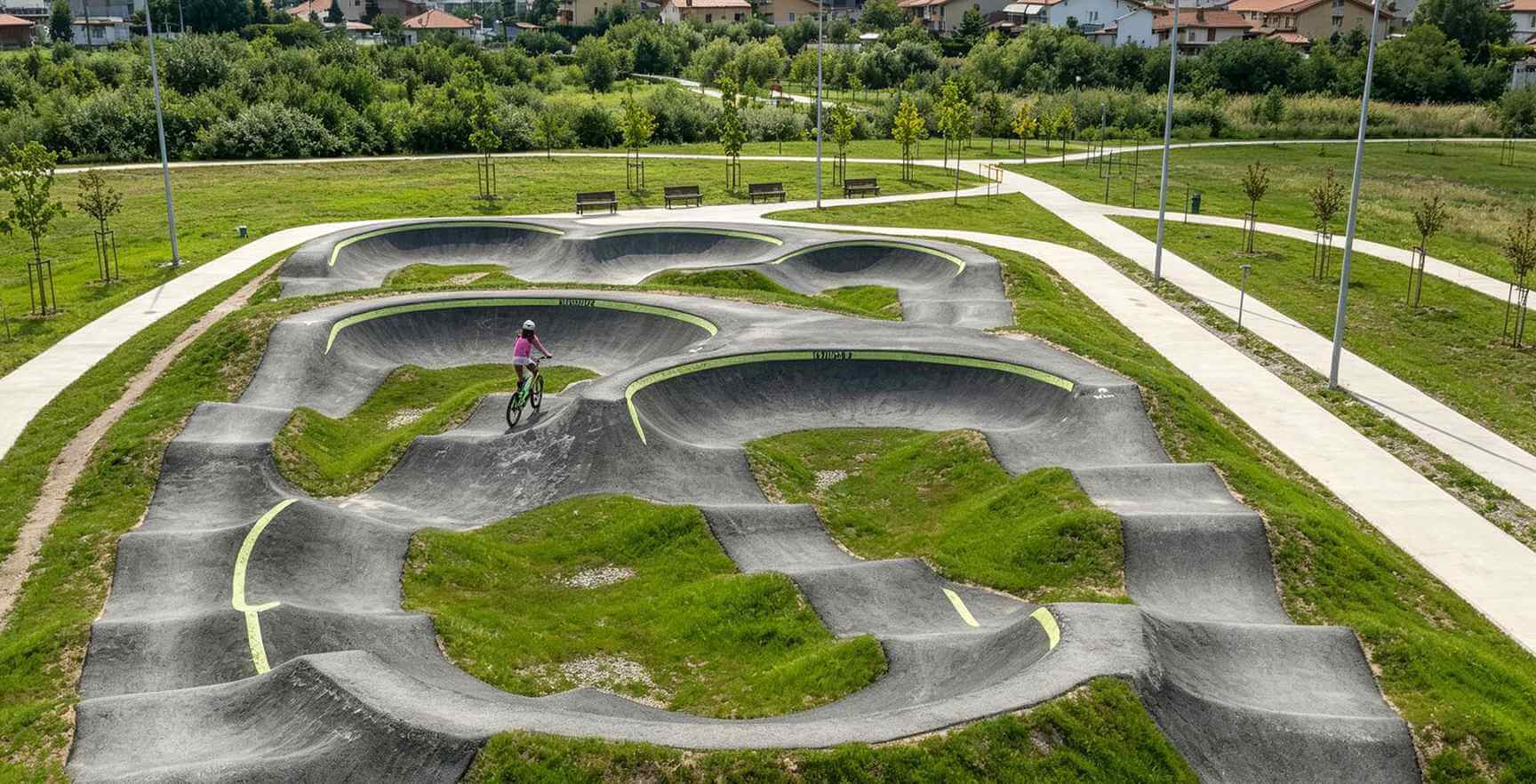
A hybrid works when zones have enough separation and the operator can explain progression. A beginner skills loop can sit beside a pump track, with a short tabletop line beyond a physical buffer. Shared lighting, seating and drainage are practical; riding speeds must remain distinct. If the footprint cannot provide buffers, one well-built zone is the better investment.
The decision also changes with seasonality. A resort may need a headline jump area during peak holidays, then use a compact pump track for everyday guests. A municipal park generally benefits from the opposite order: a durable loop first, followed by progression features once local use is established. Count nearby schools, clubs and tourist beds before assigning a large part of the budget to advanced riding.
Access affects the choice too. If equipment must pass through a narrow gate, a build that relies on large earthmoving machines can become awkward before work starts. Delivery timing, storage space and nearby residents should appear in the procurement brief. Noise limits may favour daytime installation windows, while a public park may require a temporary route that keeps pedestrians away from the work area.
Procurement Checklist Before Design Sign-Off
- User groups, wheel types and peak hours
- Footprint, setbacks, drainage route and soil report
- Skill progression and coaching programme
- Safety envelope, viewing points and emergency access
- Surface, edge and fixing specifications
- Phasing, delivery access and handover documents
- Whole-life budget for cleaning and repairs
Ask suppliers to mark assumptions on the plan. A visible assumption list makes later changes cheaper because everyone can see which dimension or duty cycle drove the quote.
Use the project planning guide when drafting the brief.
ULTRAPUMPTRACK ในฐานะผู้จัดจำหน่ายสนามปั๊มแทร็กแบบโมดูลาร์
ULTRAPUMPTRACK focuses on modular pump track systems for public parks, schools, resorts and private developments. Its scope can include layout advice, component planning, delivery coordination and installation support, keeping one technical brief from concept through handover. Supplier selection should be based on documented materials, drainage details, safety review, warranty terms and local installation requirements.
For owners, the useful question is whether the supplier will document the decisions that remain after a concept drawing: base tolerances, water routes, delivery access, assembly sequence and the checks required before public opening. Clear documentation helps the project team compare proposals on like-for-like scope rather than headline price alone.
Arrange an early feasibility conversation through the ULTRAPUMPTRACK contact team when the site conditions are clear.
บทสรุป
The right facility matches real riders, real hours and the limits of the site. Pump tracks provide broad daily use, skills parks give beginners a clear route into the sport, and jump tracks reward experienced riders when space and supervision are available. Define the primary job first, then test layout, budget and maintenance against it.
คำถามที่พบบ่อย
Is a pump track suitable for scooters and bikes?
Yes. Widths, berm heights and entry controls must allow different speeds to share the loop safely.
What is the difference between a skills park and a pump track?
A skills park uses separate practice features; a pump track is a continuous circuit of rollers and berms.
Are jump tracks safe for beginners?
Tabletop lines can be, while larger gap lines need developed control, separate lines and supervision.
สนามปั๊มแทร็กแบบโมดูลาร์สามารถต่อเติมในภายหลังได้หรือไม่?
Often, if the base, drainage, footprint and connection points were planned for future phases.
What should a pump track supplier provide?
Request drawings, materials, drainage assumptions, installation scope, inspection guidance, warranty and delivery schedule.


