

Best Indoor Pump Track Types for Sports Halls Malls and Winter Venues
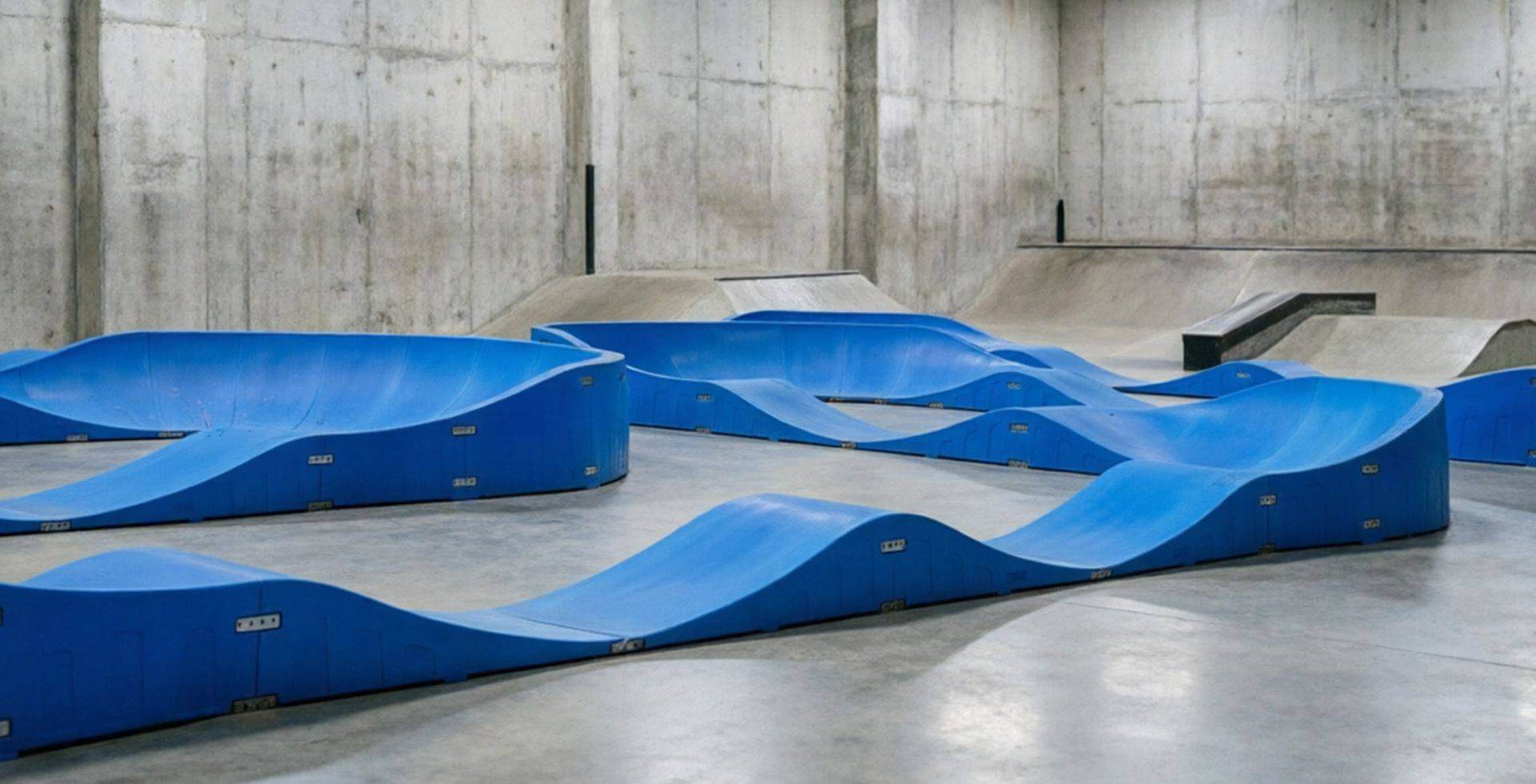
The best indoor pump track type depends on venue width, operating programme, rider group and how often the floor must change use. Sports halls often suit modular loops, malls need compact controlled layouts, winter venues benefit from seasonal systems, and event spaces may prefer straight tracks for scheduled runs. This guide explains how to choose without overlooking access, floor protection or public circulation.
The Best Indoor Pump Track Depends on the Venue
For most sports halls and seasonal winter venues, a modular loop is the strongest all-round choice because it supports continuous riding and can be removed or reconfigured. Malls often need a compact beginner loop or short straight course with controlled entry. Event spaces usually benefit from a portable straight or compact loop that matches the programme, audience and available setup window.
The label “indoor pump track” does not describe one product. The useful decision starts with the building: clear floor area, ceiling height, columns, doors, fire routes, floor loading, noise limits and the number of people who must circulate around the track. A layout that fits on a plan can still fail during operation if queues block an aisle.
Sports Halls Need a Track That Shares the Building
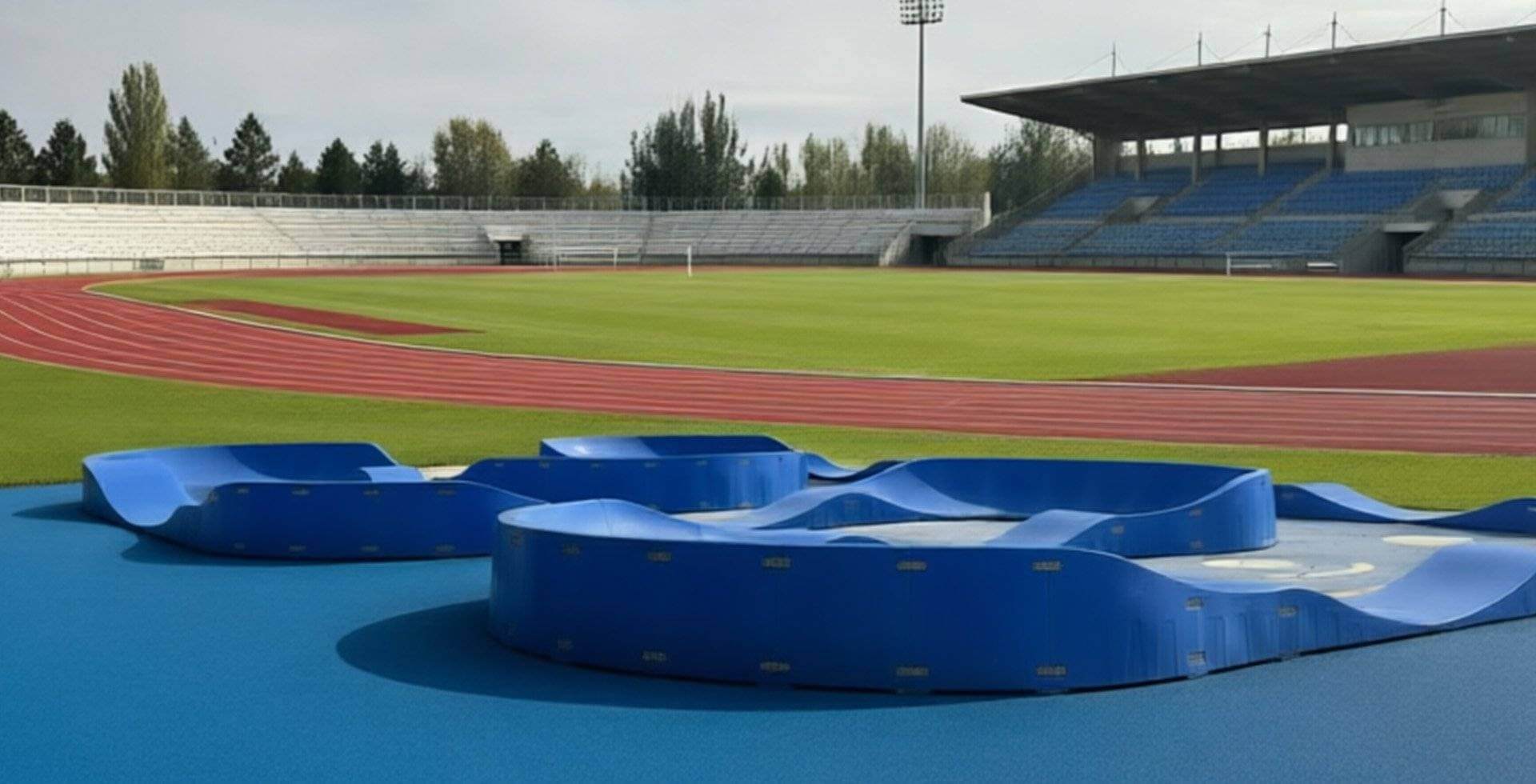
A sports hall may host school activity in the morning, club sessions after work and another sport at the weekend. A modular loop suits this pattern when the owner can dedicate the floor for a season or move the track between programmed blocks. The loop gives riders a clear direction and makes session control easier than scattered features.
Mark court lines, wall clearance, stored equipment and emergency exits before drawing the track. Protective floor layers may be needed, but they must suit the hall surface and the module support points. Staff also need a storage plan for barriers, signs and loose items.
Malls Need Compact Layouts and Controlled Flow
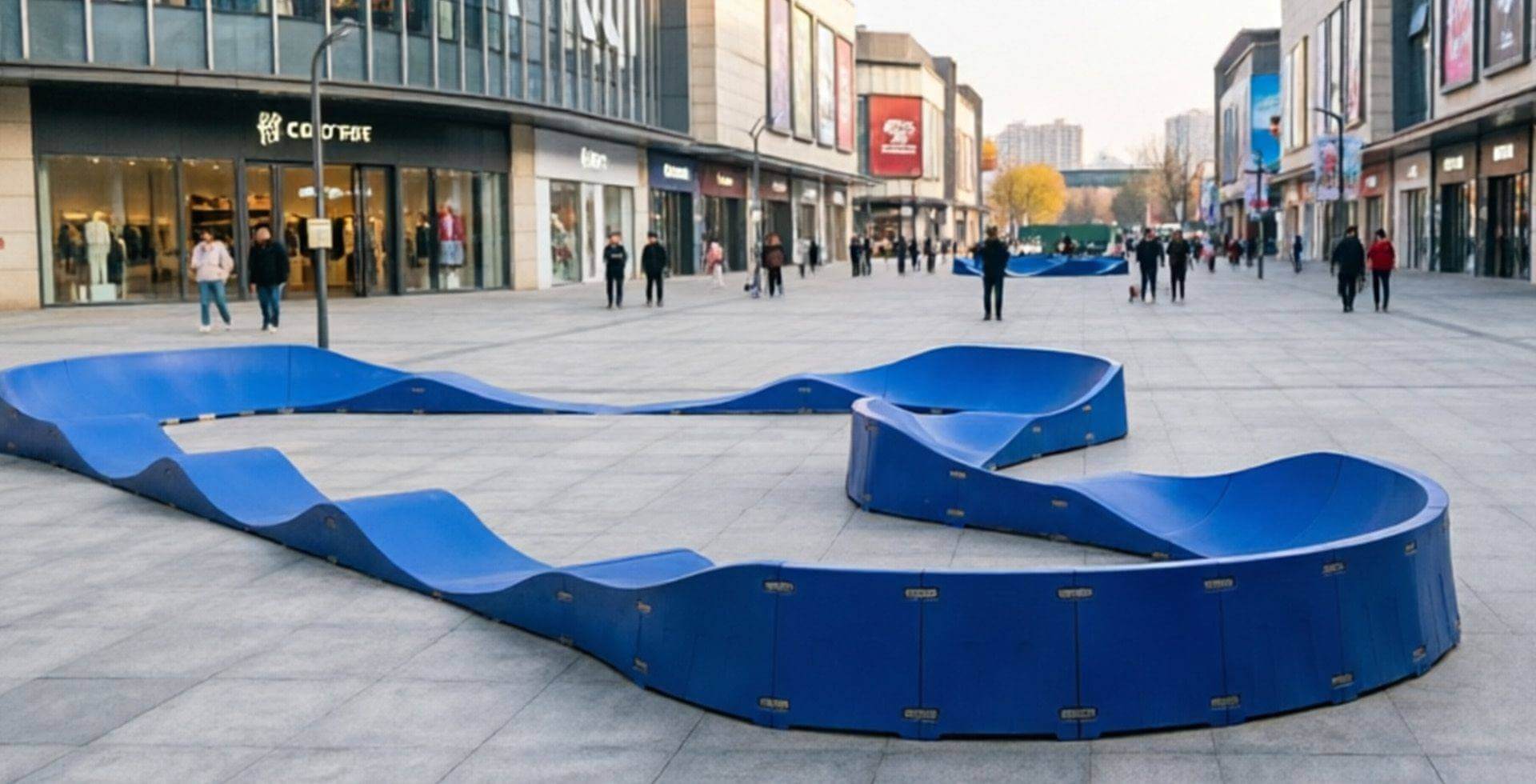
A mall installation competes with shoppers, tenants, sightlines and fire egress. A compact loop can create a visible attraction, while a short straight course can work for demonstrations or timed beginner sessions. The route into the riding area matters as much as the track itself. Registration, helmet fitting, waiting and exit should happen without spilling into the public corridor.
Noise is not only the sound of wheels. Announcements, spectators and repeated impacts near joints can affect nearby tenants. Test the proposed position during trading hours and agree operating times. Avoid promising a universal acoustic result; the floor, ceiling and surrounding finishes change how sound travels.
Winter Venues Benefit From Seasonal Modularity
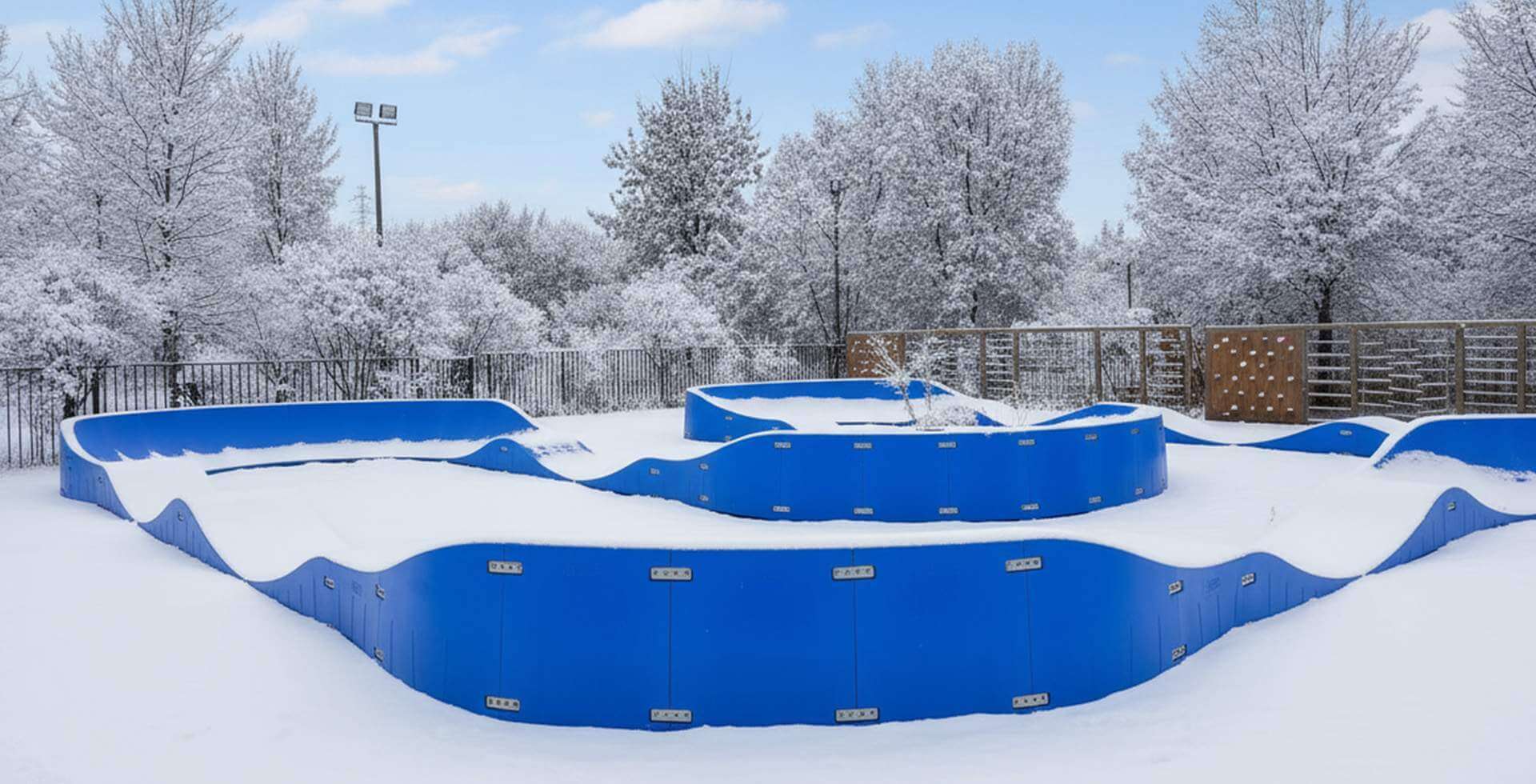
Ice arenas, ski resorts and covered winter halls often want activity when outdoor riding is limited. A modular loop gives repeatable laps and can serve mixed wheel types during supervised sessions. A straight layout may be better where the venue has a long unused concourse but lacks enough width for a return loop.
Seasonal operation changes logistics. Components need a dry storage area, a labelled packing sequence and enough access for moving modules without damaging doors or floors. Before each installation, check the base, connections and riding surface under the supplier’s instructions.
Event Spaces Need Fast Operational Changeovers
Trade shows, festivals and temporary sports events work to a fixed programme. A straight pump track creates a clear start and finish for demonstrations, coached runs or timed challenges. A compact loop supports higher repetition but needs more marshaling around entry and exit. Choose according to the event format, not the largest layout that can be squeezed into the hall.
Build setup, inspection and dismantling into the venue schedule. Delivery doors, loading bays, freight lifts and temporary storage can decide whether the plan is workable. Any claimed installation time should be based on the chosen layout, crew, access and site rules.
Check Height, Columns and Safety Clearances
Measure the lowest obstruction, not the headline ceiling height. Lighting, signs, ducts and balcony edges may sit below the main structure. Riders also need clearance around berms, run-outs and entrances. Columns inside the footprint complicate sightlines and may create collision points, so they should normally remain outside the riding line and its safety zone.
Keep fire exits and required circulation routes open at all times. Local building, fire and event rules vary, so the venue operator and relevant professionals should approve the final arrangement. The supplier’s layout supports that process but does not replace local review.
Plan the Floor, Access and Daily Operation
The floor must be level enough for the system and capable of supporting the track, riders and operating loads. Ask what protection layer is permitted and whether tapes, anchors or barriers may touch the finished surface. Confirm that delivery pieces fit through every door, turn and lift between the loading point and the hall.
Daily operation needs a pre-opening inspection, rider rules, capacity control, helmet arrangements and a closure process. Staff should know how to isolate a damaged section and where to record an incident. A strong indoor project is as much an operations plan as a equipment purchase.
Choose by Venue, Not by Marketing Name
A sports hall with regular mixed-age sessions usually favours a loop. A mall activation with short bookings may favour a compact straight track. A winter venue with a seasonal programme can use either, depending on width and storage. An event organiser should start with programme length, rider throughput and loading access.
Ask suppliers to show the footprint including external clearances, waiting space and barriers. Then test that drawing against the real floor plan. This step often reveals that a smaller layout will deliver a better visitor experience.
| Venue | Often suitable | Key question |
| Sports hall | Modular loop | Can the floor be shared and protected? |
| Mall | Compact loop or straight | Can queues stay clear of public routes? |
| Winter venue | Seasonal loop or straight | Where will modules be stored? |
| Event space | Portable straight or compact loop | Does the layout match the programme? |
Planning Checklist
- Measure clear floor area, lowest overhead obstruction and all columns.
- Protect fire exits, public aisles and emergency access.
- Confirm floor loading, level tolerance and approved protection materials.
- Map delivery doors, lifts, turns and temporary storage.
- Plan registration, waiting, helmets, supervision and closure procedures.
- Request layout drawings that include barriers and external clearances.
Informazioni su ULTRAPUMPTRACK
ULTRAPUMPTRACK supplies LLDPE modular pump track systems that can be configured for bikes, BMX, scooters, skateboards and inline skates. Modular sections support layout changes, relocation and later expansion. Indoor buyers should still confirm the proposed configuration, floor interface, access route, operating rules, inspection guidance and warranty conditions for their specific venue.
Discuss a measured site brief with the ULTRAPUMPTRACK project team.
Conclusione
Choose the indoor pump track that fits the building and the operating programme, not simply the largest available layout. A measured plan should include riders, queues, barriers, exits and storage. When those practical details are settled early, a modular track can give sports halls, malls, winter venues and event operators a flexible riding facility that is easier to programme and manage.
FAQ
Can a modular pump track be used inside a sports hall?
Yes, when the floor, clearances, access and operating plan suit the selected system. The venue should approve floor protection and safety arrangements.
Is a straight or loop pump track better for an indoor event?
A straight track suits demonstrations and controlled runs. A loop supports repeated laps but needs more width and entry management.
How much ceiling height does an indoor pump track need?
There is no single figure for every layout. Measure the lowest obstruction and review rider movement, feature height and required clearance with the supplier and venue.
Can an indoor pump track be moved between venues?
A modular system may be moved, but transport, packing, component inspection, access and trained assembly must be planned for each venue.


