

How to Choose a Modular Pump Track Supplier OEM Guide
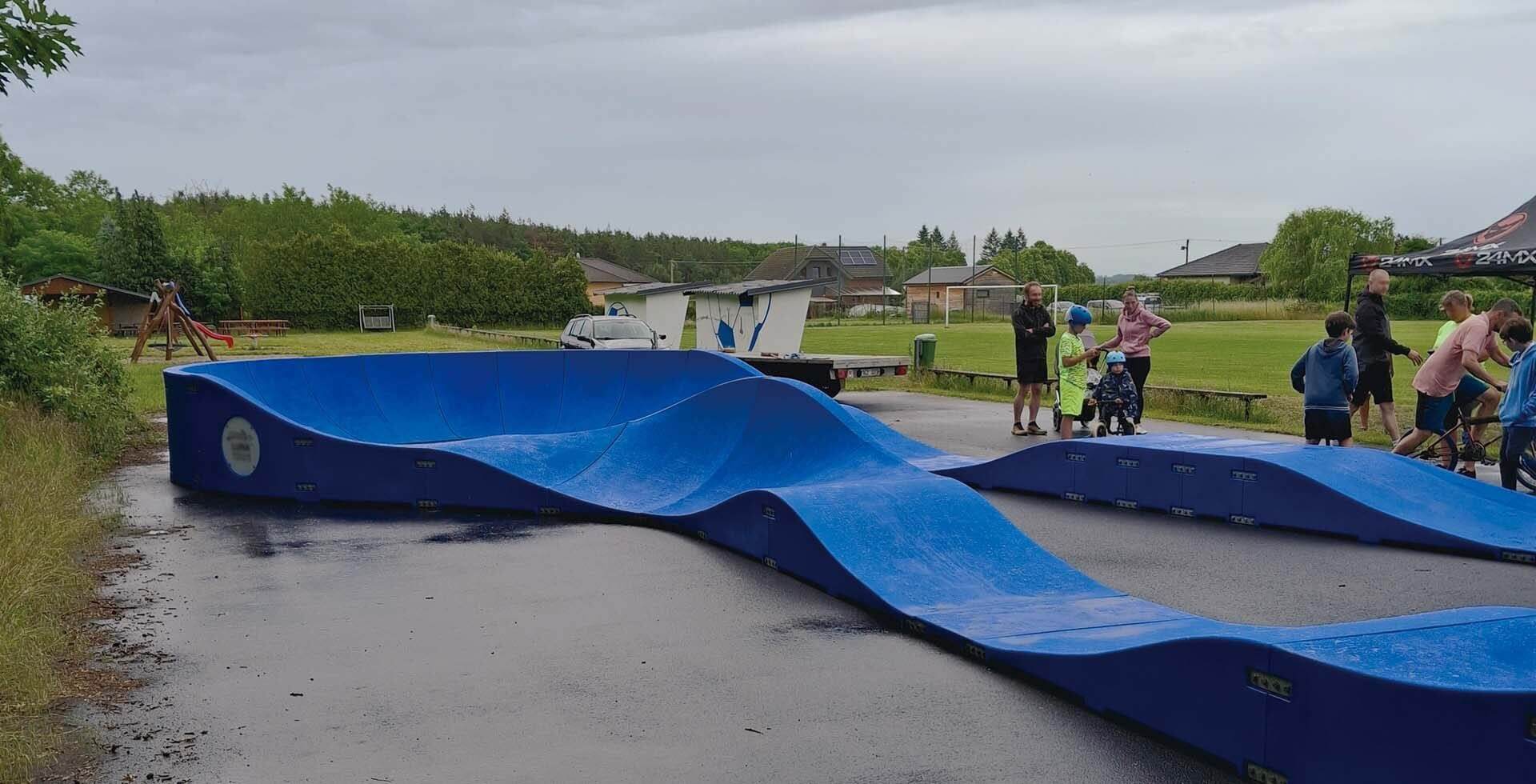
How to Choose a Modular Pump Track Supplier OEM Guide
You have received a quote for the modular pump track. The layout looks good and the price is within budget. What still needs checking? Quite a lot, because a modular pump track is not bought from a photograph. The modules have to match, the connections have to line up, and the shipment has to reach the site with the right paperwork and parts.
Supplier selection becomes easier when every claim is turned into a question with a document behind it. Who made the track? Which drawing is being built? What does the inspector record? Where does delivery end? The answers matter more than a polished catalogue.
The First Six Checks
Use this first screen before arranging samples or spending time on detailed price talks.
|
Check |
Ask to see |
Pause if |
|---|---|---|
|
Factory |
Registration details and recent production records |
Nobody will name the plant |
|
Layout |
A site drawing and module list |
The same loop is offered for every site |
|
Quality |
Material details and completed inspection sheets |
Quality is discussed but never recorded |
|
OEM work |
Colour, logo and sample approvals |
Changes live only in chat messages |
|
Freight |
Package dimensions, weights and delivery point |
Shipping is one unexplained figure |
|
Support |
Warranty route and spare-part identification |
There is no written claim process |
The table is only a starting point. A supplier can have good documents and still propose the wrong layout. Equally, a capable factory may present its information plainly. Read the evidence before judging the presentation.
Who Is Actually Making the Track?
Ask that question right at the start. The name under the quotation can very well be a manufacturing plant, an exporting house or even a distributor. There is nothing wrong with any of these scenarios; however, problems start to arise when the supplier fails to tell you who handles the molding, inspecting and design alterations.
Request the official name of the company, their production address and the individual responsible for controlling the quality of the manufactured goods. A useful call follows one ordinary module, not a display sample. Where is the material stored? How is the part trimmed? Who checks the connection points? What happens to a rejected piece?
Details such as batch labels and inspection sheets are less impressive than a row of machines, but they tell the buyer more. Do the dates make sense? Can the quality contact explain a recent record without passing the question back to sales?
The size of the order sets the next step. A small private track may need a document review and live video. A council shipment, an OEM reseller order or a heavily customized project can justify an independent audit. The purpose is simple: find out whether someone at the plant owns the quality decision.
Does the Proposed Layout Answer the Site?
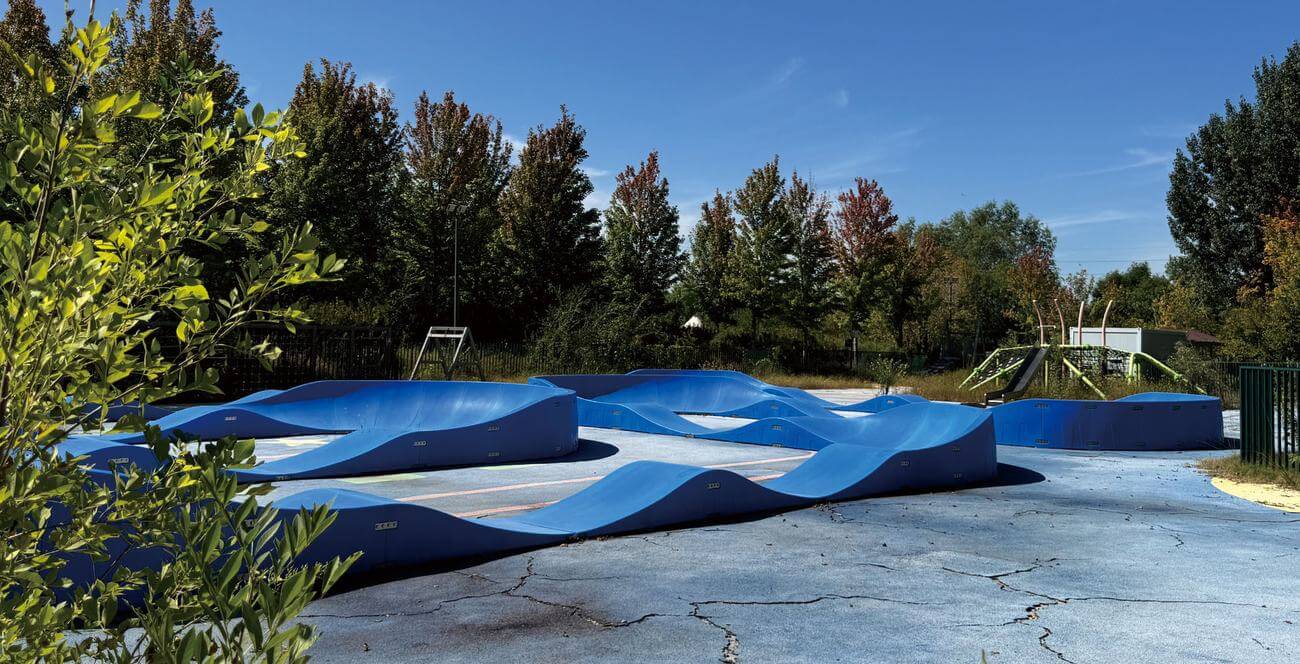
Blue Modular Pump Track Layout Installed in an Outdoor Recreation Area
Send a measured boundary before requesting a final price. Add levels, drainage notes, photographs, truck access and the expected riders. Then compare the proposed modular pump track layouts. Does the drawing respond to the information, or has a stock shape merely been placed inside the boundary?
Space beside the riding line is easy to lose on a plan. The teacher at school needs space to brief one group while the other is on the move. The park will require space for the parents, the strollers, and those who happen to be walking through. The entrance point and exit point determine how fast the event will run.
Three documents should tell the same story: the dimensioned plan, the module schedule and the connection drawing. If they disagree, which one will the factory follow? Get the answer before production.
Future expansion deserves one more line on the drawing. Which parts stay, and which new modules would be needed? “The track can always be changed later” is not enough. Geometry, clearances and rider flow still apply.
What Does the Material Specification Really Say?

Close Up of Textured Blue LLDPE Modular Pump Track Surface
LLDPE is just a material grade and is not a full acceptance criteria. ULTRAPUMPTRACK uses LLDPE material in their modular system, but the requirement is for acceptable resin, color, and surface finish. Relevant test information should sit with that specification rather than in a separate sales email.
Ask what the production inspector writes down. Depending on the part, the record may cover overall dimensions, connection positions, surface condition, colour, quantity and packing. There is no need to copy another industry’s inspection system. There does need to be a result both buyer and supplier can read.
A sample is helpful for colour, texture and markings. It says little about batch consistency on its own. Mark the approved sample with the drawing revision and record any accepted difference. When a repeat order is placed, that same reference should appear on the quotation, production sheet and inspection report.
Why be so particular about a number in the corner of a drawing? Because a replacement ordered two years later has to fit the installed track.
Keep OEM Decisions in One Approval Trail
Colour, logo, packaging and manuals are often discussed by different people. That is normal. Letting the decisions remain in separate message threads is not.
Use a defined colour reference. If a public brand or reseller needs a close match, approve a physical colour sample. Show the logo position and marking method on a drawing. Approve carton artwork separately; importer details and warnings may change without changing the module.
Now set a boundary around factory changes. A substitute material, revised connector or different carton quantity needs written approval. What documents have to be changed after the alteration? List the answer according to the order of terms. In this way, you can avoid having an outdated blueprint, fresh specimen, and altered packing list for one and the same item.
Is the Cheapest Quotation Actually Cheaper?

Buyer Reviewing Modular Pump Track Pricing and Supplier Quotation on a Tablet
Knowing the price of a selected modular pump track is not enough. Modules, connectors, edges, signage, OEM Assembly, export packaging, spares, transportation, installation guidelines, and site visit should be separated individually.
One total cannot show what has been left out. A missing connector stops a crew. Packaging that will not pass through the site gate creates extra handling. A port label corrected after arrival costs far more than a PDF proof corrected before printing.
Dates need the same treatment. What payment starts production? Which approval stops the clock? How long is the price valid? Standard production may take 7–10 days, but drawing approval, samples, packing, vessel booking, customs and inland transport sit around that window. “Ten days” is not a door-to-door promise.
Can the Shipment Reach the Installation Area?
Package count, packed volume and gross weight belong in the freight discussion. So do the dimensions of the largest package. A crate can fit in a container and still fail to pass through the gate at a school or roofed venue.
The figures should come from the final module schedule. Numbers copied from a similar project are useful for early budgeting, not for booking the shipment.
The supplier can offer the customs code as well as prepare the invoice, packing list, and origin information. It is recommended that local classifications, duties, and import regulations be checked through the buyer’s customs consultant. Delivery terms need a named point too. Port handover and delivery to a park gate are different scopes.
A mobile track adds another question: what will protect the modules on the second, fifth and twentieth move? Event operators may need durable IDs, a loading sequence and reusable protection. Those features must be discussed before the first shipment is packed.
Would the Warranty Work on a Monday Morning?
Read the warranty beside the promised installation and after-sales support. Check the start date, covered parts, maintenance duties, exclusions and evidence required for a claim. ULTRAPUMPTRACK’s general warranty is five years. Installations within 500 yards of the coast have different terms, so the quotation should state which rule applies to the site.
Try a practical question. In one instance next summer, one module will be broken; who gets the photographs, how is the part determined, and how do you order an appropriate replacement? If you can’t explain the procedure before the purchase, then you won’t know it after the claim either.
Event fleets often keep spare connectors and frequently handled parts. Permanent sites may carry fewer spares, yet they still need the installed revision in the handover file.
Installation promises also need context. “A few hours” with which crew, unloading equipment and base condition? Request the assembly instructions, tool list, inspection steps and the party responsible for final acceptance.
What Can Project References Prove?
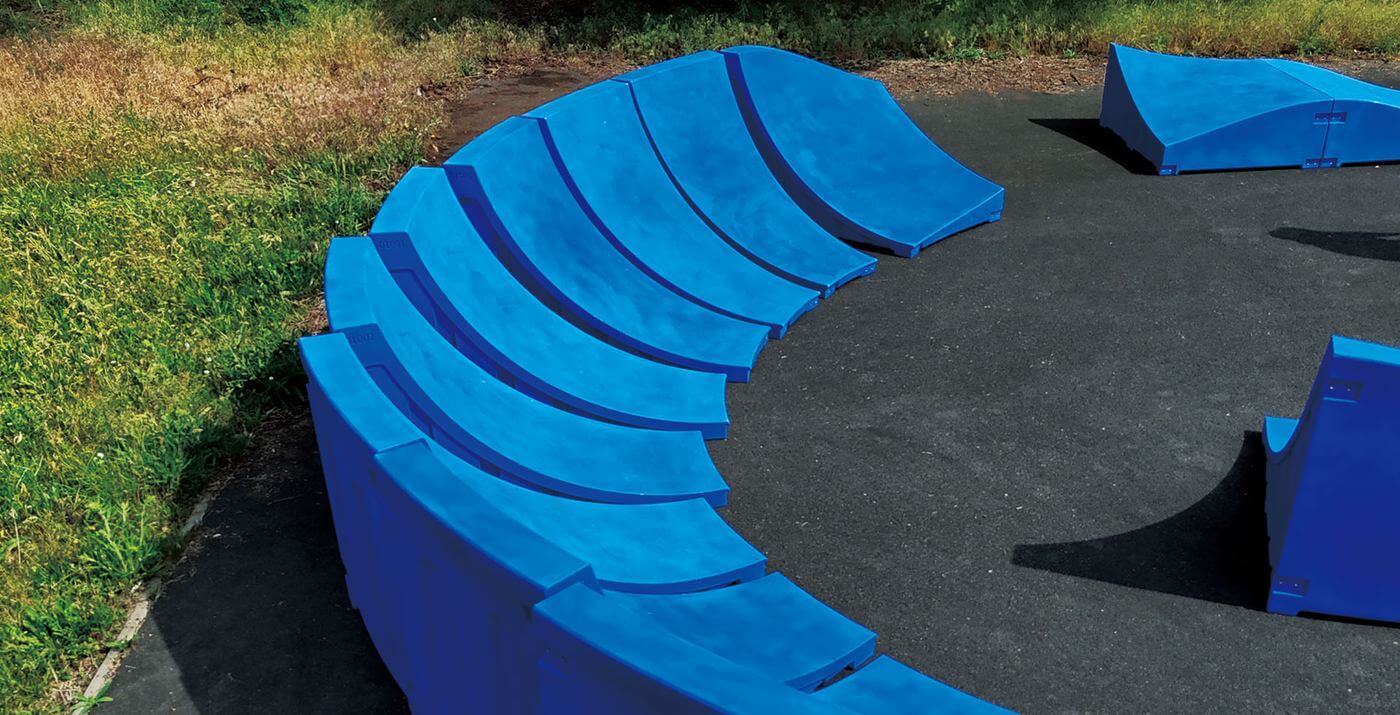
Curved Blue Modular Pump Track Sections Arranged on Asphalt
Use completed pump track projects to find relevant questions. Was the track permanent or mobile? Who prepared the base? What did the supplier provide? Did the plan change after the first site review?
Choose a reference close to the intended job. A reseller should ask whether repeat batches stayed consistent. A council may focus on drawing control and handover. An event operator needs to know how the modules and packing survived frequent loading.
Photographs show that a project existed. They do not show who solved a site problem or whether a replacement part arrived on time. Ask about the part of the job that creates the greatest risk for this order.
A Shortlist That Can Be Defended
Use one brief, one quotation schedule and one score sheet. Then keep the decisions in order:
Remove candidates that will not identify the factory or issue controlled drawings.
Review material, OEM, inspection and packing evidence before final price talks.
Approve the layout, sample, artwork and revisions before production starts.
Check the finished shipment against the specification and packing list.
Place the final revision in the handover file for later spare-part orders.
A limitation is not always a reason to reject a supplier. An honest “not with this module” followed by a workable option can be more useful than an unsupported yes.
About ULTRAPUMPTRACK
The ULTRAPUMPTRACK provides LLDPE modular pump tracks to local councils, schools, holiday parks, landscaping projects, development companies, communities, events, and residential projects. The project could involve discussions on layouts, OEMs, components, deliveries, and installations.
In case of project-related questions, you can contact the ULTRAPUMPTRACK project team using a planned layout, rider teams, OEM information, and the delivery location.
Conclusion
A reliable supplier leaves a trail that another person can follow: factory identity, site drawing, approved specification, inspection record, packing data and revision number. Compare that trail before comparing the final totals. It is a little slower at the start and much faster than sorting out incompatible parts after shipment.
FAQs
These are the questions buyers most often raise at the final review.
What should an OEM pump track supplier provide before production?
Look for an approved layout, module schedule, specification, OEM proofs, quotation scope, lead-time basis, packing plan and one revision reference. Conflicting documents should be corrected before the production clock starts.
How does a buyer ensure that the modular pump track factory is genuine?
The legality of the company and its address must be confirmed, along with its production history, a physical walk-through, and an audit in case it justifies.
Is it a good idea to do a pre-shipment inspection?
In case of a large or customized order, yes. The inspection needs to follow the approved specification of the product.
Which element brings the greatest risk to OEM pump track procurement?
The unknown change. This includes material, drawings, colors, logo, packaging quantity, and module changes.

