

Modular Pump Track vs Asphalt Which Wins for Modern Projects
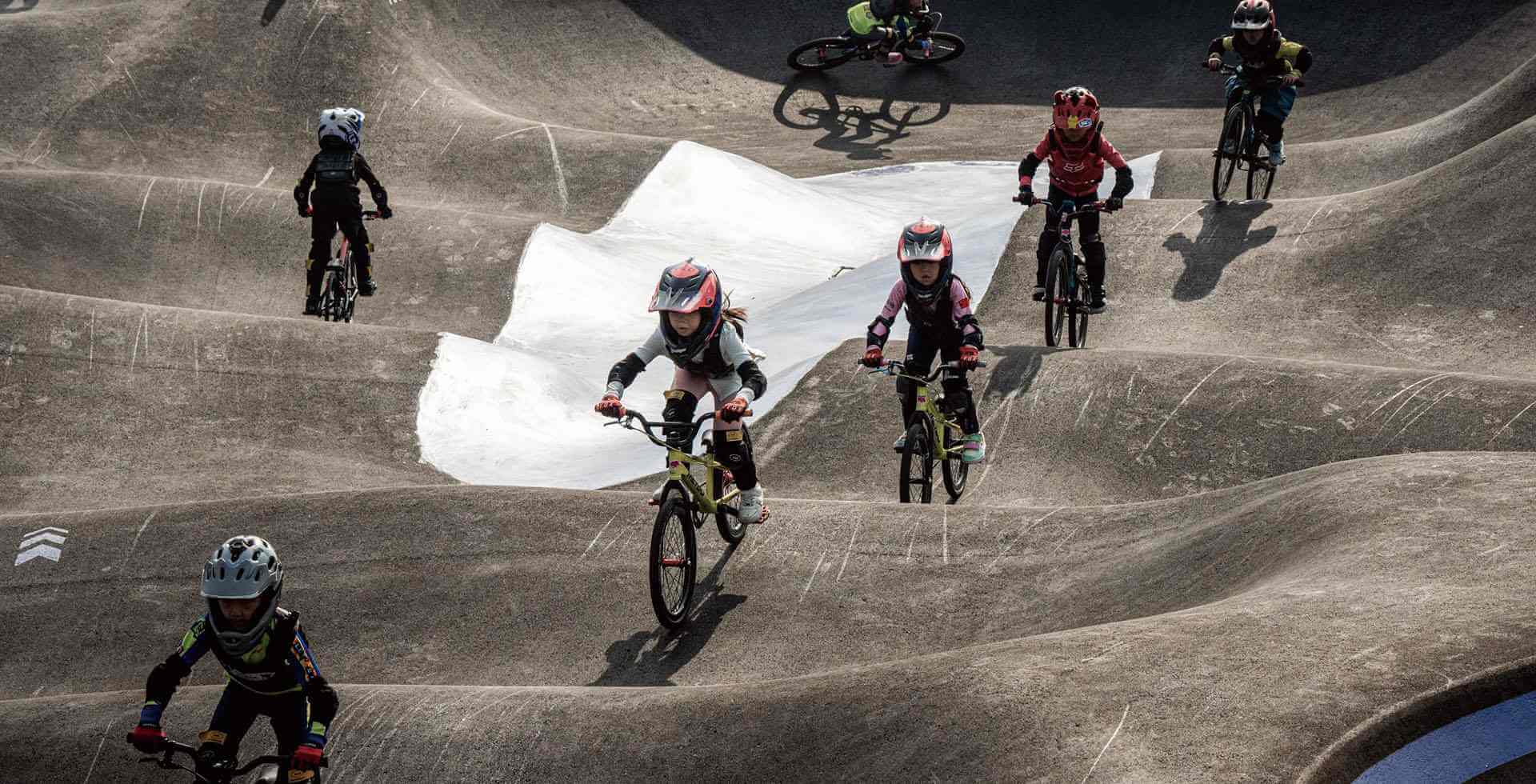
Pump tracks are no longer a niche feature for BMX riders alone. Today, they show up in schoolyards, municipal parks, campgrounds, sports parks, resort projects, and mixed-use recreation zones. For planners and buyers, the real question is no longer whether a pump track works. It is which type works better for the site, the budget, and the long-term plan?
When that comparison starts, modular pump track vs asphalt pump track becomes the key decision. Traditional asphalt pump tracks still have a place in permanent public sports infrastructure. But for many modern projects, a modular pump track offers clear advantages in installation time, layout flexibility, maintenance, relocation, and phased growth. That matters when a project has a tight timeline, a limited footprint, or a budget that needs room to move.
Why This Comparison Matters for Buyers
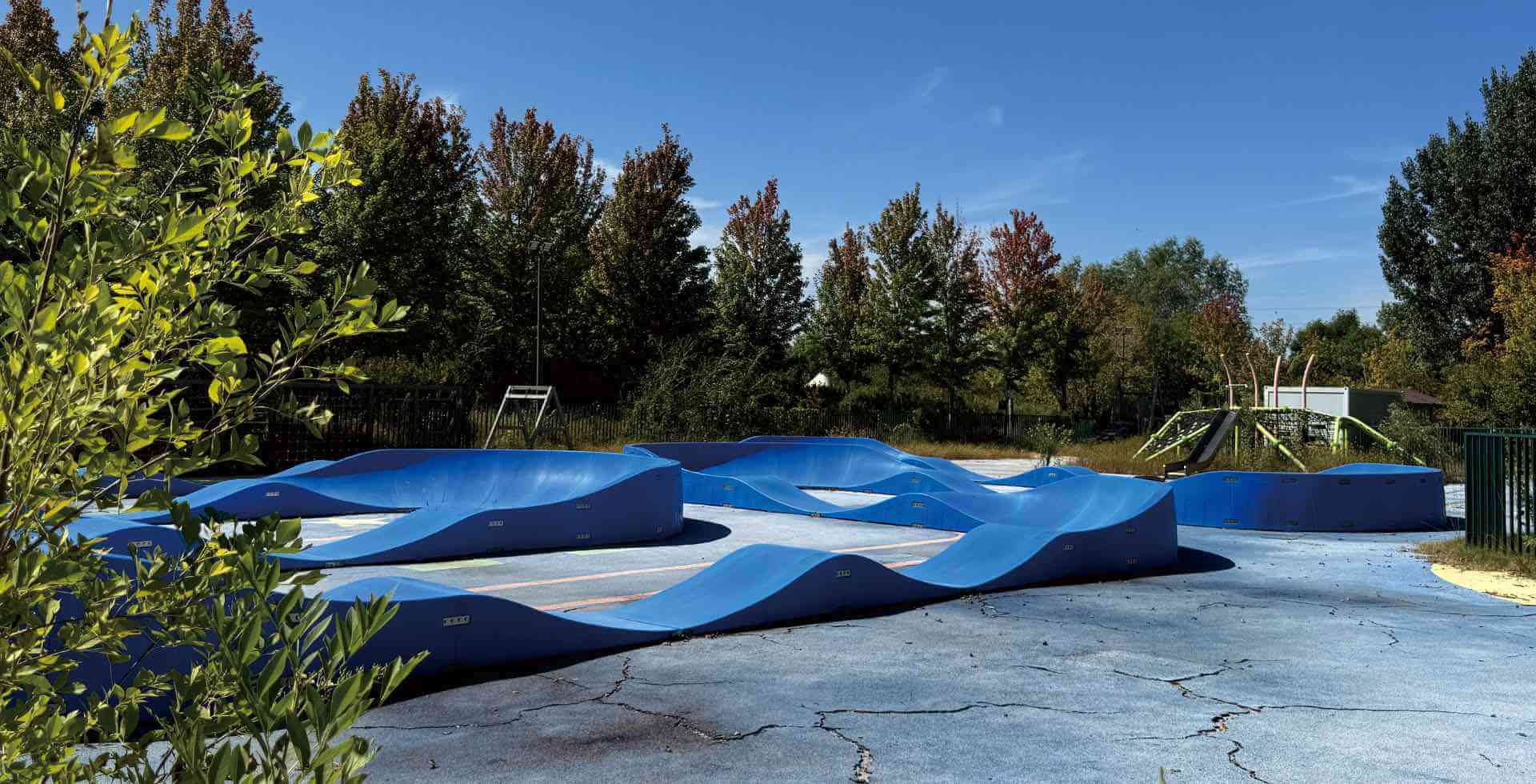
Before looking at specific benefits, it helps to look at how buying decisions are usually made. In real projects, the choice is rarely about riding feel alone. A school may care more about fast setup during a holiday break. A park department may care more about upkeep over five years. A campground may want a portable pump track that can support peak-season traffic without a long construction period.
That is why the best pump track surface is not always the most permanent one. It is the one that matches the job.
A Quick Side-by-Side View
| Factor | Modular Pump Track | Traditional Asphalt Pump Track |
| Installation time | Fast, usually far less site work | Longer build cycle with more site prep |
| Layout flexibility | High, easy to reshape or expand | Low after construction |
| Relocation | Possible | Not practical |
| Maintenance | Localized repairs, lower disruption | Durable, but repairs can be more involved |
| Budget staging | Good for phased investment | Better for one-time full build |
| Fit for events or pilot projects | Strong | Limited |
Faster Installation With Less Site Disruption
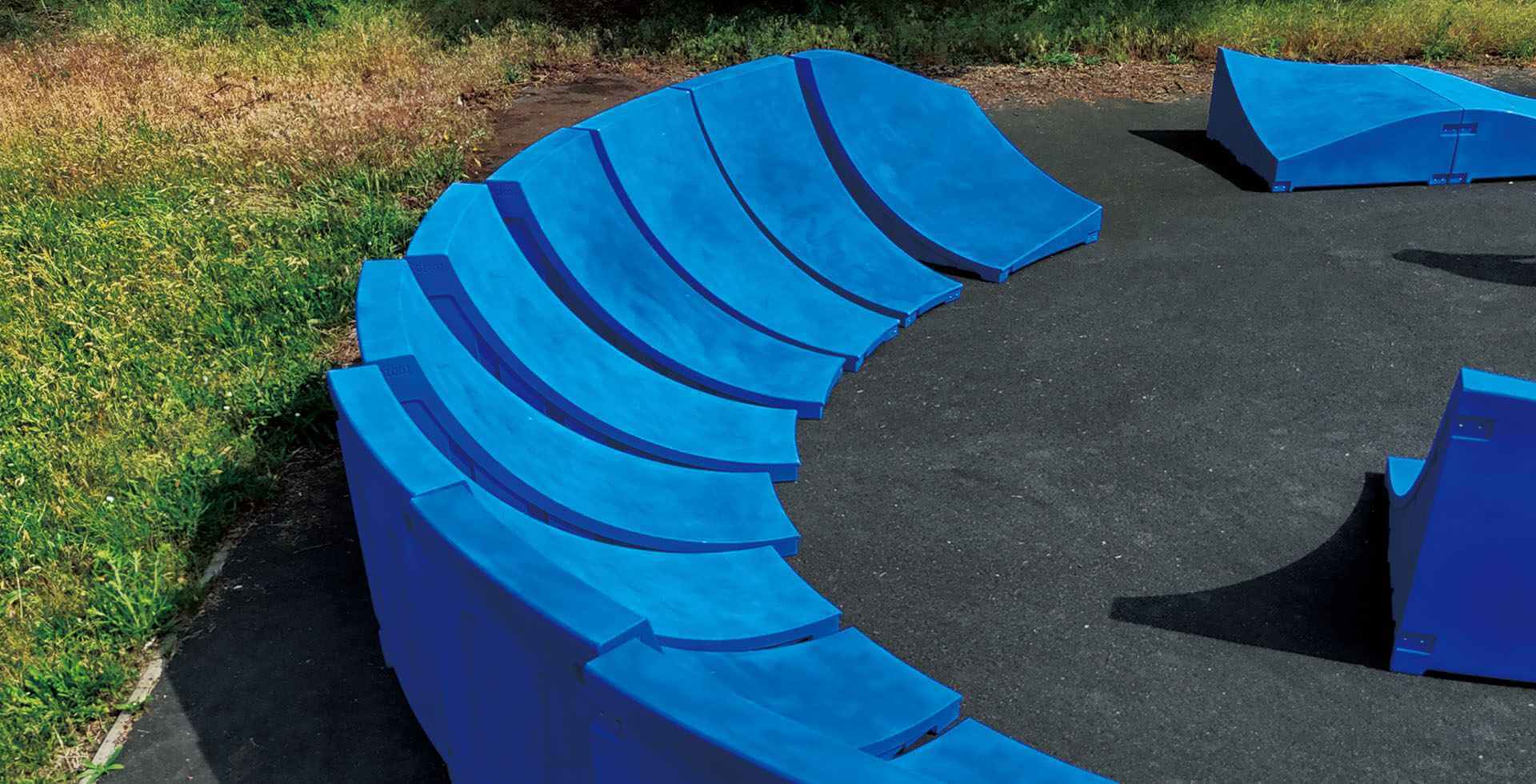
The first big advantage of a modular pump track is speed. In many projects, time is not a small detail. It is the deciding factor.
A traditional asphalt pump track usually needs more preparation on site. That may include grading, forming, drainage planning, surface work, curing time, and coordination with contractors. Even when the plan is clear, the timeline can stretch. Weather can also slow the process.
A modular pump track installation is usually much simpler. The track arrives as prefabricated sections, so the work on site is more about placement, connection, and final checks. This is useful in places where the site must stay open as much as possible, such as:
- schools during semester breaks
- public parks with high daily foot traffic
- campgrounds before peak season
- sports venues preparing for an event
- commercial sites that cannot handle a long construction window
Why Faster Installation Often Means Lower Project Friction
A long build does not only cost time. It can create noise, mess, permit pressure, and public complaints. For smaller municipalities and private operators, that friction matters.
A modular system also makes it easier to test the site early. If a layout needs to work around a tree line, paved edge, fence, or existing skate area, changes are easier before the final setup is locked in.
Greater Layout Flexibility for Real-World Spaces
Many buyers start with an ideal drawing and end up with a very different piece of land. The site may be narrow. It may have awkward corners. It may sit next to a parking lot, a skatepark, or a school building. This is where a modular pump track often pulls ahead.
Instead of forcing the land to fit the track, a modular pump track can often be adjusted to fit the land. A custom pump track layout is easier to build when the system is based on connected modules rather than a fully fixed asphalt form.
Better for Tight, Irregular, or Multi-Use Sites
This matters in projects such as:
- a schoolyard with limited open space between buildings
- a community park adding a pump track beside a playground
- a campground using an underused paved zone
- a skatepark wanting a linked riding feature nearby
- a developer adding active recreation to a small common area
For these cases, a flexible pump track layout can be more practical than a one-shot permanent build. The track can start compact, leave room for circulation, and expand later if demand grows.
Lower Maintenance Burden Over Time
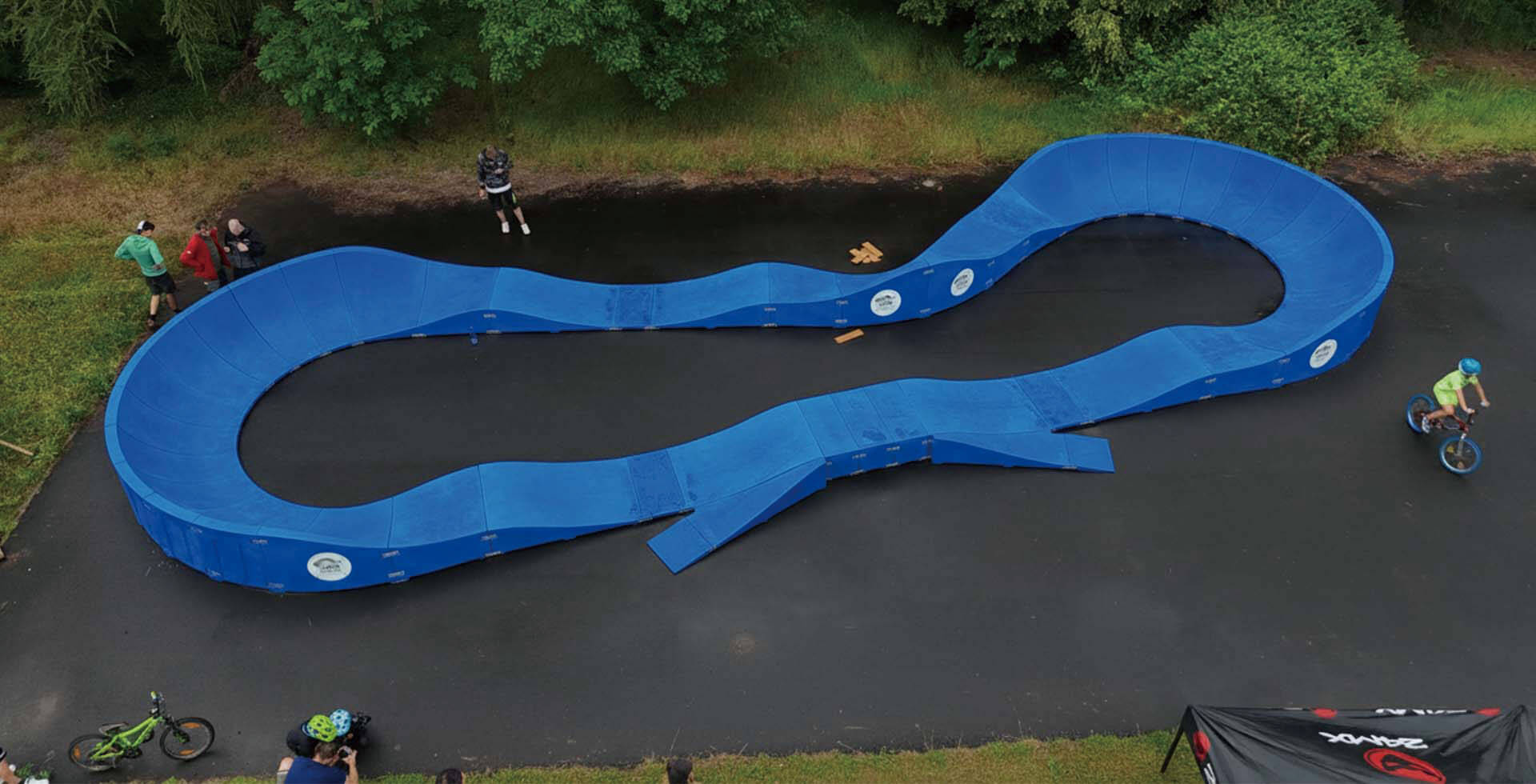
Initial cost gets attention, but long-term pump track cost is where many owners feel the difference.
An asphalt pump track is durable. That is true, and it should be said clearly. For fully permanent municipal builds, that durability is one reason asphalt remains popular. But maintenance is not just about whether a surface lasts. It is also about how easy it is to deal with wear, site changes, or local damage when they happen.
A modular pump track maintenance plan is often simpler because work can be more targeted. If a section needs replacement or adjustment, the operator is not dealing with a full reconstruction process. That reduces downtime and site disruption.
Surface Grip Matters Too
There is also a common misconception about surface feel. A pump track surface should not be described as smooth in the sense of slick or glossy. For real riding use, grip matters. A well-made modular pump track surface is anti-slip, textured, and built to support control. That is especially important for kids, beginners, scooters, BMX bikes, and mixed-use riding.
This point matters in buyer conversations because safety is often judged by feel under wheels, not by appearance in a catalog photo.
Portability Changes the Business Case
One of the strongest arguments for a portable pump track is simple: not every project is ready for a permanent decision on day one.
A city may want to test public demand first. A school may need a track that can move with a campus plan. An event operator may want a temporary pump track solution for seasonal use, promotions, or sports festivals. Asphalt does not offer much room here. Once built, it stays put.
A relocatable pump track changes that equation. It gives buyers options.
Where Portability Has Real Value
| Use case | Why modular helps |
| School program | Can fit phased campus upgrades |
| Event activation | Easy to deploy for limited-time use |
| Resort or campground | Can support seasonal traffic patterns |
| Pilot project | Lets operators test usage before larger investment |
| Site redevelopment | Track can move if the land use changes |
This flexibility also helps dealers, rental operators, and project partners who need a pump track for events or promotional work.
Easier to Expand as Budget and Demand Grow
A lot of recreation projects do not begin with the full dream budget. They begin with a workable first phase.
That is where an expandable pump track system makes practical sense. Instead of waiting years for a full permanent build, a site can start with a smaller layout and add sections later. This phased pump track investment model is especially useful for schools, community groups, private leisure sites, and growing parks.
Expansion Works Best When Usage Is Uncertain
In many new locations, demand is hard to predict. Will the local riders use it every day? Will families show up on weekends? Will scooters dominate? Will the track pull traffic from nearby towns?
A scalable pump track gives operators a way to answer those questions with less risk. If the response is strong, the layout can grow. If the first phase is enough, the owner has not overbuilt the site.
A Better Fit for Schools, Parks, and Community Projects
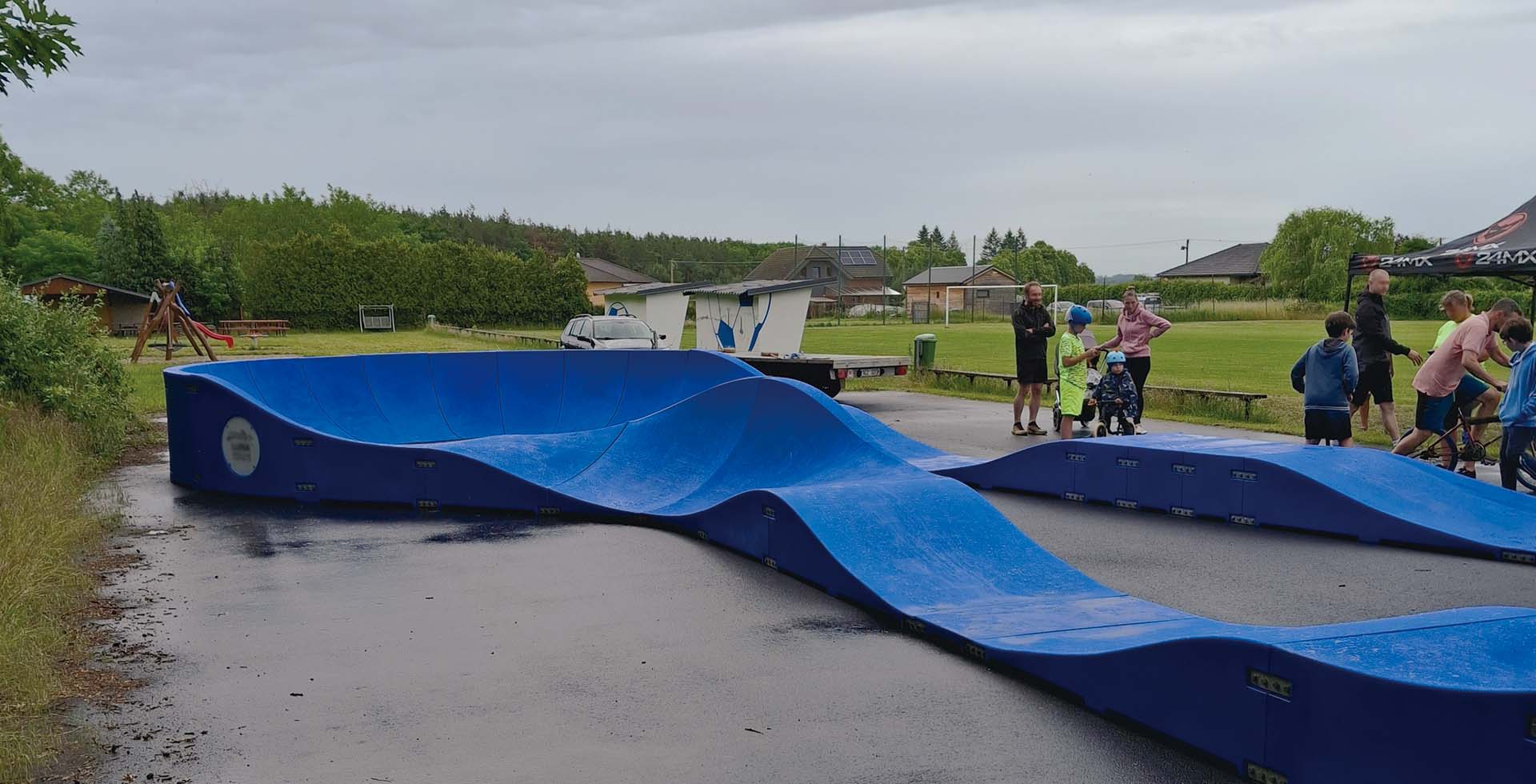
The strongest modular pump track projects are often not extreme-sport projects at all. They are community recreation projects.
A modular pump track for schools can support balance, coordination, outdoor activity, and mixed-age use. In parks, it can turn an overlooked corner into a high-traffic feature. In campgrounds and family resorts, it gives children and teens an activity that keeps pulling them back without the staffing needs of a programmed attraction.
Why These Settings Often Prefer Modular
For schools and parks, the winning features are usually:
- quick installation
- anti-slip riding surface
- easy fit in existing space
- lower upkeep pressure
- broad appeal across bikes, scooters, skateboards, and inline skates
- ability to expand later
That mix is hard to ignore. A modular pump track for parks or schoolyards is often easier to approve because it solves more than one problem at once: activity, visibility, flexibility, and budget control.
ULTRAPUMPTRACK as a Modular Pump Track Supplier
For buyers comparing suppliers, experience across different project types matters just as much as the track itself. ULTRAPUMPTRACK presents itself as a modular pump track supplier with roots in earlier dirt and asphalt track building, which gives useful context for its current focus on modular systems. That background matters because it shows the shift was not based on trend alone, but on practical limits seen in older materials and construction methods.
The company positions its modular pump tracks for schools, parks, community spaces, campgrounds, skatepark additions, and dealer channels. Across its site, the brand emphasizes flexible layouts, quick assembly, anti-slip surface performance, and use across multiple wheeled sports. Its case content also points to use in sport parks, RV parks, skatepark support, and distributor projects, which helps buyers see modular pump tracks as a workable solution in more than one setting.
Conclusion
When the question is modular pump track vs asphalt pump track, the answer depends on the project. Asphalt still fits some public builds well. But for many buyers today, the advantages of modular pump track are hard to overlook.
It installs faster. It causes less disruption on site. It adapts better to tight or unusual spaces. It offers a low maintenance pump track option with easier updates. It can move, expand, and support phased investment. For schools, parks, community sites, campgrounds, and pilot projects, that combination is often the smarter path.
If a project needs flexibility as much as durability, a modular pump track is often the better choice.
FAQs
Is a modular pump track better than an asphalt pump track?
For many projects, yes. A modular pump track is often better when fast installation, flexible layout, portability, and phased budget planning matter. An asphalt pump track may still suit fully permanent municipal builds with a fixed long-term site plan.
How long does modular pump track installation take?
The exact time depends on site condition, track size, and access. In general, modular pump track installation is much faster than asphalt construction because the track arrives in prefabricated sections and needs less on-site work.
Is a modular pump track surface slippery?
No. A proper modular pump track surface should be anti-slip, not slick. That grip is important for control, especially for children, beginners, scooters, BMX riders, and shared-use settings.
Can a modular pump track be expanded later?
Yes. One of the main benefits of an expandable pump track system is that it can start with a smaller layout and grow over time. That makes it useful for parks, schools, and community projects with staged budgets.
What is the best pump track for schools and parks?
In many cases, the best pump track for schools and parks is a modular pump track because it is easier to install, easier to scale, and easier to fit into existing spaces. It also works well for mixed-age and mixed-equipment use.


