

Selling Modular Pump Tracks as a Distributor: Demo Units, Pop-Up Events and What a Three-Day Trial Proves
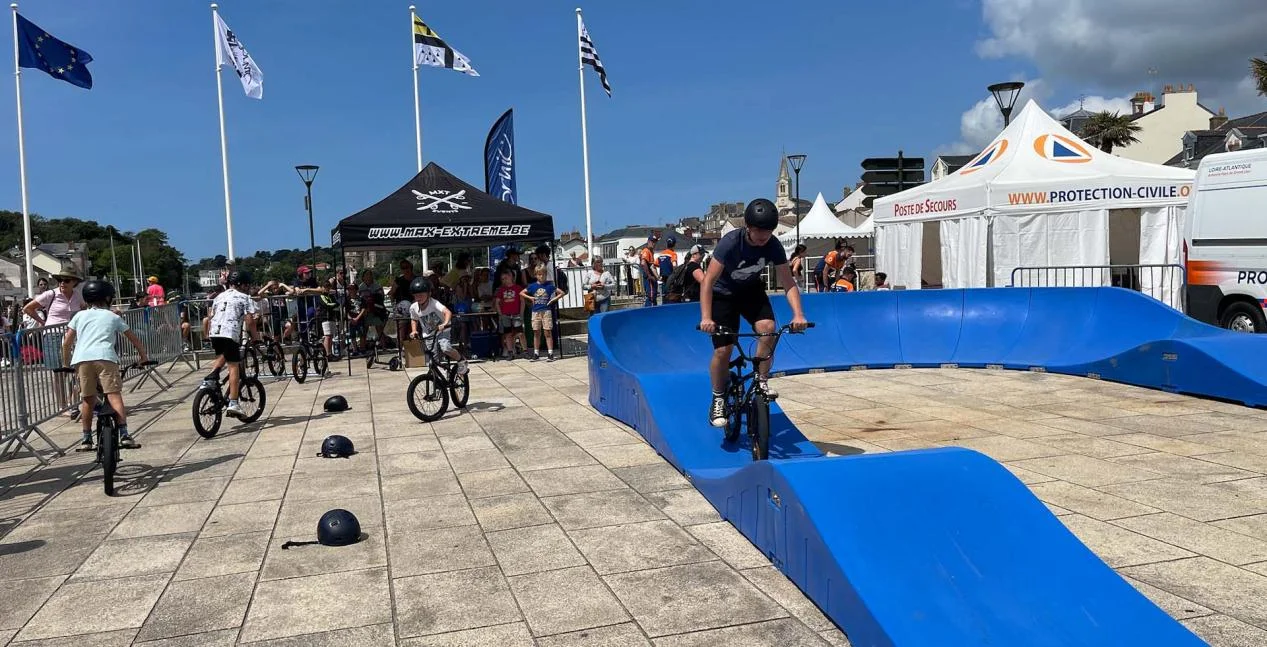
No park operator signs a purchase order because a catalogue looked good. What moves pump track orders is a demo unit that goes up fast, a three-day event with real riders on it, and a clean record of what happened. The numbers from one downtown trial — a single truck of freight, under two hours of assembly, more than 300 riders across three days — settle doubts that no brochure can touch. This page walks through how a demo programme gets built, what a pop-up actually involves, and where the order sits inside all of it.
What a Demo Unit Should Be
img.Modular pump track modules strapped on a flatbed trailer for transport.webp
Start Smaller Than the Final Track
A demo doesn’t need to match the track a client will eventually buy. It needs to ride well and fit somewhere plausible, which usually means the smallest workable layout rather than a full circuit. Modular systems help here, since a handful of base modules recombine into a surprising number of layouts, and a distributor can grow the demo later instead of replacing it. For a sense of what small footprints look like, the comparison between the Stellar, Nova Trek and Speed Dome plaza layouts is a useful reference when picking the demo configuration.
There’s a second reason to keep the demo compact. Small layouts travel in one vehicle. That single fact shapes everything else — the cost of the event, the permits needed, how often the unit can move.
One Truck, Two Hours, Any Plaza
The connection design on a modular system matters more to a distributor than to anyone else. Basic tools and a couple of people are enough, and a complete small track assembles in under two hours. During a downtown demo in Denver, every component fit into one truck, the build finished well inside that window, and the unit moved to a new location twice a day to follow foot traffic. Try that schedule with anything that needs a crane.
Running a Three-Day Pop-Up That Earns Its Keep
img.Pop-up pump track set up on a lakeside grass field at sunset.webp
Picking the Spot and Getting Permission
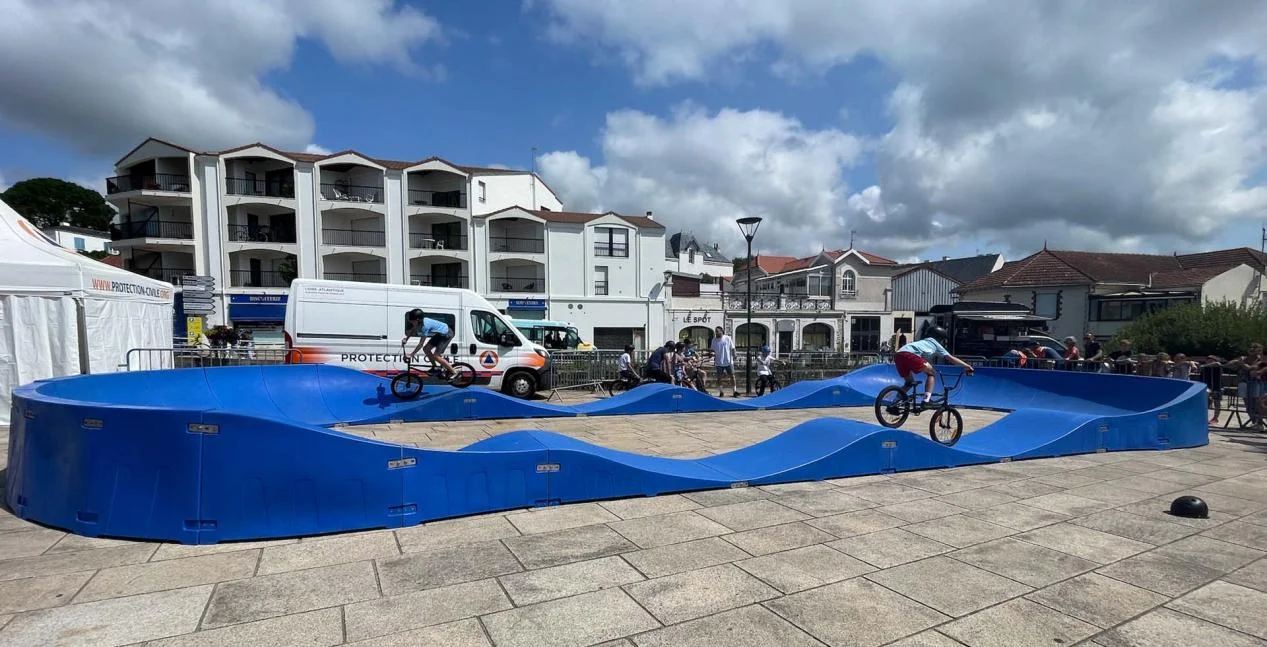
A plaza demo lives or dies on two decisions, and permission is the boring one that kills events. Cities usually want an application for anything placed on public ground, plus a note on public liability, so the paperwork starts weeks before the truck rolls. Ground comes second. Flat, hard surface keeps the modules true and the riding predictable, which is why paved plazas and parking areas work so well for pop-ups. Grass can host a track, but it belongs to the permanent-site conversation, not a three-day trial.
What the Denver Trial Actually Did
The three-day format has a shape to it now, and the Denver run shows the pattern:
| ステージ | What happened at the downtown demo | Why it mattered |
| 貨物 | Every component fit into one truck | One vehicle, one driver, one permit |
| Build | Under two hours with basic tools | Riding started the same morning |
| Rotation | Site changed twice a day | The unit followed foot traffic instead of waiting for it |
| Result | Over 300 riders in three days | Evidence for every sales call that followed |
One detail from that event gets forgotten too often. Parents kept asking where the track could be bought. Demand talks loudest when it walks up to the stand on its own.
Not every demo ends in a city square. A professional BMX rider in Antwerp bought a system for his skatepark business and runs it as a rental plus an event asset; a French client booked it, he loaded it on a trailer, and by dusk the track was standing in France waiting for riders. Same unit, second income. Rental between events changes the maths on owning a demo at all, and the rental business breakdown covers that side in numbers.
Turning Rider Numbers Into Orders
What to Record on Site
img.Young riders queuing for their turn on a demo pump track at a plaza event.webp
Rider counts make good headlines and poor sales arguments on their own. The useful record sits one level deeper. Who rode — kids, teens, adults, whole families. Which organisations stopped by: schools, sports clubs, the local council’s parks officer. What ground each candidate site has, photographed. And a contact name for every conversation that lasted more than a minute, because memory lies a week later.
Photographs earn their place in the file as well. A shot of a packed track in a ordinary plaza answers the “will it look out of place” question before it gets asked. The same images feed straight into event marketing material later, so nothing gets shot twice.
The Follow-Up Week
Interest cools fast, so the follow-up starts within days of the truck coming home. Every contact gets the rider numbers, the photos and a layout proposal matched to the site they mentioned. A first quote at this stage carries the standard commercial shape: production runs seven to ten days from deposit, payment splits fifty-fifty by T/T, and freight goes either to the nearest port or door to door depending on what the buyer prefers. Quotes that arrive while the memory of the event is still fresh convert at a different rate than quotes that arrive a month late. Ask anyone who has tried both.
Stock, Spares and Season Two
A demo unit works hard, and spares deserve a line in the budget from day one. Modules take knocks during transport, connectors go missing, and a damaged section in the middle of event season means a rental cancellation unless a spare sits on the shelf. Some distributors keep the demo inventory deliberately overlapping with their spare pool — same modules, dual use — though that trade-off limits how many events can run at once.
Season two is where the demo pays for itself a second time. The track still assembles in hours, still fits one truck, and now carries a season of proof. Weather tolerance helps repeat bookings too; the same system design ran through a Middle East park installation at 50-degree heat with more than 300 riders a week, so a hot summer event is not a special case.
ULTRAPUMPTRACK, the maker behind the system, grew out of a downhill club in 2012 and spent its early years building dirt and asphalt tracks before turning to modular plastic. The third-generation ULTRA system went to international markets in 2025, backed by utility model and appearance patents. Distributors evaluating the brand can read the 会社概要 or go straight to the dealer page.
FAQ
Choosing a demo configuration is easier with the candidate sites in hand first, since the layout should match the ground those sites offer. Send the region, the city sizes and the type of venues on the list, and contact the ULTRAPUMPTRACK team for a layout matched to them — a demo picked for real sites sells faster than one picked from a catalogue.
How much space does a demo unit need?
Less than most buyers expect, because the demo serves a different job than a permanent track. The smallest plaza layouts run in compact footprints, and the exact figure comes from the layout drawing rather than a rule of thumb. Match the demo to the venues on the target list and the space question answers itself.
Can a demo unit earn money between sales events?
It can, and the Antwerp case shows the pattern. The same system that demos for customers rents out for private events, festival activations and promotions, which turns a sales asset into a second revenue line. The rental numbers work best where event demand is seasonal and the unit would otherwise sit still.
What should the first quote after a trial include?
The layout version agreed with the client, the module count behind it, the freight arrangement — port collection or door to door — and the commercial terms: seven to ten days of production from deposit, and payment split fifty-fifty by T/T. A quote that mirrors what the client saw at the trial closes the loop between riding the track and buying it.

