

Straight Pump Track vs Loop Pump Track for Community Use
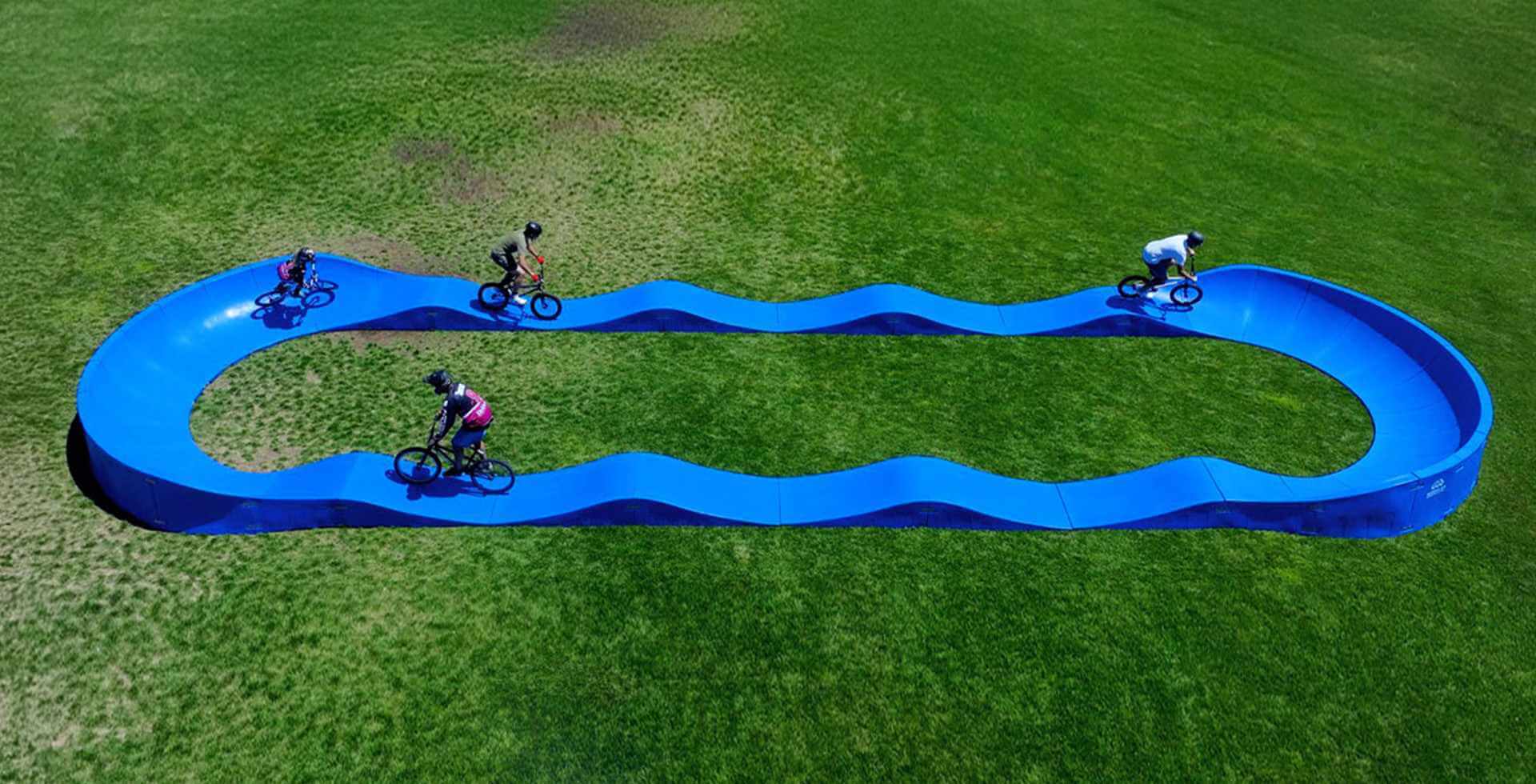
For most open-access community parks, a loop pump track is the stronger choice when the site has enough width because it supports continuous laps and a clear direction of travel. A straight pump track fits narrow land and works well for coached sessions, timed runs and temporary events. The right decision comes from rider flow, supervision, site shape and the return route.
Quick Verdict
Choose a loop pump track when the community needs continuous laps, mixed-age recreation and an easy-to-read direction of travel. Choose a straight pump track when the site is narrow, sessions are coached or timed, or the facility must support demonstrations and temporary events. Neither layout is automatically safer or cheaper; geometry, user management, base work and site access decide the outcome.
The first question is not “which shape looks better?” It is what people will do during the busiest hour. A loop keeps riders moving around a circuit. A straight track creates a start, a run and a finish, so users return outside the riding line or wait for another turn.
How a Straight Pump Track Works
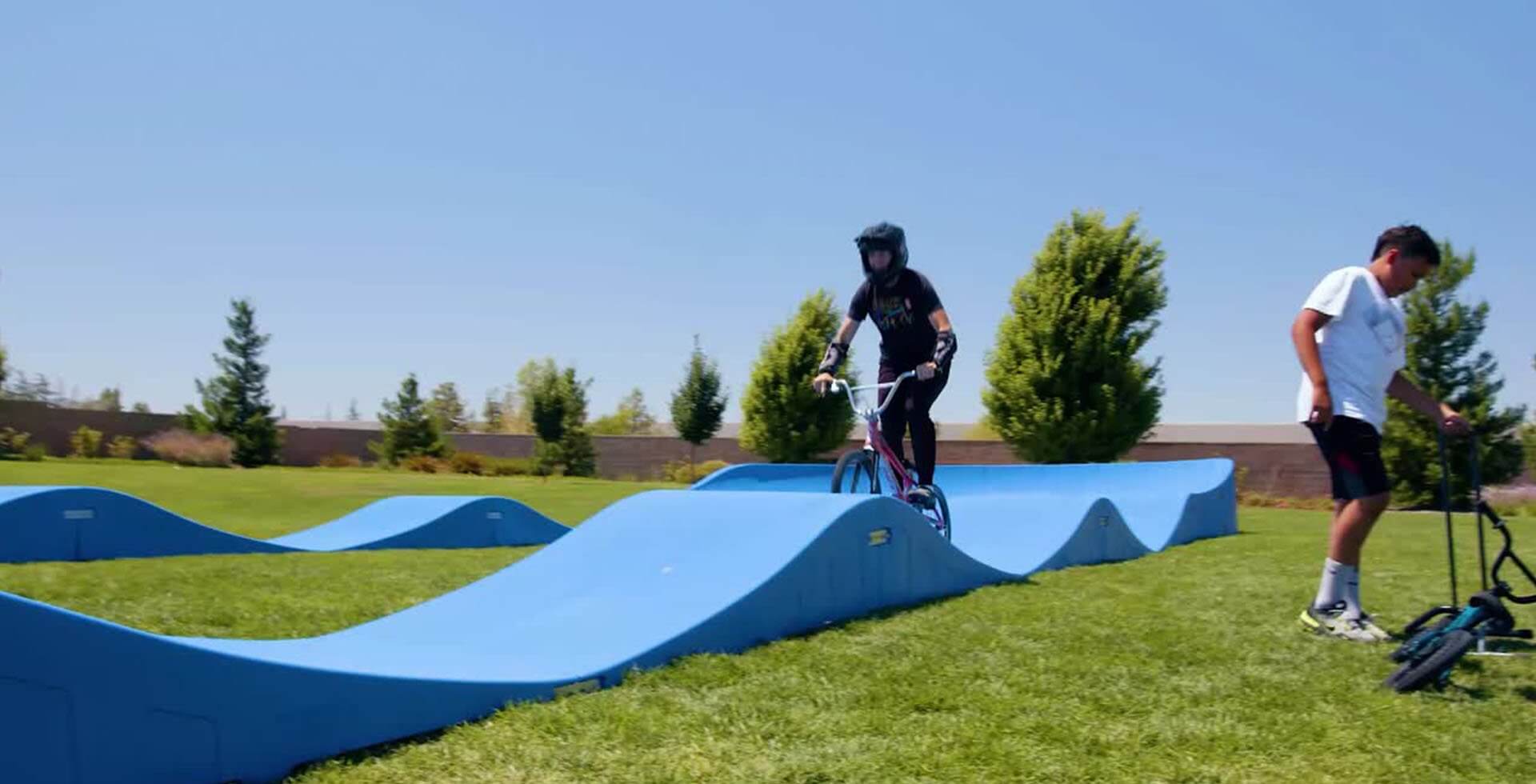
A straight pump track places rollers and transitions along one main direction. It can fit beside a path, along a school boundary or in a long strip of parkland that cannot accept a loop. It also suits coached sessions because an instructor can release riders one by one and observe the full run.
The return route must be designed, not improvised. Riders who finish need a separate way back to the queue. If they walk or ride against the main direction, conflicts appear quickly. Provide enough room at both ends for waiting, stopping and turning equipment around.
How a Loop Pump Track Works
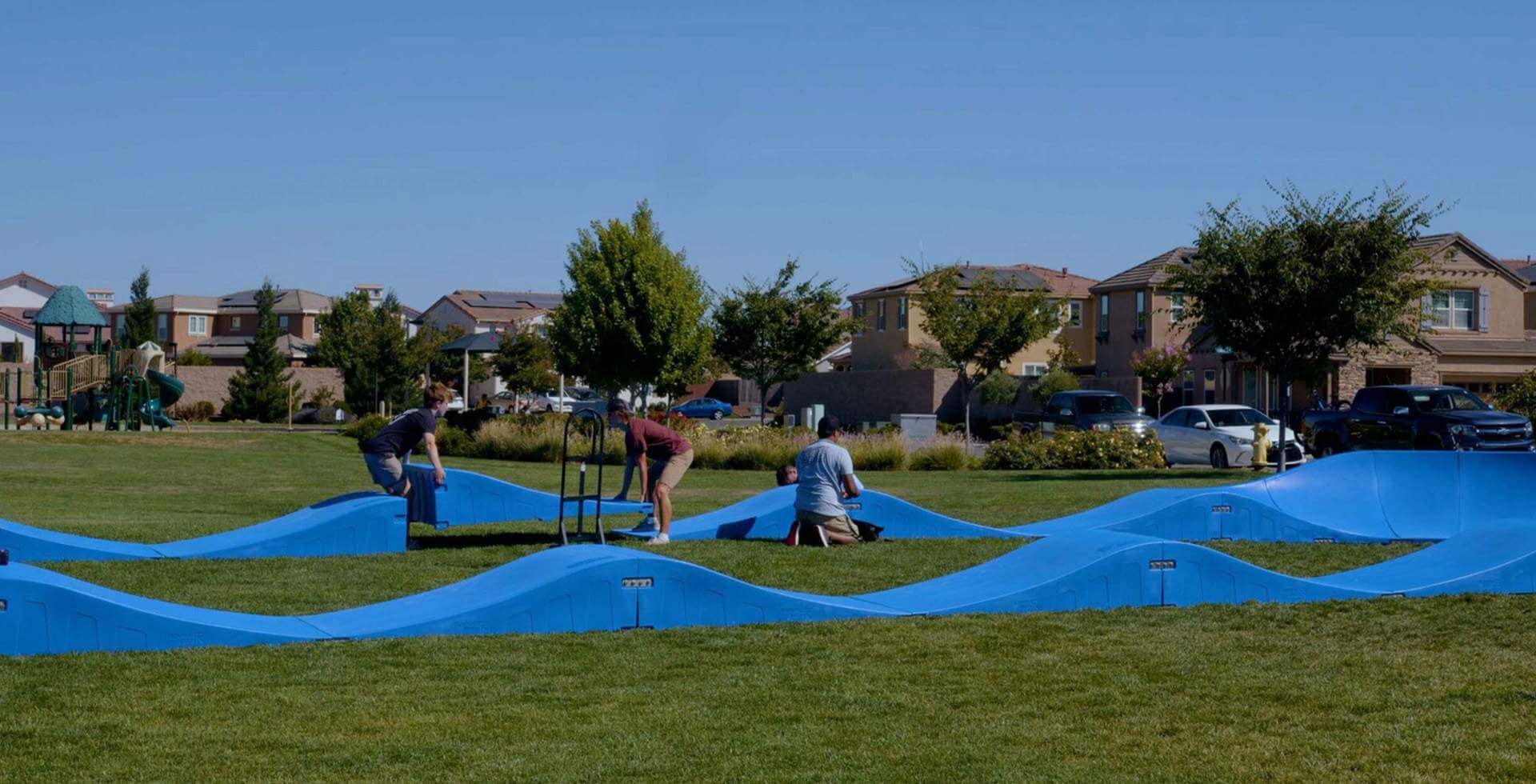
A loop connects the riding line into a continuous circuit. Riders can build rhythm over several laps, and the direction is easy to show with signs and entry markings. For an unscheduled public park, that continuous experience often makes a loop the more intuitive community option.
Loops need more width than a comparable straight run and can place several parts of the track near paths or neighbours. Sightlines across berms also matter. Parents and staff should be able to see entrances, exits and likely stopping points from the viewing area.
Compare Community Use and Rider Flow
A loop supports repeat riding without leaving the circuit after every run. That can create good flow, but faster riders may catch beginners. Operating rules, entry spacing and occasional beginner sessions can reduce pressure. A straight track naturally separates each run, which is useful for lessons but may create a visible queue.
Estimate use by scenario rather than a fixed rider number. Consider an ordinary afternoon, a school booking and a community event. Draw waiting users and spectators on the plan. A layout that works with five riders can feel very different when twenty people arrive with bikes and guardians.
Fit the Layout to the Available Site
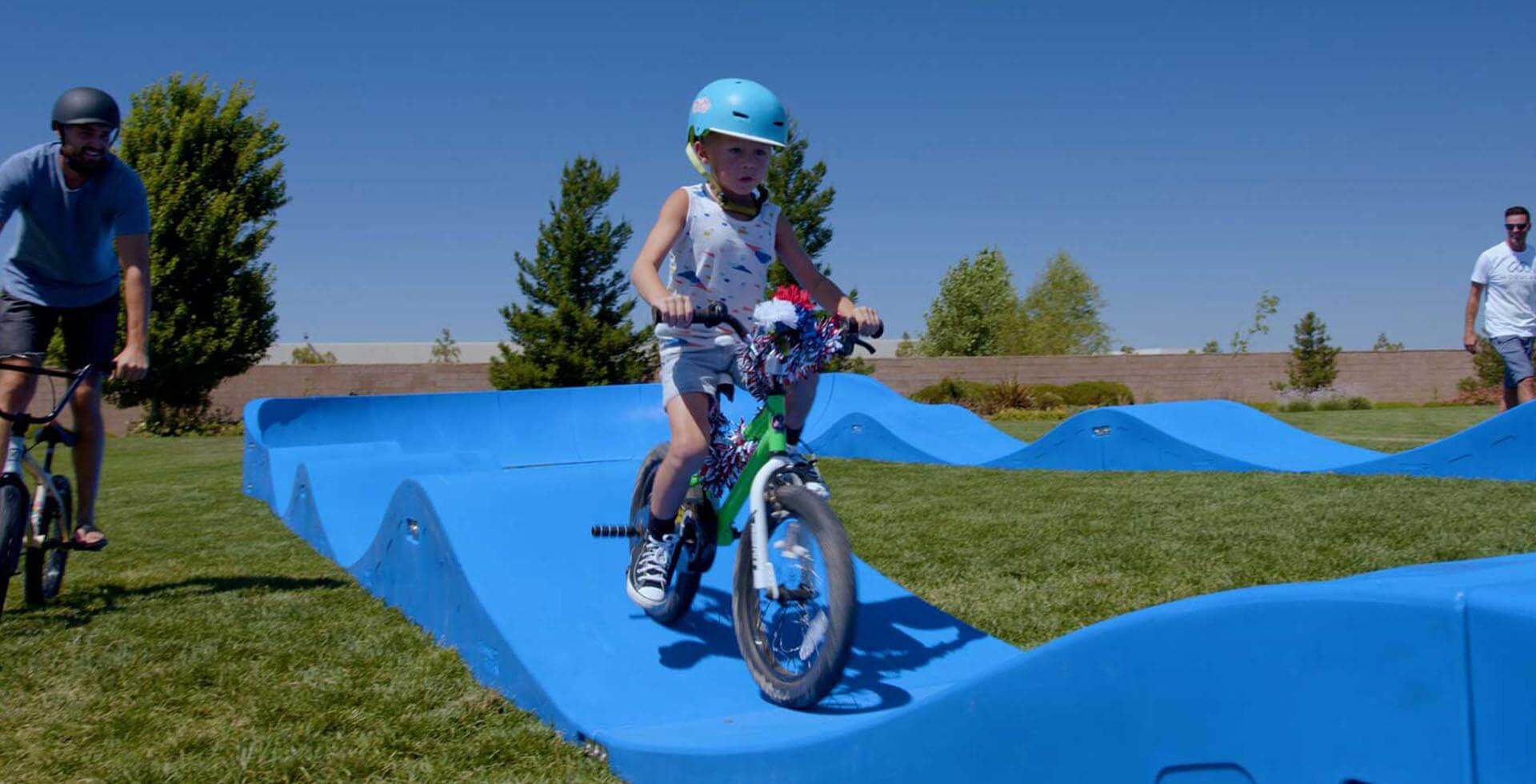
A long narrow parcel points toward a straight track. A wider central area may support a loop with seating and paths outside it. Remove drainage routes, utilities, trees, setbacks and emergency access before judging the usable footprint. Gross park area is not riding area.
Slope and water can change the choice. A straight track running with the grade may simplify some earthwork but send water toward one end. A loop crosses several directions and needs positive drainage around low points. Site design should follow measured levels.
Consider Supervision and Neighbour Relations
Straight tracks make starts easy to control during classes and events. Loops allow independent laps but require supervisors to watch merging and overtaking behaviour. Place seating where adults can observe without crossing a return path or standing at the end of a run.
For nearby homes, review distance, existing barriers, opening hours and how people arrive. Noise and parking concerns relate to the whole facility, not only the track shape. Consultation should use a real site plan and proposed operating hours rather than generic assurances.
Compare Cost and Future Expansion
The number of modules, base area, drainage, delivery and installation scope influence cost more than the words straight or loop. A compact loop may use fewer elements than a long straight track with generous start and finish zones. Request itemised proposals based on the same site information.
Modular systems can support later changes if connections and spare land are planned from the start. A straight phase may later connect to a return line. A loop may gain an additional section or skills zone. Future options should appear on the initial plan so paths and utilities do not block them.
Make the Final Community Decision
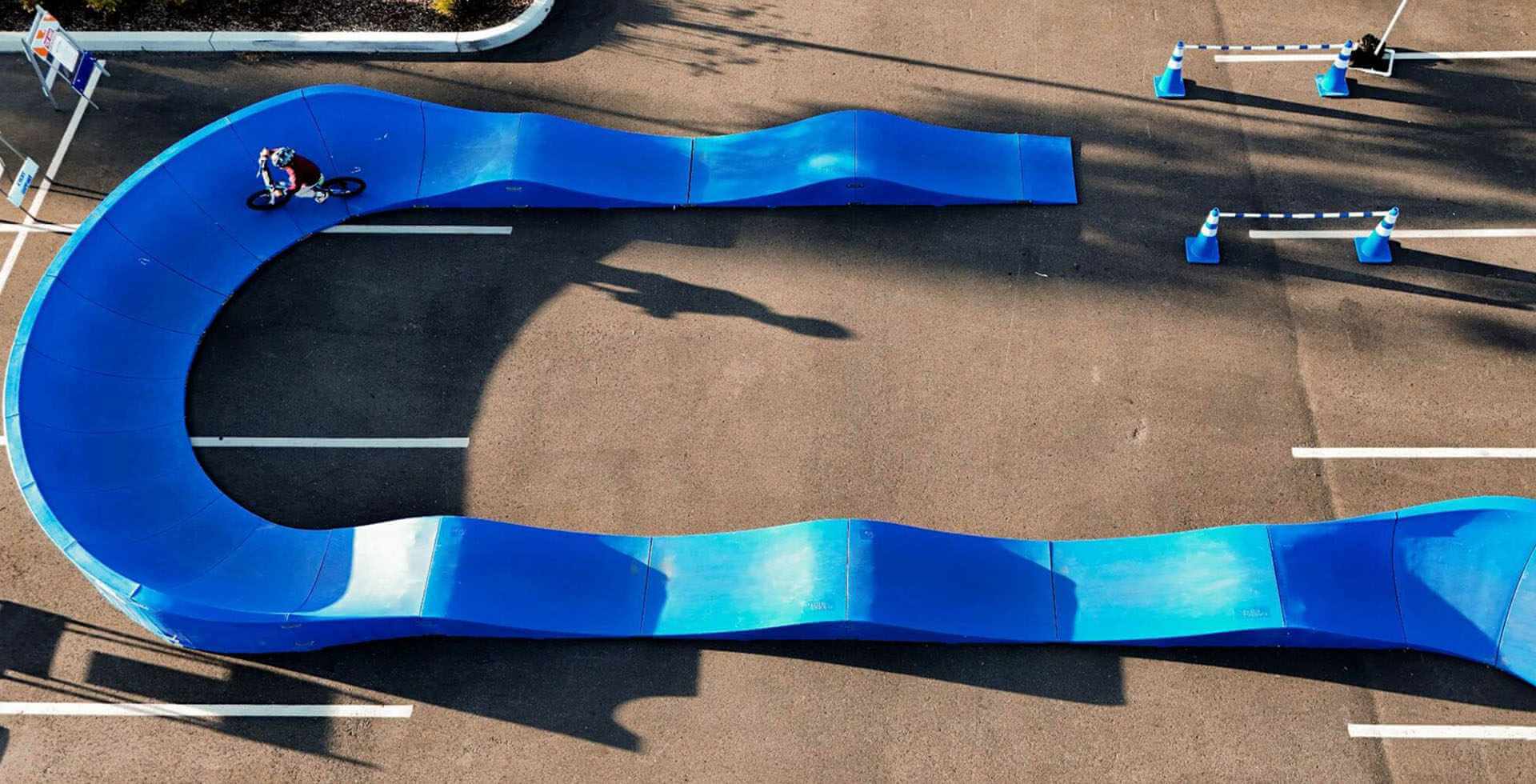
Score each layout against the project brief: target users, peak use, site fit, supervision, drainage, neighbour impact, events, budget and expansion. Weight the criteria before reviewing supplier drawings. This keeps an attractive rendering from overriding a serious operating problem.
For a typical open-access community park with enough width, a loop is often the stronger starting point. For a narrow site, coached programme or travelling activation, a straight track can be the better tool. The final answer should be visible in the operating scenario and measured plan.
| Decision factor | Straight pump track | Loop pump track |
| Site shape | Long and narrow | Wider compact area |
| Rider pattern | One run then return | Continuous laps |
| Supervision | Controlled starts | Entry and lap management |
| Events | Timed runs and demonstrations | Open sessions and repeated riding |
| Expansion | Add length or return line | Add loop sections or skills zone |
Planning Checklist
- Define the primary users and busiest operating scenario.
- Measure usable land after drainage, access and setbacks.
- Draw queues, return routes, spectators and emergency access.
- Compare proposals using the same base and scope assumptions.
- Check sightlines, neighbour conditions and opening hours.
- Reserve space and connections for a future phase.
ULTRAPUMPTRACKについて
ULTRAPUMPTRACK supplies LLDPE modular pump track systems for public spaces, schools, holiday parks, events and residential settings. Layouts can be configured, relocated or expanded where the site and chosen components allow. Buyers should compare measured drawings, base and drainage assumptions, delivery scope, inspection guidance and warranty terms before selecting a straight or loop configuration.
Discuss a measured site brief with the ULTRAPUMPTRACK project team.
結論
A loop is usually the clearest choice for everyday community riding when space permits. A straight track earns its place on narrow sites and in controlled programmes. Test both against real peak use, include the space outside the riding surface and price the same project scope. That produces a decision the community can use and the operator can manage.
よくある質問
Is a loop pump track better for beginners?
A well-designed loop can be intuitive, but beginners still need suitable geometry, spacing and supervision. A straight track may work well for coached first sessions.
Does a straight pump track need a return path?
Yes. Users need a safe route from the finish back to the start that stays outside the active riding line.
Which pump track layout uses less space?
It depends on site shape, clearances and feature length. Straight tracks suit narrow land; compact loops can use wider sites efficiently.
Can a straight modular pump track become a loop later?
It may be possible when compatible connections, drainage, base work and enough land are planned in the first phase.


