

Pump Track Safety Rules: A Practical Guide for Every Rider
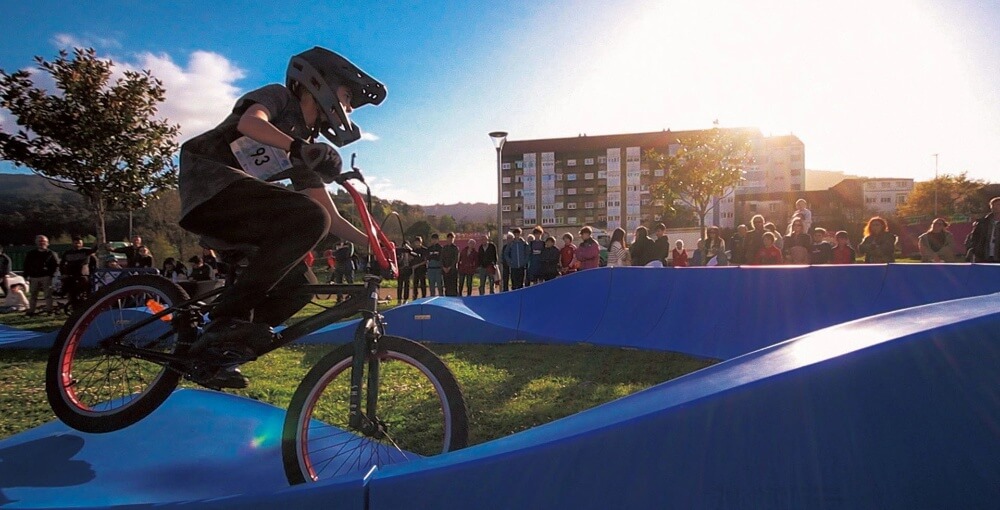
Pump tracks look simple: a loop of rollers and berms where riders build speed by “pumping” instead of pedaling. But the same features that make a pump track fun also create predictable crash patterns—front wheels washing on dusty turns, beginners stopping in the riding line, and collisions caused by unclear right-of-way.
This guide turns the most common pump track incidents into clear safety rules for riders, parents, schools, and park operators. It is written for real mixed-use tracks where bikes, scooters, skateboards, and inline skates share the same space. One important note up front: many modern pump track surfaces are textured and anti-slip, not glossy-smooth. Grip is high when the surface is clean, but safety still depends on traffic flow, spacing, and smart progression.
What Makes a Pump Track “Safe” in Real Life
A pump track is designed so speed comes from body movement: push into transitions, stay light over crests, and keep eyes scanning ahead. That riding style creates two safety truths.
First, riders need room. Most wipeouts happen when someone changes speed or direction unexpectedly. Second, everyone needs the same “rules of the road.” If half the riders yield and half expect to be yielded to, the track becomes unpredictable.
Many of the best-ranked pump track safety resources repeat the same fundamentals: protective gear, one direction of travel, clear signage, and staying off the riding surface as a pedestrian.
Core Pump Track Safety Rules That Prevent Most Crashes
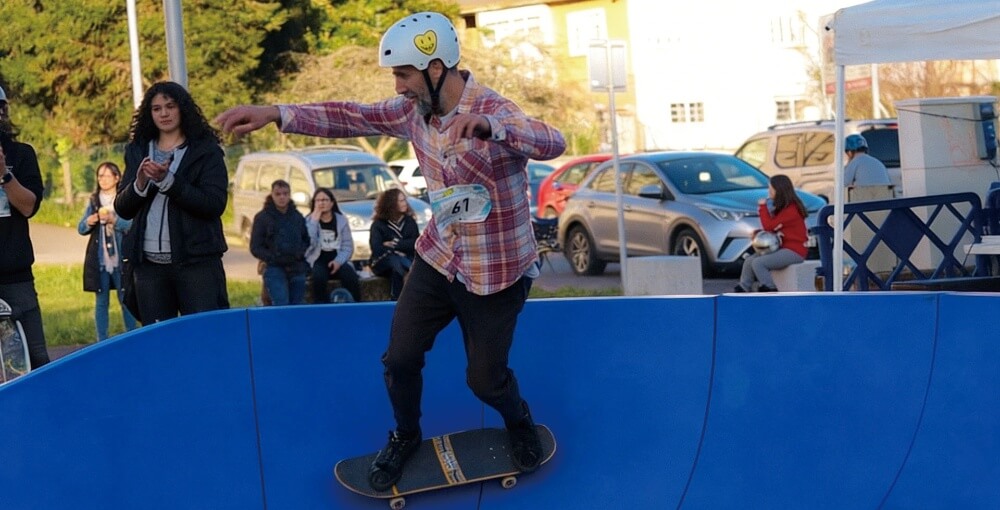
Before getting into gear and technique, these rules handle the biggest risks: collisions and sudden stops.
Ride One Direction, Every Lap
A pump track works like a roundabout. If riders go opposite directions, even at low speed, the closing speed becomes dangerous. Follow posted direction. If no signage exists, follow the dominant flow already being used and do not “test” the opposite direction during busy hours.
Yield to Riders Already Moving
The safest right-of-way rule is simple: the rider already on the track keeps their line; the person entering waits for a clean gap. This matters even more for scooters and skateboards, where starting speed can be slower.
No Stopping on the Riding Line
Stopping on a roller, in a berm, or right after an exit is the fastest way to cause a pile-up. If a break is needed, roll to a flat staging area away from the track edge.
Pedestrians and Spectators Stay Off the Track
Pump tracks are not walking paths. A person stepping onto the surface “just to watch” creates a hazard that riders cannot avoid mid-berm. Parks that publish safety reminders consistently emphasize keeping the surface clear.
The Anti-Slip Surface Myth: Why “Grippy” Still Needs Rules
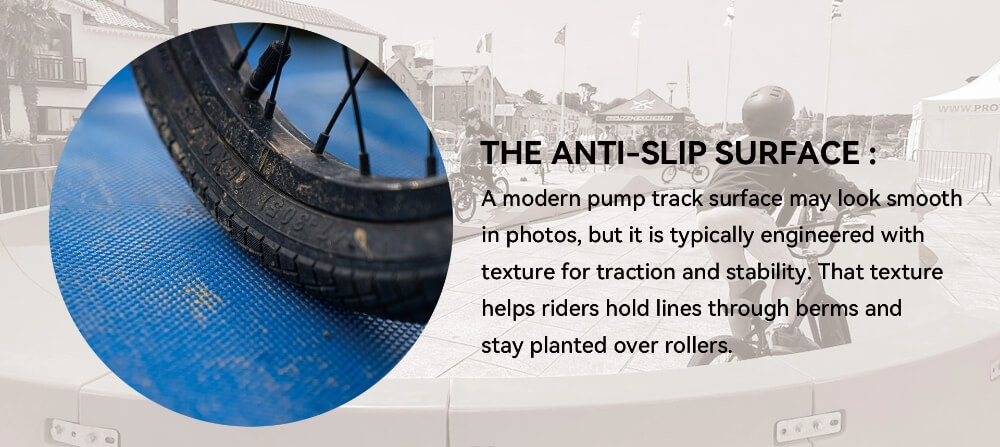
A modern pump track surface may look smooth in photos, but it is typically engineered with texture for traction and stability. That texture helps riders hold lines through berms and stay planted over rollers. Still, even an anti-slip surface becomes less predictable when:
Dust or fine sand builds up in turns.
Wet leaves collect in low points.
Algae grows in shaded areas after long moisture cycles.
Small gravel gets tracked onto the surface from shoes or tires.
Treat surface grip as “high when clean,” not as a guarantee. On any track, a two-minute inspection before riding reduces slips and sudden front-wheel washouts.
Protective Gear That Matches Real Pump Track Falls
Falls on pump tracks are usually forward and lateral: hands out, knees down, hips sliding, sometimes a shoulder hit when a berm exit is missed. That makes helmets non-negotiable and makes pads a strong default for kids and new riders. Pediatric injury-prevention guidance for skate and scooter sports consistently recommends helmets and joint protection.
The table below summarizes practical gear choices by rider type and session style.
| Rider / Session | Minimum Gear | Strongly Recommended | Why It Matters on a Pump Track |
|---|---|---|---|
| Kids learning (bikes/scooters) | Helmet | Knee pads, elbow pads, gloves | Low-speed tip-overs still hit knees/hands |
| Skateboard / inline sessions | Helmet | Wrist guards, knee pads | Wrist injuries are common in forward falls |
| Busy public hours | Helmet | Pads, bright clothing | Higher collision risk, lower reaction time |
| Wet or shoulder-season riding | Helmet | Pads, shoes with good tread | Debris + moisture changes traction quickly |
Pump Track Etiquette for Mixed Wheels
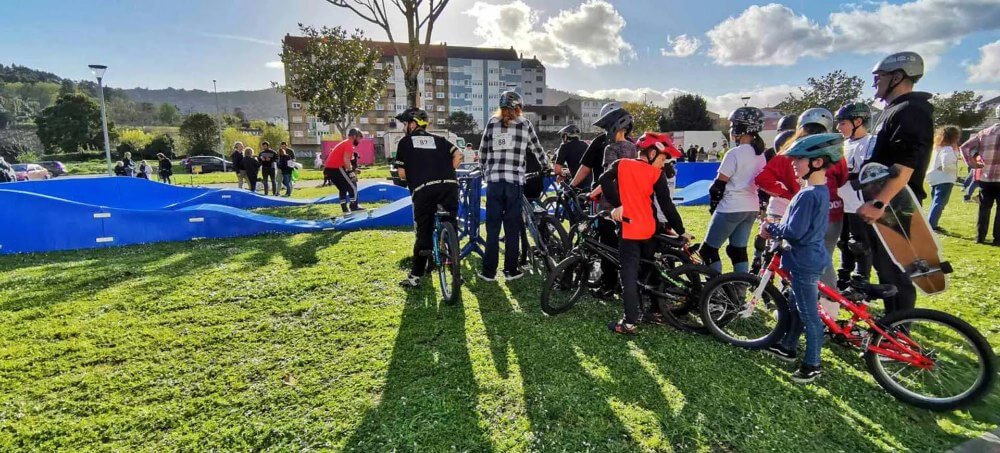
In many communities, the track is shared by BMX riders, mountain bikes, balance bikes, scooters, and skateboards. Mixed use is a feature, not a problem—if etiquette is consistent.
Passing Rules That Actually Work
Passing should be rare on a small loop. If it happens, the faster rider passes only on a straight, only with clear space, and never by cutting inside a berm. If the track is crowded, treat it like a single-lane flow and wait.
Group Sessions Need Spacing, Not Speed
The safest spacing cue is time-based: maintain at least a two-to-three-second gap. That buffer covers sudden wobbles, missed pumps, or a rider bailing out.
Coaching Kids Without Creating Hazards
Parents and coaches should stand off the riding surface and give cues at exits or staging zones. Calling instructions from trackside often pulls attention away from the line and causes sudden braking.
Weather, Lighting, and “Go/No-Go” Checks
Most pump track injuries rise when people ride in conditions they would avoid on a trail: poor lighting, wet debris, or damaged sections. Industry risk-management guidance stresses signage and hazard awareness, especially when the facility is open to the public without supervision.
A simple go/no-go check before riding:
Is the surface clear of loose debris?
Is the track fully open with no blocked sections?
Is visibility good enough to see two features ahead?
Is anyone using the track in a way that breaks direction-of-travel?
If any answer is “no,” wait, ride a different time, or ride a slower practice lap.
Operator Rules: Signage and Layout That Prevent Injuries
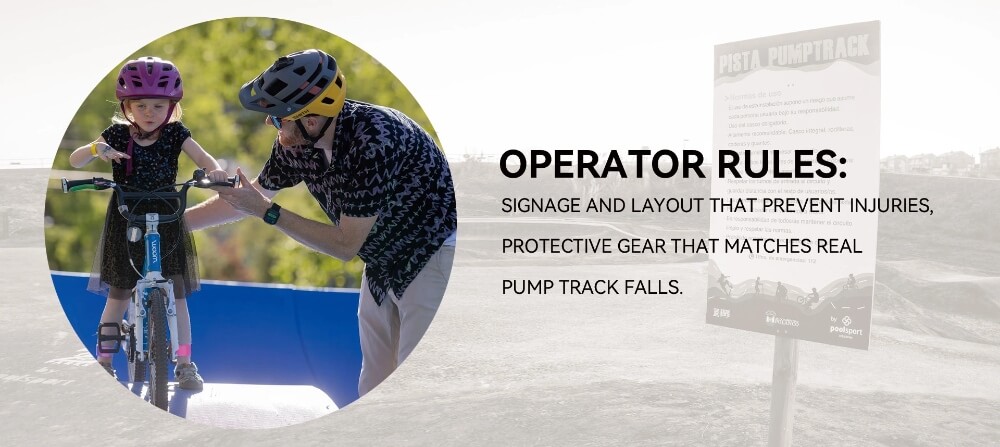
For schools, parks, campgrounds, and event rentals, rider behavior improves dramatically when rules are visible at entry points.
Signage That People Actually Read
Signs work when they are short and specific: required helmet use; direction of travel; yield on entry; no pedestrians; keep moving; ride at own skill level. Risk-management documents for pump tracks and bike parks consistently highlight entrance signage as a core safety control.
Designing for Safety in Real Spaces
The safest pump track is the one that fits the site. Crowded corners, blind entries, and narrow staging areas create conflicts. A modular approach can help match layout to available space and budget, with the option to adjust the footprint over time. ULTRAPUMPTRACK’s design service describes customizing layouts by adding or removing modules to suit space and budget constraints.
Low-Drama Maintenance That Keeps the Track Safe
Maintenance is safety. Many riders only think about “wear,” but most day-to-day hazards are simple: loose debris, water stains, or connections loosening over repeated use.
A modular system is often chosen specifically to reduce ongoing maintenance compared with dirt tracks that deform after heavy rain. ULTRAPUMPTRACK’s company overview notes that dirt tracks commonly need frequent maintenance due to erosion and deformation, while weather-resistant modular solutions are designed to hold shape with less upkeep.
For coastal installs, salt exposure matters. ULTRAPUMPTRACK’s warranty terms note reduced coverage duration for installations within 500 yards (457 meters) of a saltwater shoreline.
Meet ULTRAPUMPTRACK
ULTRAPUMPTRACK is a dedicated pump track supplier focused on modular systems for public and private spaces. The team’s background includes years of designing and building dirt and asphalt tracks before concentrating on modular pump tracks, with a development timeline that spans multiple generations of systems and international market expansion.
From a practical safety perspective, modular tracks are often used where predictable shape, quick installation, and consistent riding characteristics are priorities. ULTRAPUMPTRACK’s materials and build approach are positioned for outdoor exposure and repeat use, with documented warranty terms and a support process for quality-related issues.
Their case examples include installations in recreation and travel settings, where mixed-age riders and shared-use flow are typical.
Conclusion
Pump track safety rules are pretty simple. But the hard part is sticking to them every single time. You ride in one direction only. You give way when you enter. You never stop on the riding line. And you keep all walkers off the track surface. These steps stop most bad accidents.
After that, safe rides depend on a few basic habits. Wear the right gear for how people really fall. Keep enough space between riders. Pick lines that others can see coming. And change your style when junk or weather makes the grip different. When riders and operators treat a pump track like busy road traffic instead of a still play area, the track stays fun, fast, and without much trouble for everyone.
FAQs
Here are some common questions and answers about pump track safety rules.
What are the most important pump track safety rules during busy hours?
The key pump track safety rules during busy times are simple. Ride only one way. Give way when you come in. Keep space between riders. And never stop on the rollers or in the berms.
During busy hours, try fewer passes. Also, pick slower speeds. This keeps everything flowing smoothly and easy to guess.
Do pump track helmet rules apply to scooters and skateboards?
Yes, they do. Pump track helmet rules need to cover all users on wheels. This is because falls happen with forward speed onto hard ground. For skateboards and inline skates, adding wrist guards and knee pads helps cut down on usual hurts.
Are pump tracks safe for kids who are just learning?
Yes, they can be safe for new kids. They should ride when it is quiet. Wear a helmet. Start on the small paths. And never stop on the track.
The main danger comes from different speeds. So, new riders do better with clear ways to enter. Plus, adults should watch from outside the riding area.
What should be included in pump track signage requirements for parks and schools?
Pump track signs for parks and schools should include a few key things. Show the direction to ride. Remind everyone to wear helmets. Tell riders to yield when entering. Keep pedestrians off the track. And remind not to stop on any features.
Short signs right by the entrance work best. They are better than long lists of rules.


