

Best Pump Track for Kindergarten Kids: A Practical Guide
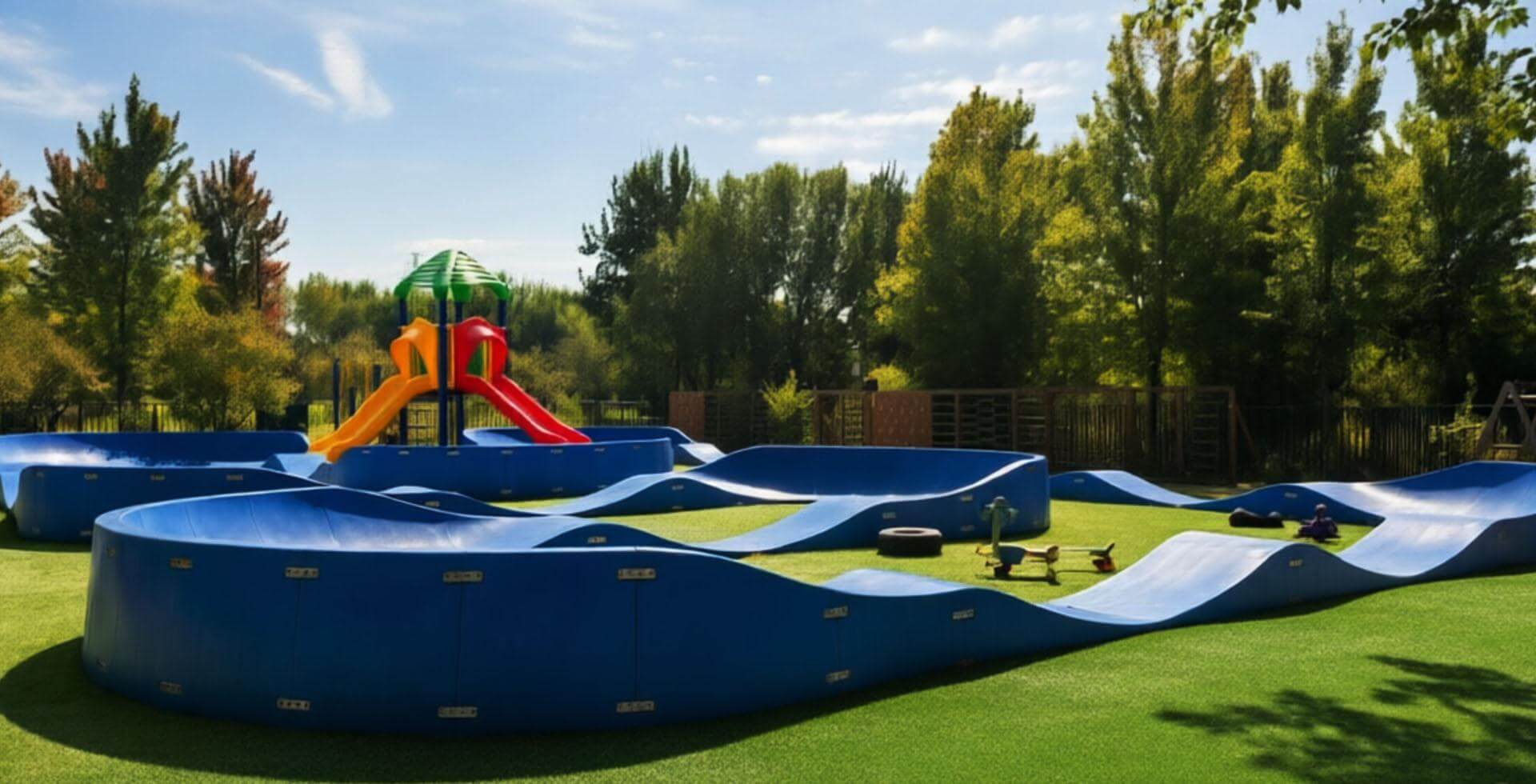
The pump track for kindergarten children must ensure balance, steering, braking, and confidence, but not encourage speed and trick. The most optimal kindergarten pump track ideas offer short and readable tracks where children can safely start, go through the track, stop, and repeat.
A modular pump track for the vast majority of nurseries, preschools, and early years’ schools will be a perfect solution. It can accommodate a certain territory, balance bikes and scooters, and vary depending on the place.
Why a Pump Track Works in a Kindergarten
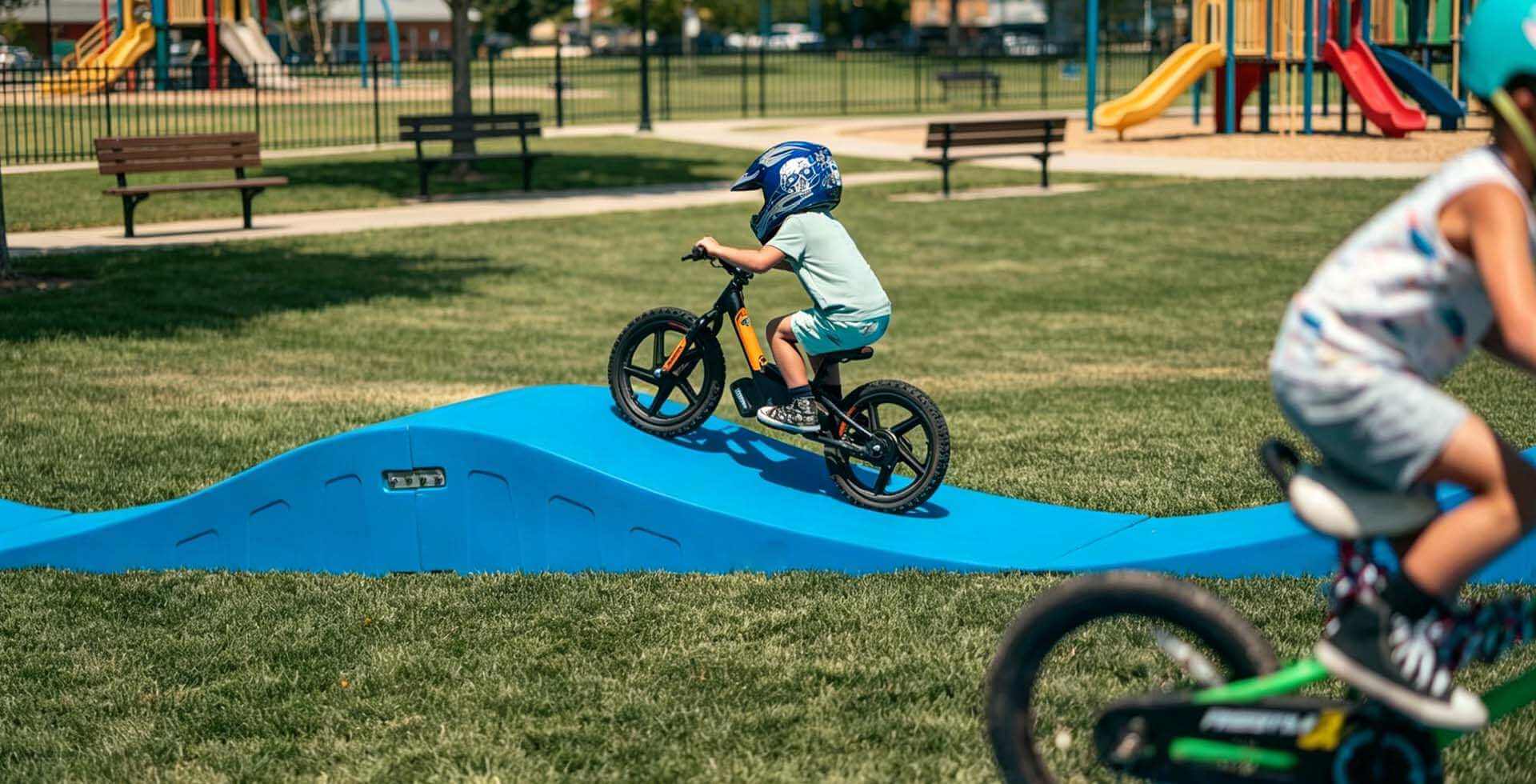
A kids pump track turns wheeled play into a repeatable learning activity. Every lap calls for slightly better timing and control.
Balance, Coordination, and Confidence
In the pump track of balance bike, the kids have to be taught about looking forward, body balance shifting, lining, and controlling their momentum. The rollers provide a smooth flow. In the turns, the riders have to control themselves and choose the safe path.
The pump track in preschool can make the kids graduate from walking balance bikes to sliding on them. The kids in higher level of kinder gardens can be taught about the pedal bikes or the scooter bikes.
More Active Outdoor Play
Standard outdoor play equipment typically separates play into different stations. The pump track provides one continuous path where play can take place in a controlled environment, as well as PE class and group training exercises.
A short stretch next to a playground can introduce the concept of pumping and balancing, whereas a loop trail can be used for prolonged riding with a designated entrance.
What Makes a Pump Track Safe for Young Children
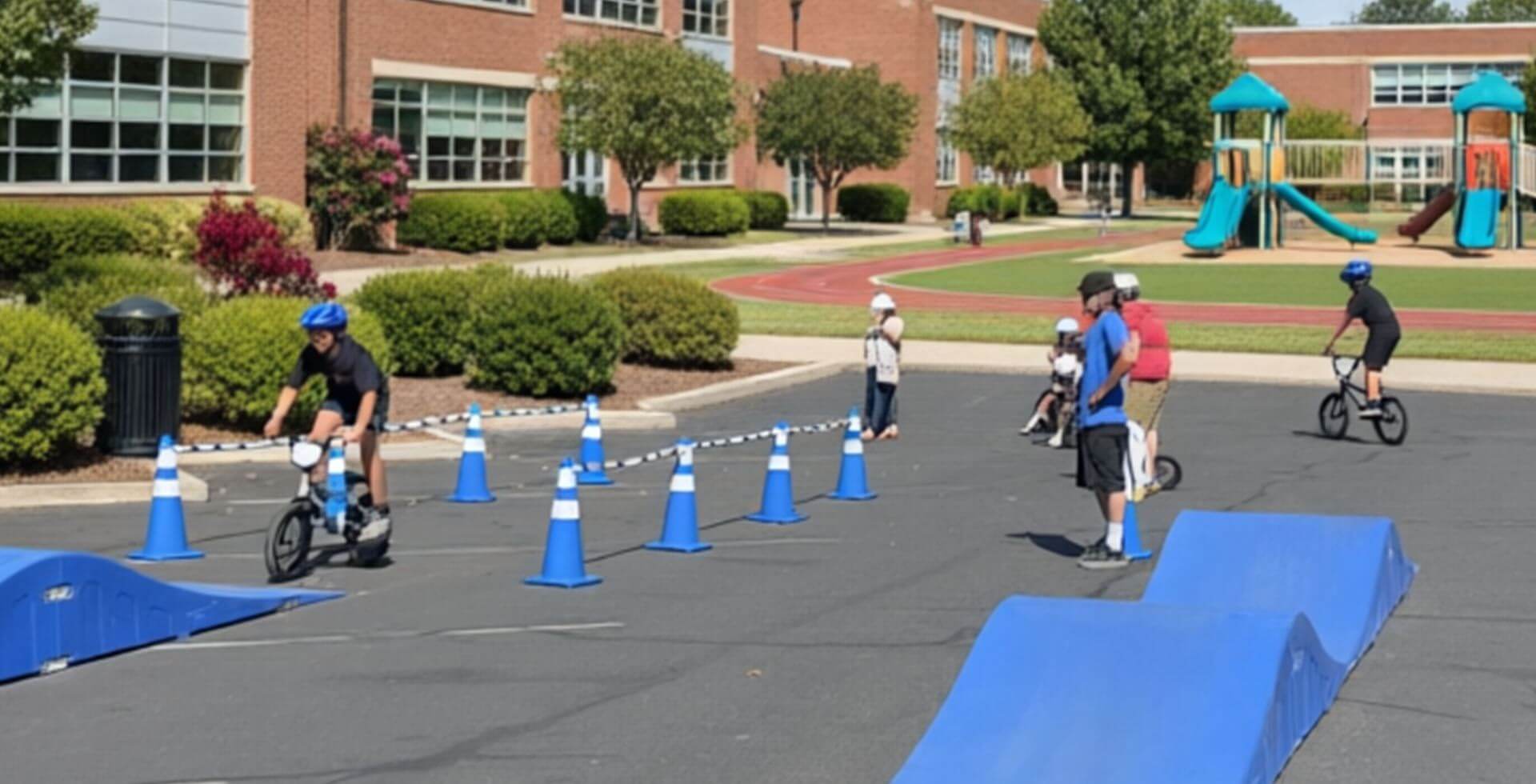
A safe pump track for kids depends on layout, surface grip, supervision, and operating rules. The design should match the youngest regular users, not the strongest child.
Low Rollers and Predictable Turns
A beginner pump track should give children time to read the next feature. Low rollers, gradual transitions, open sight lines, and generous turns are easier to follow. Blind corners, steep features, crossings, or several entry points can create conflicts.
Waiting children should remain outside the route, and riders should not cross a fast section to return to the queue.
An Anti-Slip Riding Surface
The pump track surface is anti-slip, not smooth. A polished or slippery finish would reduce tyre grip, particularly for small wheels. An anti-slip surface gives balance bikes, bicycles, scooters, and skateboards firmer contact through rollers and turns.
ULTRAPUMPTRACK states that its modular system uses LLDPE with anti-UV and anti-aging additives for outdoor conditions. Its product pages also describe a weatherproof riding surface with strong grip.
Clear Rules and Supervision
Even the best pump track for kids needs a simple routine:
- Helmets are required for every ride.
- Children enter only when the first section is clear.
- Everyone follows the same direction.
- Riders do not stop or walk on the riding line.
- Bikes and scooters are checked before use.
- Beginners ride in small, supervised groups.
Which Type of Pump Track Is Best for Kindergarten Kids?
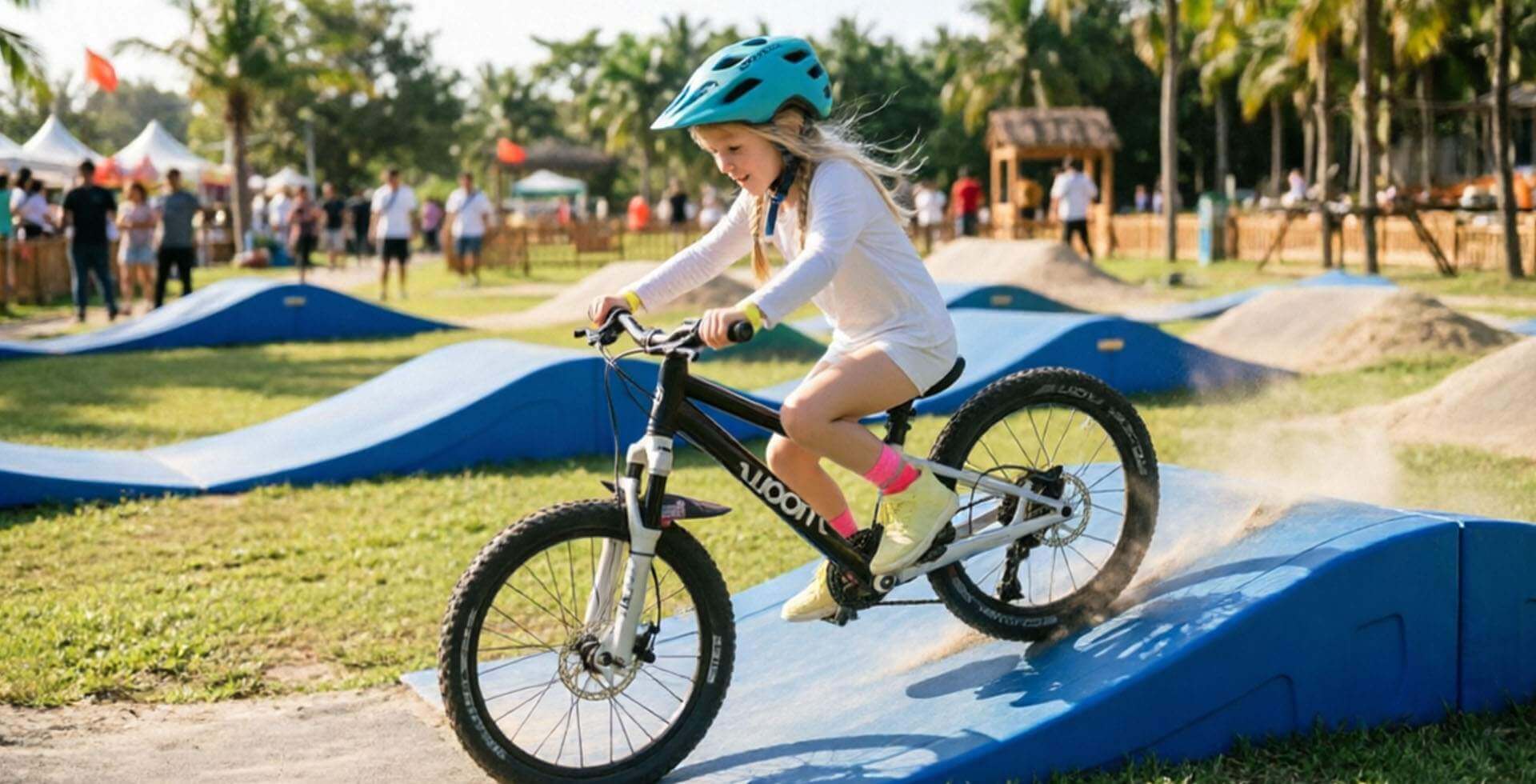
The right format depends on the site, group size, and lesson plan. In many early-years settings, a plastic modular pump track fits better than a permanent advanced course because it can be selected around the available ground and revised later.
Straight Micro Track for First-Time Riders
A straight mini pump track suits children who are still learning to glide. Staff can see the whole run from one position. Children ride to the end, leave the track, and return through a separate walking lane.
Pump Cycle 1 has three rollers in a 12.5 m by 1.2 m layout. Pump Cycle 2 uses four rollers across 16.5 m by 1.2 m. Both are entry-level layouts for beginners and younger riders. They can fit a narrow playground edge or school activity zone.
Compact Loop for Regular Sessions
A loop introduces turning, route awareness, and continuous movement. For a kindergarten pump track, it should remain easy to read and have one controlled entry point.
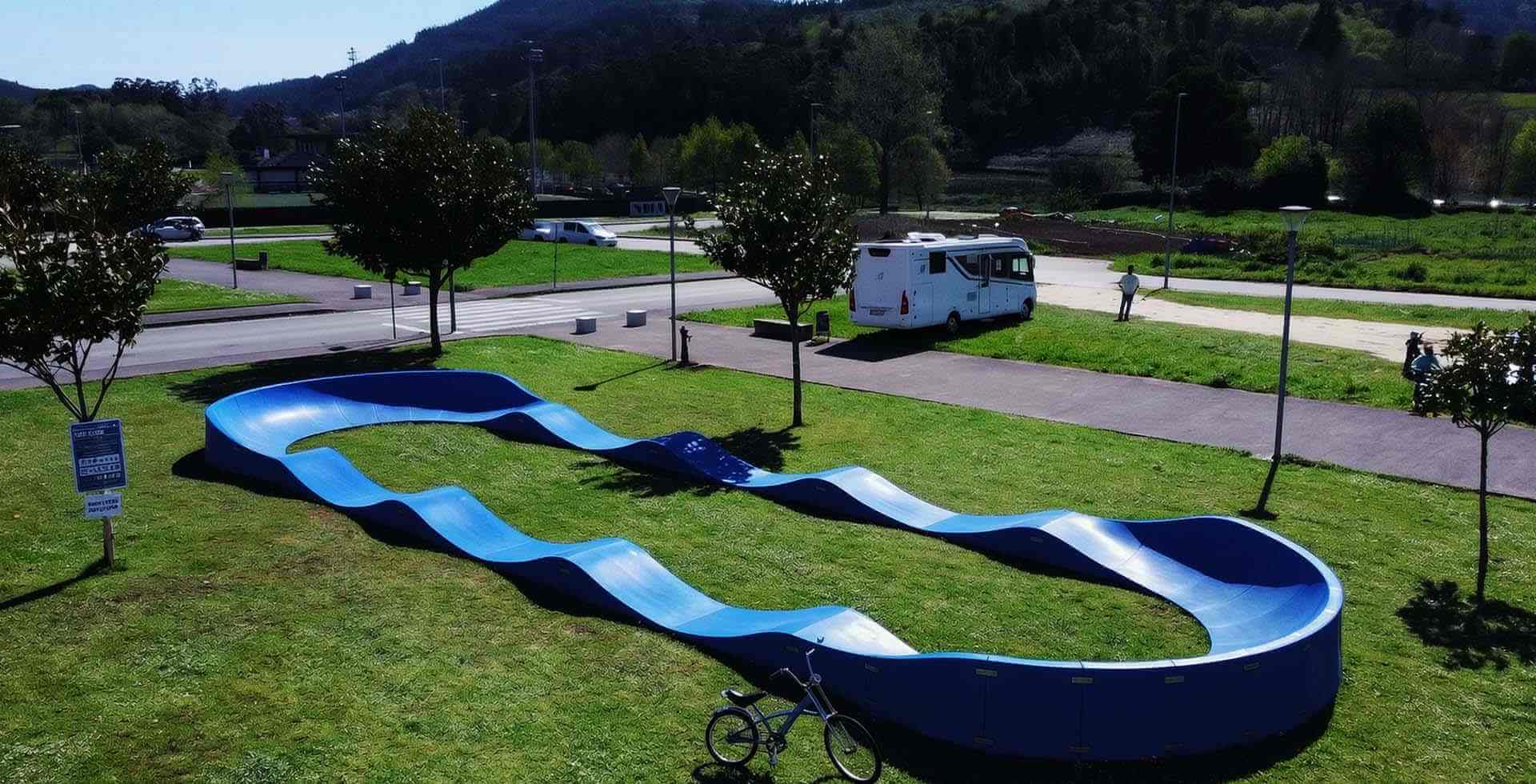
Velocity Loop 1 uses six rollers and two turns on a 38.9 m track, with a listed area of 17 m by 8.5 m. It may suit a kindergarten with room for the track, a waiting zone, a safety buffer, and adult access outside.
Larger Track for Shared Facilities
A larger kids bike pump track may suit a school campus or recreation site used by several age groups. Younger riders should have separate sessions from faster users.
Stellar is listed as a child-suitable layout with a large interior area, four turns, ten rollers, a 52 m track length, and a 20 m by 14 m footprint. Its scale offers more variety but calls for a stronger supervision plan.
| Track type | Best use | Main planning point |
| Straight micro track | First balance-bike practice | Add a separate walking return lane |
| Beginner loop | Regular kindergarten sessions | Control entry, direction, and queueing |
| Larger children’s track | Shared school facilities | Separate younger and faster riders |
How to Choose the Right Kindergarten Pump Track
Start with the daily operating plan, then choose the product. A track can look impressive on a drawing yet be difficult to supervise.
Match the Layout to Real Users
List the age range, wheel types, and likely group size. Balance-bike beginners have different needs from a mixed group using bicycles and scooters. Training wheels are generally unsuitable because they can lift or catch unevenly over rollers.
Map the full activity area, not only the product footprint. Leave room for helmet fitting, waiting, walking bikes to the start, staff access, storage, and separation from doors, paths, fences, seating, and other equipment.
Check Long-Term Practical Details
A modular pump track can be reconfigured, relocated, or expanded when a school changes its playground plan. ULTRAPUMPTRACK lists 18 base configurations and offers custom layouts by adding or removing modules according to space and budget.
Before ordering, request a scaled layout, ground requirements, drainage guidance, installation instructions, inspection routines, warranty terms, and replacement-part support. These details matter more over time than price alone.
About ULTRAPUMPTRACK
ULTRAPUMPTRACK is a modular pump track supplier serving schools, parks, recreation sites, and wheeled-sport projects. Its background includes dirt and asphalt track construction before the development of plastic modular systems. The range covers micro tracks, core loops, and larger layouts, with design support based on space, budget, user age, and wheel type.
For kindergarten buyers, a project can start with a short beginner section or move to a custom pump track with more rollers and turns. The anti-slip surface, modular format, and layout service provide several practical choices.
Conclusion
For most early-years settings, the best pump track for kindergarten kids is a modular beginner track with low, predictable features, one riding direction, an anti-slip surface, and enough space for supervision. A straight micro track fits first-time riders and narrow sites. A compact loop adds turning and continuous riding. Larger layouts suit shared facilities with separate sessions for different ages.
The final choice should follow the site plan and daily routine. When the layout matches the children, equipment, and staff, a kindergarten pump track becomes a useful learning space rather than another playground feature.
FAQs
What age can children start using a pump track?
There is no single starting age. Children who can control a balance bike, steer, and stop may use a simple beginner pump track under close supervision. The layout must match their size and ability.
Is a modular pump track suitable for a kindergarten?
Yes. Compact layouts are available, and the configuration can follow the site. The project still needs an anti-slip surface, a safety buffer, and supervised rules.
Can scooters use a kids pump track?
Many modular tracks support scooters, balance bikes, bicycles, and skateboards. A scooter pump track session should group riders by speed and skill because wheel sizes and riding habits differ.
How much space does a kindergarten pump track need?
The area depends on the layout. A straight micro track may use a strip about 1.2 m wide, while a loop needs more room. Add space for queues, circulation, supervision, storage, and separation from other activities.
Which ULTRAPUMPTRACK model is best for beginners?
Pump Cycle 1 and Pump Cycle 2 are beginner options for younger riders. Velocity Loop 1 adds a full loop for sites with more room. The best model depends on ability, space, and session management.


