

Pump Track Footprint Guide: Match Any Site Shape
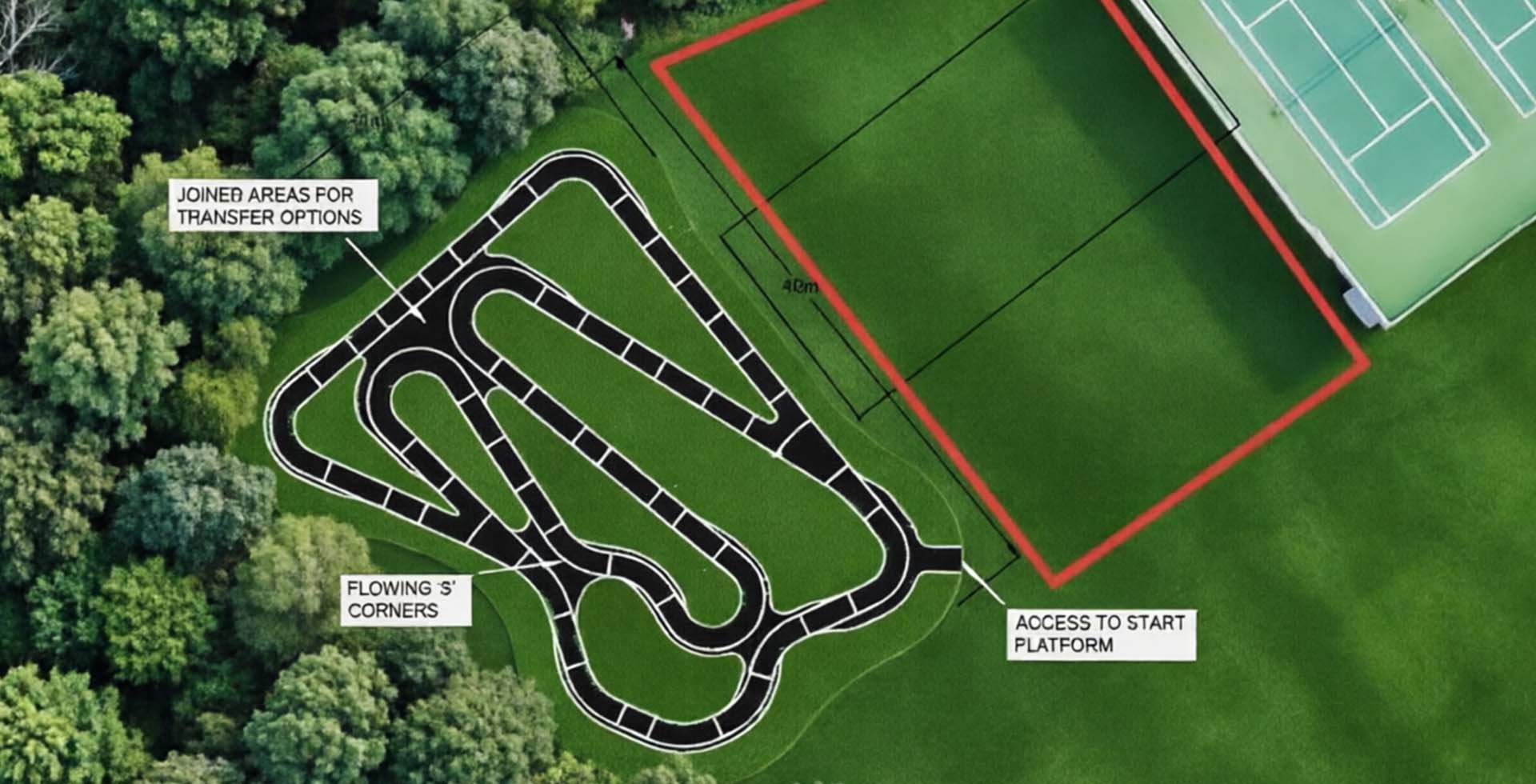
A long strip beside a sports court behaves differently from a square schoolyard, an L-shaped park corner, or a wide event field. The key question is, “Which layout fits the shape, access, rider flow, and future plans?”
A modular pump track makes that match easier because its rollers, turns, and connectors form repeatable units. The published pump track footprint is only a starting point. Projects also need room for entry, drainage, and safe movement.
Start With the Usable Pump Track Footprint
Before comparing models, mark the space that can actually carry the track. Boundaries may include trees, lamp posts, utility covers, planting beds, or routes that must stay open.
Measure More Than Length and Width
Record the longest usable dimension, narrowest point, slope, drainage direction, delivery access, and rider entry points. A layout that crosses a pedestrian route will create daily problems.
Check:
- clear length and width
- fixed obstacles and underground services
- queue and spectator space
- emergency and maintenance access
- base condition and rainwater runoff
- expected rider ages and wheel types
A pump track should provide a non-slip, high-grip contact area rather than a slick finish. Grip supports predictable wheel contact through rollers and banked turns.
Best Pump Track Layouts for Narrow Sites
Long, narrow sites often sit beside school fences, parking areas, or courts. The best narrow pump track layout uses the available length without forcing awkward crossings.
Pump Cycle 1 for a Thin Strip
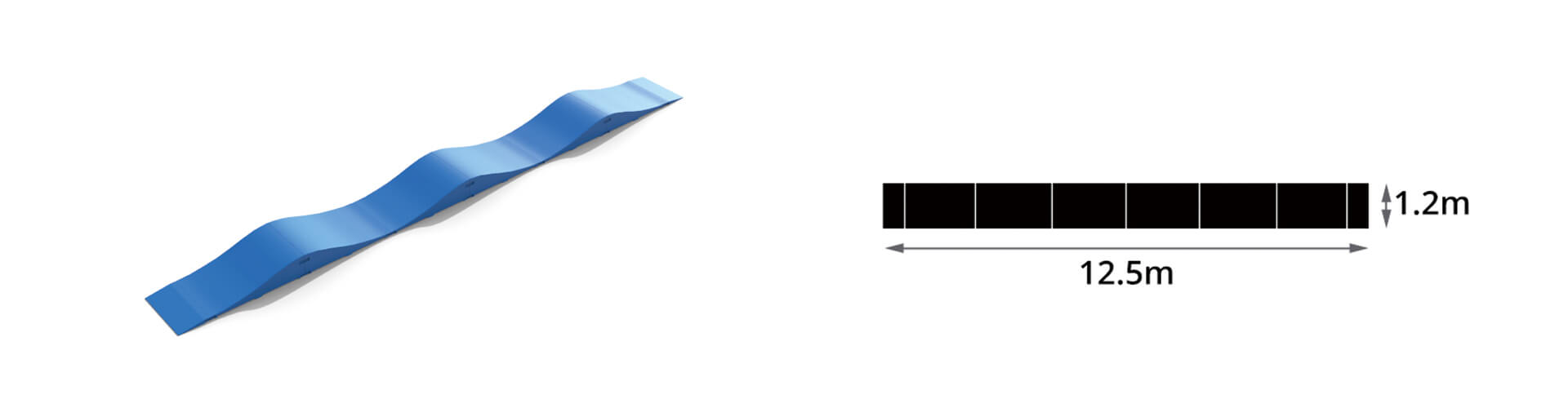
Pump Cycle 1 needs 12.5 by 1.2 metres and provides a 12.5-metre straight track made from eight modules. Three rollers form a practice line for younger riders and beginners learning weight transfer.
This small footprint pump track suits a school edge, resort lawn, indoor hall, or an add-on beside an existing bike area. It is a training feature, not a continuous loop.
Velocity Loop 2 for a Rectangular Circuit
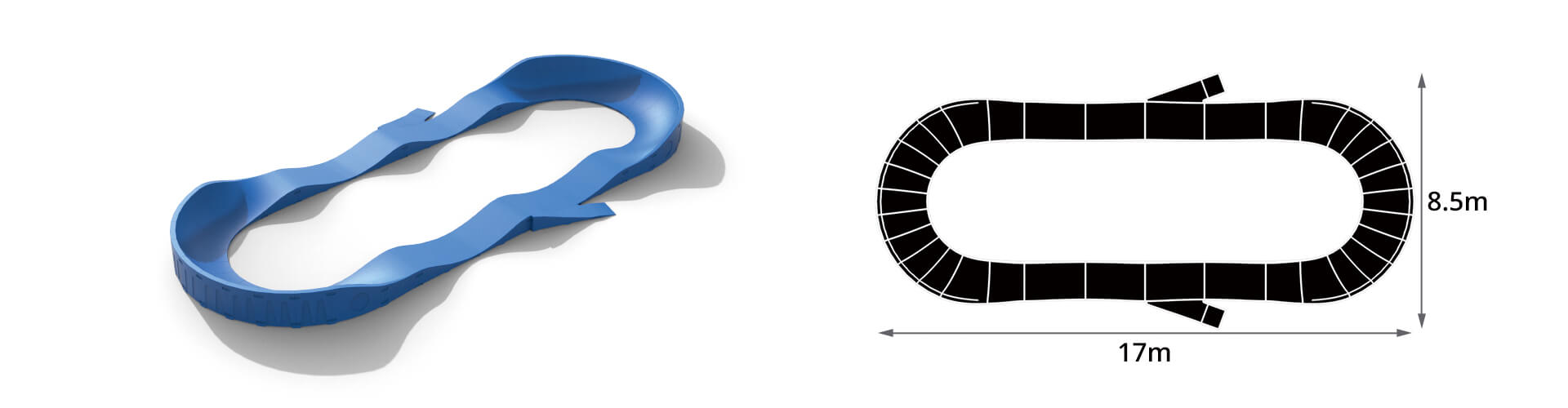
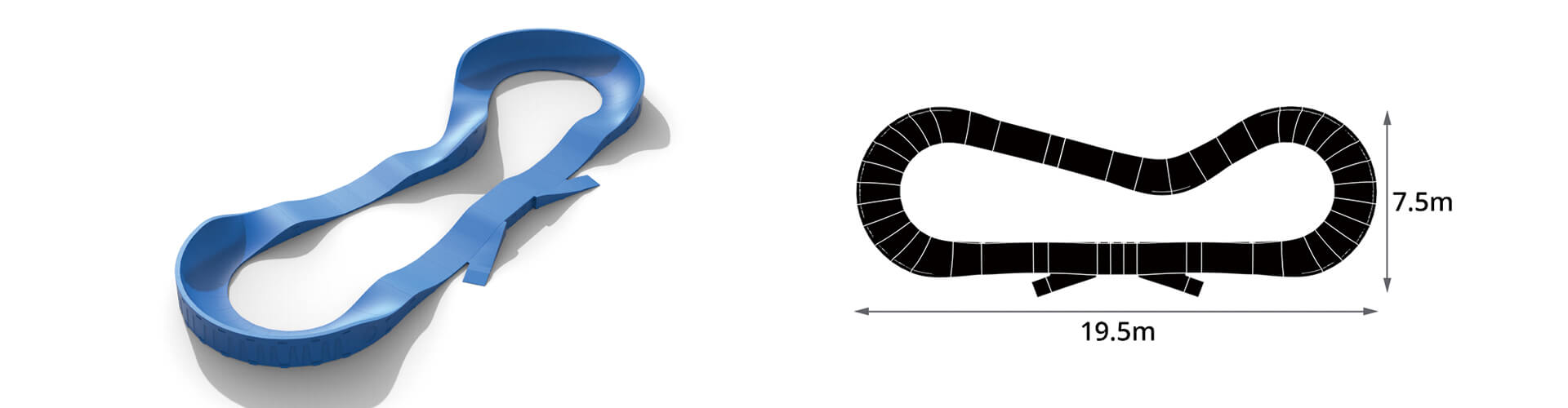
Velocity Loop 2 uses a 20.5 by 7.5-metre area. Its 46-metre route combines eight rollers with two turns across 42 modules. The long oval form works well on a former court or narrow park plot.
Speed Dome fits within 19.5 by 7.5 metres and adds three turns plus a tabletop to a 44.5-metre track. It suits sites that need more variety than a basic loop.
Best Pump Track Layouts for Square Sites
A square plot can support turns in both directions and leave useful central space.
Nova Trek for Compact Square Plots
Nova Trek fits a 15 by 17-metre pump track footprint and supplies 49 metres of riding line through 43 modules. Three rollers between turns create a steady rhythm, while the open middle keeps the form easy to read.
This square pump track layout suits schools, compact parks, and community centres. Any use of the inner area should be checked against local clearance rules.
Vortex for a Larger Square Experience
Vortex expands the idea to 20 by 22.5 metres. Its 95-metre track uses 90 modules, six large turns, and 16 rollers. Quick S-shaped sections break up longer straights while keeping continuous flow.
Best Layouts for Irregular Sites
Irregular plots rarely match a catalogue rectangle. Trees, paths, or buildings may create an L-shaped boundary. Here, a custom modular pump track should begin with a survey rather than a preferred model.
Viper as a Dense Starting Point
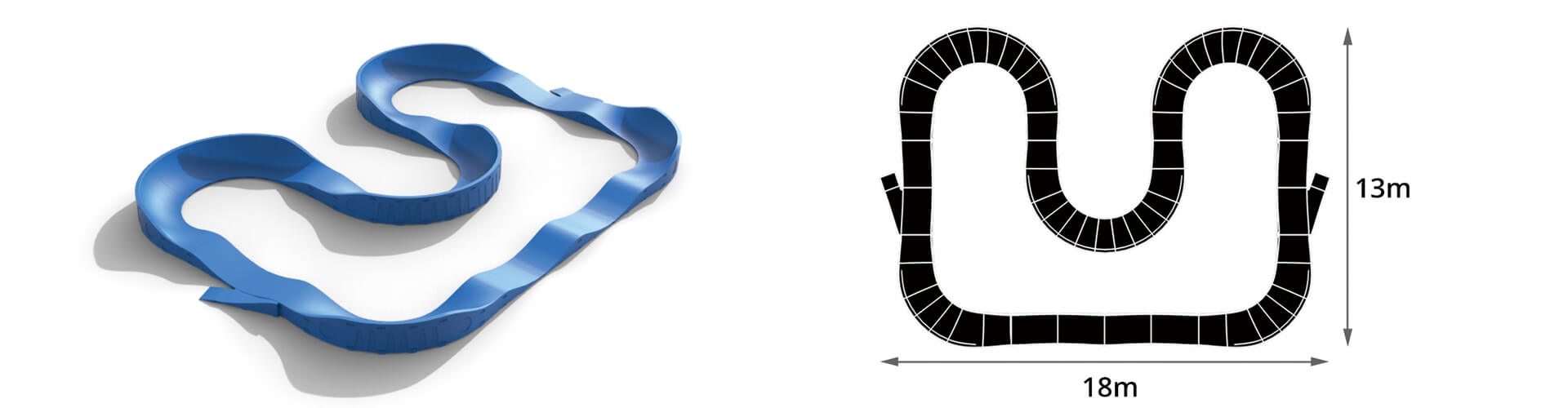
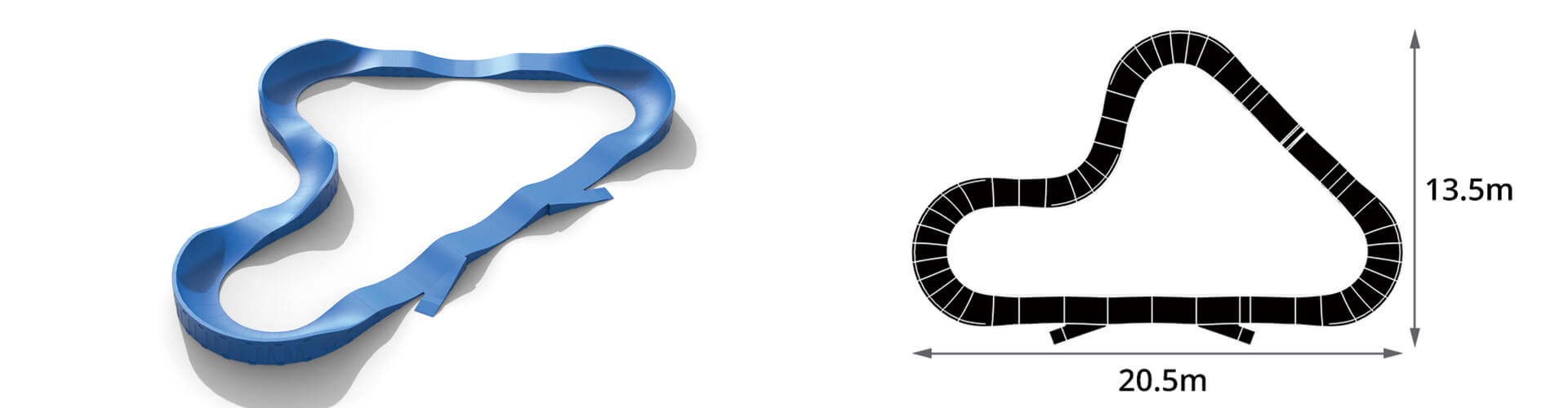
Viper places 61 metres of track inside an 18 by 13-metre area. Five two-way turns and nine rollers are packed into 65 modules, creating a technical layout without requiring a huge plot.
That density makes Viper a useful reference for a compact central zone. Modules can then be reviewed around trees, drains, or access lanes.
Adapt Modules Around Real Limits
A site-specific pump track layout may add, remove, or reposition modules. Good design protects sightlines, avoids blind entries, and leaves room for waiting riders.
No irregular lot should be approved from an aerial image alone. Ground measurements can reveal slope changes, raised covers, soft edges, and drainage channels that do not appear on a drawing.
Best Pump Track Layouts for Large Sites
A large open area allows longer laps and better separation between riders and waiting groups. Long tracks still need readable turns and a route beginners can follow.
For public projects, rider capacity should be discussed alongside track length. A longer route spreads riders across more features, but the entrance, waiting zone, signage, and supervision points still control how the site works during school sessions, weekend peaks, or organised events.
| Site type | Suggested layout | Layout area | Track length | Best use |
| Very narrow | Pump Cycle 1 | 12.5 × 1.2 m | 12.5 m | Beginner practice |
| Narrow loop | Velocity Loop 2 | 20.5 × 7.5 m | 46 m | Schools and events |
| Compact square | Nova Trek | 15 × 17 m | 49 m | Parks and communities |
| Dense irregular | Viper | 18 × 13 m | 61 m | Technical riding |
| Large community | Prime Time | 22.5 × 18.5 m | 104 m | High-use recreation |
| Extra large | Xtreme Turbo | 35 × 32.5 m | 158 m | Long laps and events |
Prime Time for Community Parks
Prime Time provides 104 metres of track in a 22.5 by 18.5-metre layout. Three 90-degree turns and four broad turns create a “track within a track” feel. It fits a community pump track where varied lines support repeat visits.
Xtreme Turbo for Maximum Length
Xtreme Turbo reaches 158 metres within a 35 by 32.5-metre footprint and uses 142 modules. It suits leisure sites and event programmes that want long laps. Extra space is still needed for access and supervision.
Choosing the Final Modular Pump Track Layout
A school may value simple supervision and beginner flow. A municipal site may place more weight on capacity and later expansion.
Before requesting a quotation, prepare a dimensioned plan, ground-level photographs, expected rider mix, base details, and delivery restrictions. This gives a pump track supplier useful planning information.
About ULTRAPUMPTRACK
ULTRAPUMPTRACK is a modular pump tracks supplier whose experience grew from cycling, dirt-track, and asphalt-track work. Its plastic modular system uses LLDPE material and offers 18 base configurations. Modules can be added or removed to create a custom pump track layout for different spaces and budgets.
The range covers practice sections, compact loops, technical combinations, and large tracks. The riding surface is designed for grip and outdoor use, while the connection system supports assembly, later changes, and phased expansion. Layout support, colour choices, shipping assistance, project cases, and dealer opportunities are available for public, educational, leisure, and commercial projects.
Conclusion
The best pump track layout begins with site shape, not catalogue size. Use straight or elongated models for narrow plots, balanced loops for square areas, adaptable modules for irregular boundaries, and longer tracks for large sites. A measured footprint, suitable base, safe circulation, and clear rider profile turn available land into a practical facility.
FAQs
What is the smallest modular pump track footprint?
Pump Cycle 1 has a published layout area of 12.5 by 1.2 metres. It is a straight practice track with three rollers, suited to beginners and very narrow spaces rather than continuous lap riding.
Which pump track layout works best on a narrow site?
Velocity Loop 2 is a strong choice for a 20.5 by 7.5-metre rectangle. Speed Dome fits a similar width and adds more turning variety. The better choice depends on rider level and the desired experience.
Can a modular pump track fit an irregular lot?
Yes. A custom modular pump track can be adjusted by changing the module arrangement. Accurate ground measurements are still needed for obstacles, drainage, access, and safe circulation.
Is a plastic pump track surface slippery?
The ULTRAPUMPTRACK riding surface is designed as a non-slip, high-grip surface, not a smooth slick surface. Correct installation, routine checks, and clearing mud, leaves, or standing water remain important.


