

Pump Track Feasibility Study: 12 Steps to Council Approval
A pump track can turn an underused park corner into an active space for bikes, BMX, scooters, skateboards, balance bikes, and inline skates. Yet council approval rarely comes from a concept image alone. Decision-makers need evidence that the project fits the site, answers a real need, can be funded, and will remain safe after opening.
A strong pump track feasibility study brings those points into one document. This 12-point checklist covers the information that matters most in a municipal pump track project.
The 12-Point Pump Track Feasibility Study Checklist

The study does not need to be hundreds of pages. It does need clear facts, drawings, cost ranges, and named responsibilities. Each section should lead to a decision, not simply describe the idea.
State the Project Purpose
Start with the local problem. Is youth recreation space limited? Are riders building informal jumps? Is a school or sports park seeking a compact wheeled-sports facility?
Link the pump track proposal to a parks plan, youth strategy, cycling plan, or public-space renewal project. A direct strategic link gives the project a reason to compete for funding.
Prove Community Demand
Record survey responses by age, postcode, wheel type, and likely frequency of use. Add comments from schools, cycling clubs, youth workers, nearby residents, and park users.
Useful evidence includes:
- survey responses and supporting signatures;
- travel distance to the nearest similar facility;
- requests from earlier park consultations;
- letters from schools or community groups;
- concerns about noise, parking, hours, or behavior.
Showing objections alongside support makes the community demand assessment more credible.
Define Users and Capacity
List intended users before choosing a pump track layout. A beginner track for balance bikes needs a different rhythm from a municipal facility for experienced BMX riders.
Estimate weekday, weekend, school-holiday, and event use. Explain how mixed users will share the track. Riding direction, waiting areas, entry points, and visible rules matter when scooters and faster bikes use the same line.
Carry Out a Pump Track Site Assessment
A good location is visible, easy to reach, and large enough for the track plus circulation space. Measure the full plot rather than relying on an online map.
Check levels, drainage, services, trees, flood exposure, nearby homes, emergency access, parking, lighting, toilets, and accessible viewing areas.
| Site question | Evidence for the council |
| Is the plot large enough? | Surveyed dimensions and safety clearances |
| Will water leave the site? | Levels, drainage route, and ground condition |
| Can families reach it? | Paths, transit, parking, and cycle access |
| Could neighbors be affected? | Distance, screening, hours, and noise review |
Compare Track Construction Types
Compare modular, asphalt, concrete, and dirt options by ground works, installation time, layout flexibility, repairs, weather exposure, relocation, and whole-life cost.
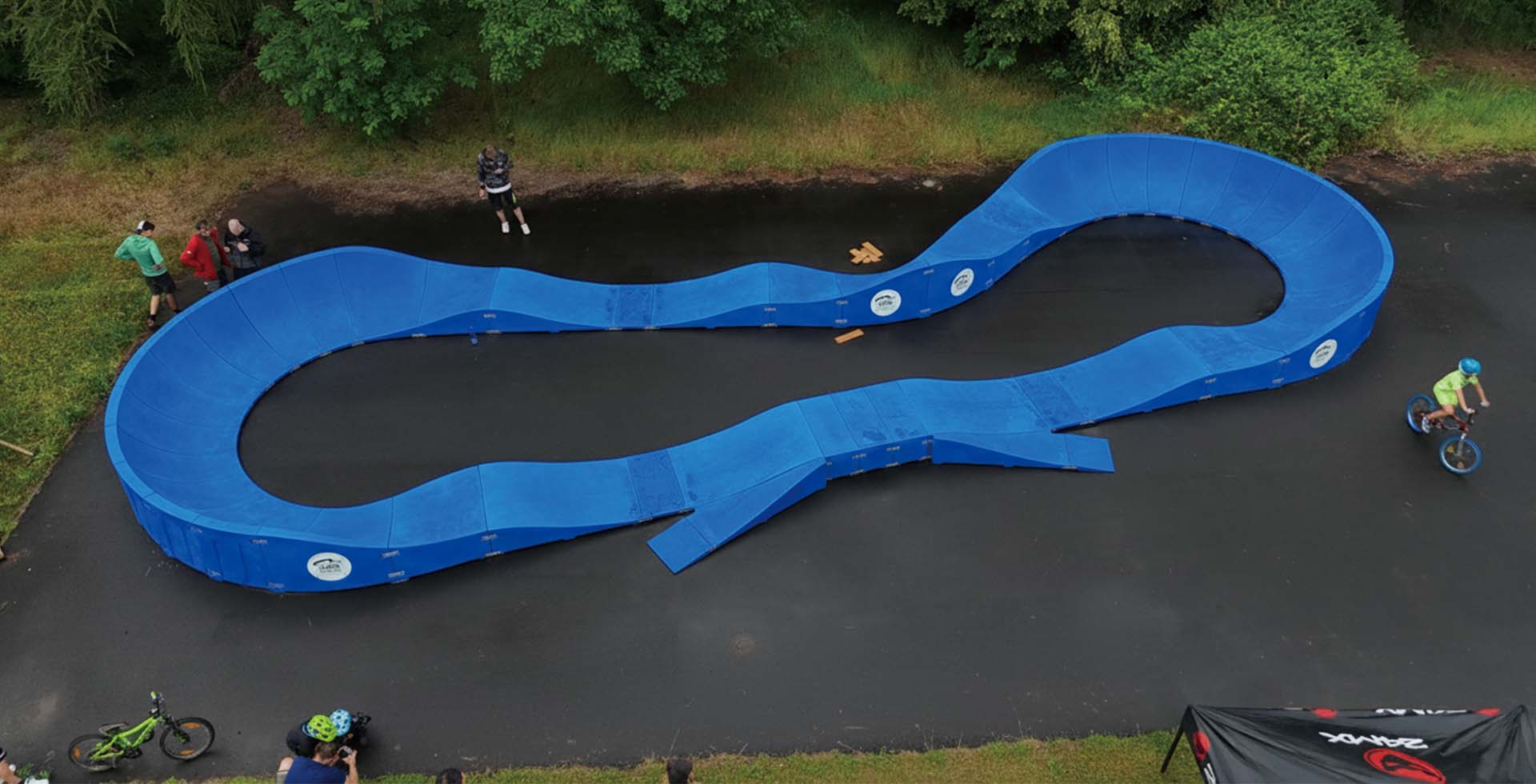
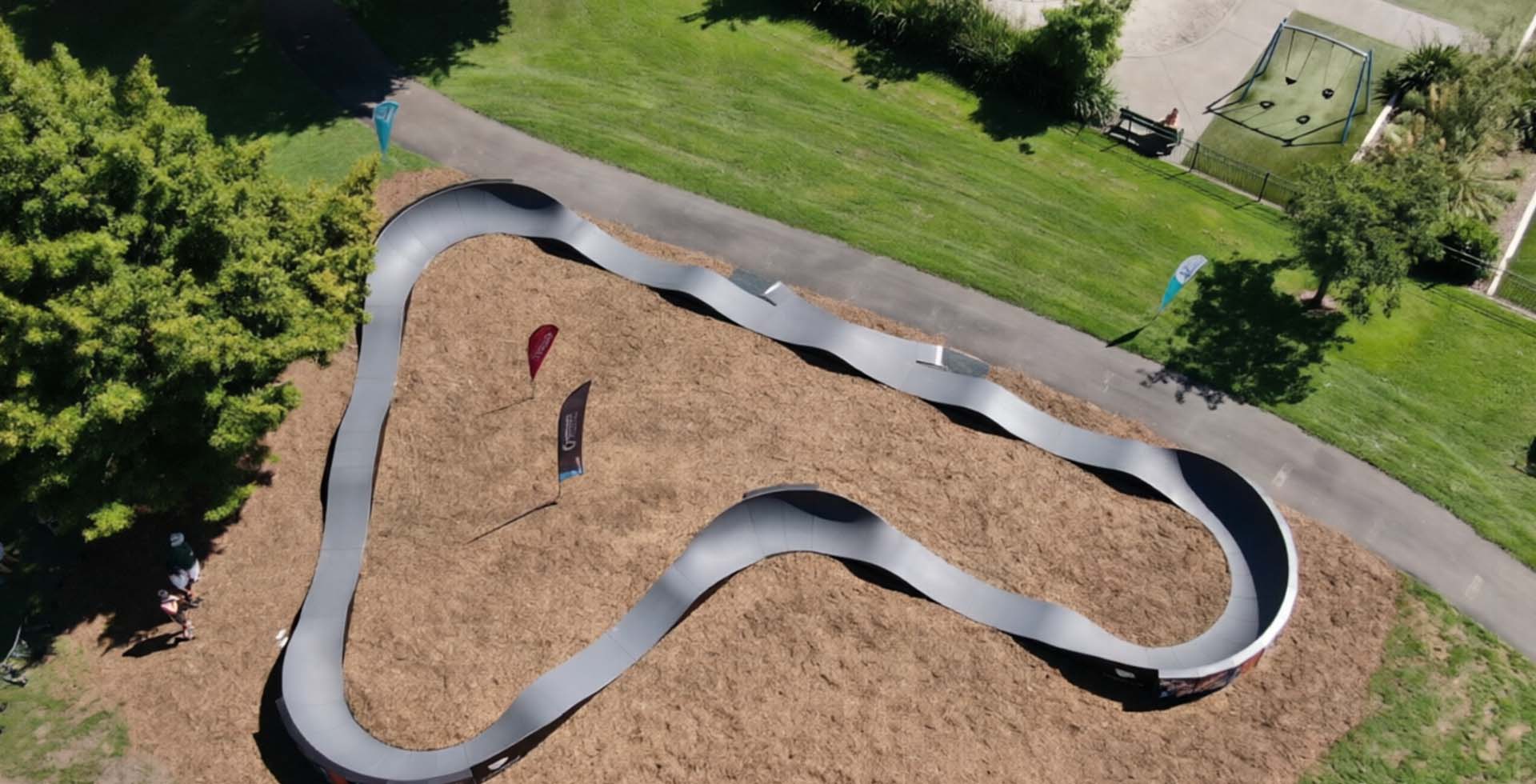
A modular pump track can suit a pilot, schoolyard, event space, or permanent park because modules can be changed. Asphalt and concrete create fixed facilities and usually need more site work. Dirt may cost less at first where soil and skilled maintenance are available, but erosion control and reshaping become regular tasks.
Prepare a Concept Layout
Include at least two options. Show track length, layout area, rollers, berms, turns, entry and exit points, spectator space, and a future expansion zone.
Published dimensions help test the plot. Pump Cycle 1 is 12.5 metres by 1.2 metres. Velocity Loop 2 uses 20.5 by 7.5 metres, while Speed Dome uses 19.5 by 7.5 metres. Larger Viper and Primetime layouts support longer lines. These figures cover the track, not the full project area, so add safety and access space.
Address Pump Track Safety
The riding surface should be textured and anti-slip, not smooth, glossy, or slick. Grip supports predictable control, but it does not replace cleaning, inspection, rider spacing, or sensible speed.
The pump track risk assessment should cover connections, edges, falls, rider conflict, debris, standing water, signs, helmets, emergency response, and closure after damage. Request current technical documents, warranty terms, installation instructions, and relevant test information.
Check Planning and Environmental Issues
Do not assume a portable pump track is exempt from planning permission. Local rules may still apply because of land use, lighting, drainage, hours, noise, trees, earthworks, or installation length.
Speak with the planning authority early. Record whether the project needs development approval, environmental checks, or a noise assessment. This can stop a site from failing after design fees have been spent.
Build a Whole-Life Pump Track Budget
A supplier quote is only one budget line. Add surveys, design, ground preparation, drainage, freight, installation, paths, signs, seating, landscaping, lighting, professional fees, and contingency.
Include annual pump track maintenance cost for inspections, cleaning, parts, repairs, and asset renewal. Present low, expected, and high scenarios to show how site conditions change the total.
Set the Procurement Route
State whether the council will buy supply-only equipment, request installation, or use a design-and-build contract. Ask bidders for comparable projects, drawings, delivery terms, spare parts, warranty response, and references.
Also ask how the layout can change if the budget, site boundary, or user mix changes.
Write the Operations and Maintenance Plan
Name the team that will manage the asset. Set inspection frequency, defect reporting, cleaning routines, closure rules, and repair authority.
A busy staffed park may need daily checks. A quieter site might use scheduled inspections and post-storm checks. Cover litter, mud, loose stones, damaged signs, unauthorized changes, and resident complaints.
Give the Council a Clear Recommendation
Finish with a decision page. State the preferred site, track type, concept layout, budget range, funding route, key risks, and next approval required.
Add measurable outcomes such as monthly visits, school sessions, community events, satisfaction, reported incidents, and annual maintenance spend. This turns the pump track business case into a project the council can review after opening.
Choosing a Suitable ULTRAPUMPTRACK Layout
Model selection should follow the site assessment, rider group, and budget. ULTRAPUMPTRACK lists 18 base configurations and can adjust layouts by adding or removing modules.
Pump Cycle 1 is a compact beginner option with three rollers. Velocity Loop 2 offers a traditional loop with eight rollers and two turns. Speed Dome adds three turns and a tabletop. Viper packs nine rollers and several turns into an 18-by-13-metre layout. Primetime provides a 104-metre riding line for larger public spaces.
About ULTRAPUMPTRACK
ULTRAPUMPTRACK is a modular pump track supplier with roots in cycling and dirt and asphalt track construction. Its current system uses outdoor LLDPE components, configurable layouts, basic-tool assembly, custom design support, and a textured anti-slip riding surface.
The range covers micro tracks, core loops, and large combination layouts for parks, schools, community centers, events, sports sites, and campsites. Support can include layout planning, shipping assistance, and product selection. Councils and consultants can request drawings and technical details before fixing a concept design.
Conclusion
A council-ready pump track feasibility study answers practical questions before they become objections. It proves demand, tests the site, compares construction choices, sets a realistic budget, and assigns long-term responsibility.
The strongest proposal is not always the largest track. It is the option that fits local riders, available land, planning rules, funding limits, and maintenance capacity. A measured concept plan and supplier discussion can give council officers the detail needed to move from interest to formal approval.
FAQs
What should a pump track feasibility study include?
It should include project goals, community demand, user groups, site assessment, concept layouts, safety, planning checks, environmental matters, capital cost, maintenance cost, procurement, operations, risks, and a clear recommendation.
How much space is needed for a modular pump track?
Space depends on the layout and safety clearances. Paths, waiting zones, drainage, seating, and emergency access must be added to published track dimensions.
Is a modular pump track surface smooth?
No. The riding surface should be textured and anti-slip rather than smooth or glossy. Cleaning still matters because mud, leaves, loose stones, and standing water can reduce grip.
How much does a municipal pump track cost?
There is no reliable single figure. Pump track cost changes with size, freight, ground condition, drainage, access, installation, landscaping, signs, and local professional fees. The study should present a full cost range, not only the equipment price.
Does a modular pump track need planning permission?
That depends on local rules and the proposed site. Councils should check land use, installation period, drainage, lighting, noise, earthworks, tree impacts, and nearby homes before treating any project as exempt.


