

Best Pump Tracks for Schools: A Practical Guide
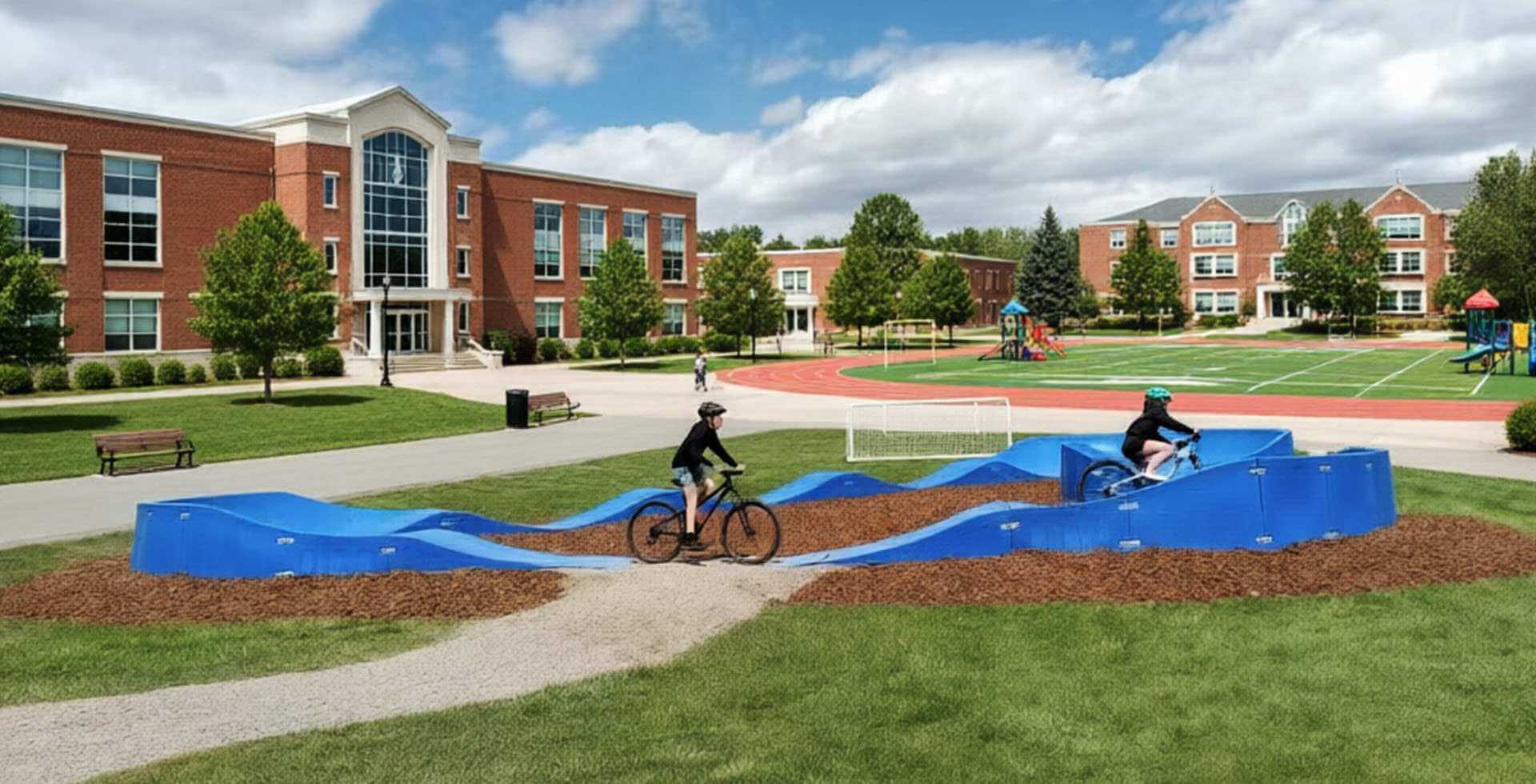
A school pump track can turn an unused playground edge into a riding space for PE lessons, clubs, and supervised breaks. Riders gain momentum by moving over rollers and banked turns instead of pedaling all the way around. The motion develops balance, timing, cornering, and bike control.
The best pump track for schools is the layout that fits student ages, usable ground, class routines, and supervision. For many campuses, a modular pump track offers compact sizing, quick installation, low maintenance, and room for later changes.
What Makes a Pump Track Suitable for a School?
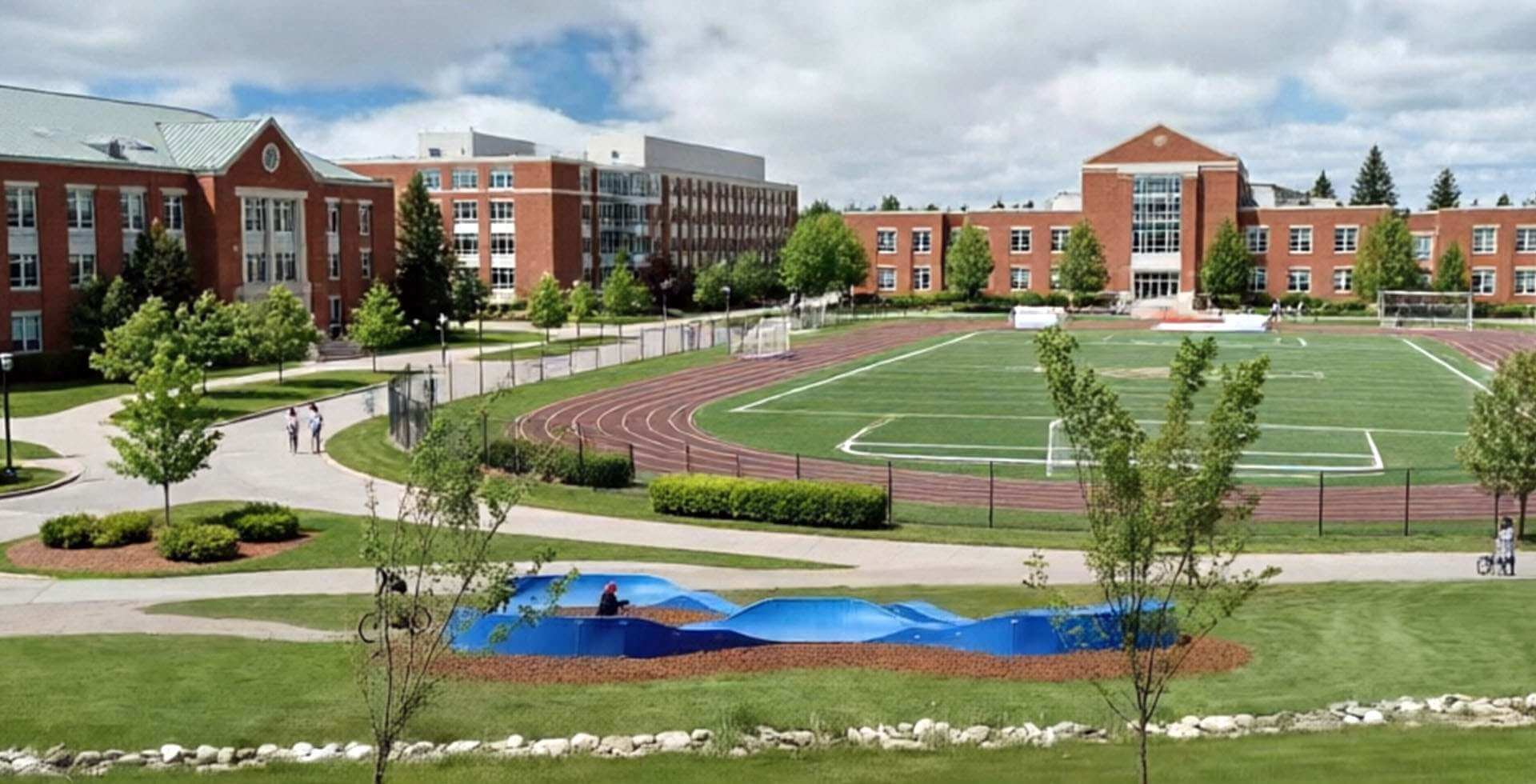
A school cycling facility must work within lesson periods, support beginners, and remain visible to teachers.
Before comparing products, review:
- Student age, confidence, and wheel types
- Usable space, including stopping and waiting zones
- Ground condition, drainage, and installation access
- Sight lines for teachers and playground staff
- Helmet rules, riding direction, group size, and inspections
Surface texture matters. A school pump track should have a textured, anti-slip riding surface that gives bike tires, skateboard wheels, and small scooter wheels reliable grip. It should not feel polished, glossy, or slippery.
Matching Track Design to Age and Space
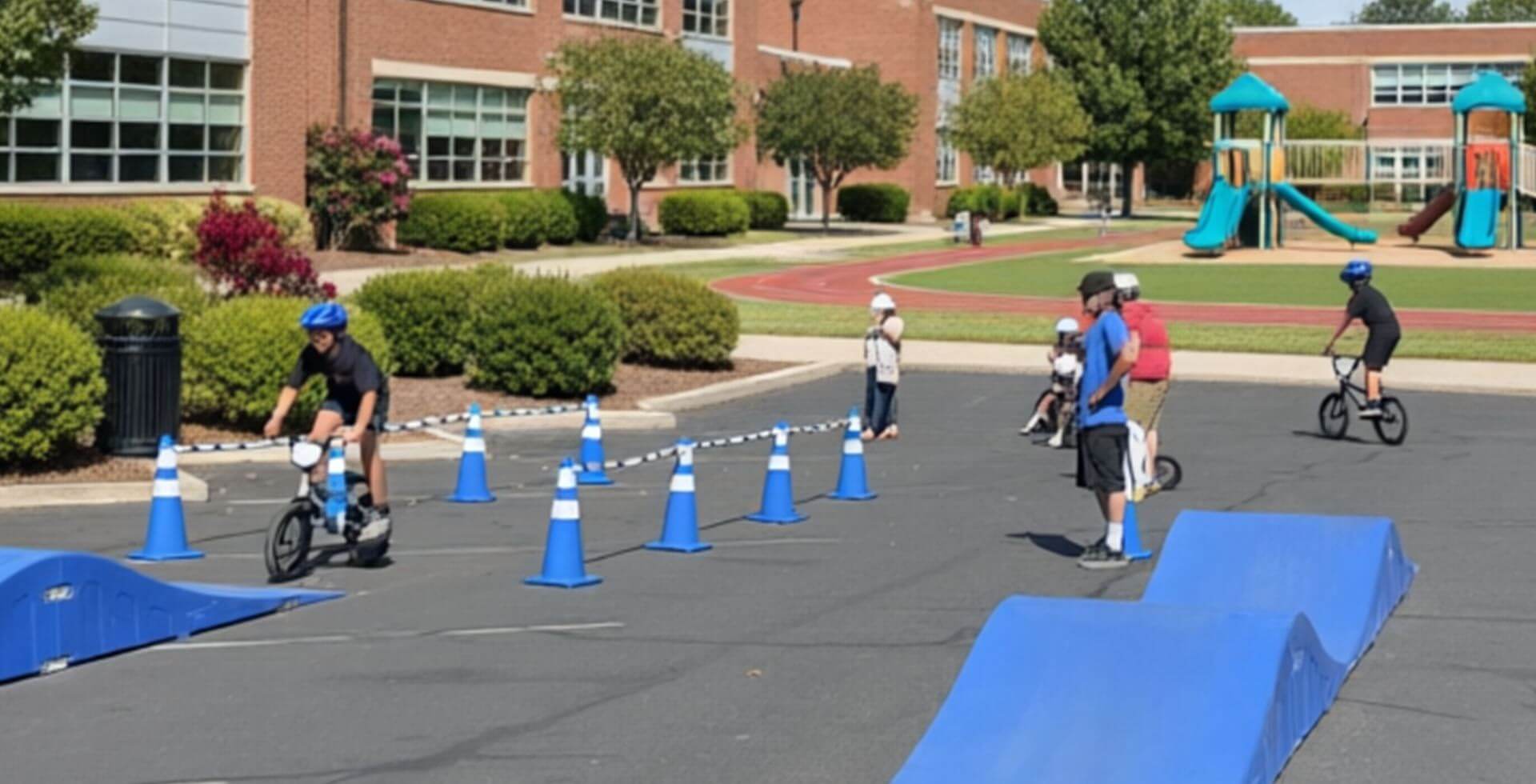
A good pump track design for schools begins with the riders. Gentle rollers help younger students learn rhythm; older riders may need longer lines and more turns.
Primary Schools and Beginners
A primary school pump track should favor control over speed. A short straight works well for balance bike lessons: students enter one at a time, ride several rollers, and stop in a marked zone. Teachers can see the full route.
A compact pump track loop adds cornering practice. Keep one riding direction and leave space for waiting students. A readable loop often teaches more than a crowded design.
Secondary Schools and Mixed Skill Levels
Older students benefit from longer routes and more variation. A BMX pump track for schools may combine a main loop with a straight practice section, separating beginner drills from faster riding.
Beginner, intermediate, and club sessions can run at different times, reducing overtaking and making progress easier to observe.
Main Types of Modular Pump Tracks for Schools
For schools, the optimal choice for modular pump tracks also depends on the layout and intended use of the equipment. A straight track supports first lessons, a closed loop builds continuous riding skills, and a combination layout gives older students more variety. Each type below connects directly with suitable ULTRAPUMPTRACK models.
Micro Tracks for Beginners and Narrow Sites
Micro tracks suit primary schools, balance bike sessions, and campuses with a long, narrow area beside a playground or sports court.
Pump Cycle 1 is a 12.5 m straight track with three rollers and a 12.5 m by 1.2 m footprint. Its simple line is easy to supervise and gives beginners a clear entry, riding, and stopping sequence. Pump Cycle 2 extends the same format to 16.5 m, giving students more time to develop a steady pumping rhythm.
Dynamo adds seven rollers, one right turn, and one left turn within a 28 m by 4.7 m area. It is a practical next step when a school wants cornering practice but lacks space for a wide loop.
Core Tracks for Continuous Loop Practice
Core tracks form complete loops. Riders can practise pumping, braking, turning, and safe following distances without leaving the course after each pass.
Velocity Loop 1 has six rollers and two turns. Its 38.9 m riding line fits within about 17 m by 8.5 m, making it a strong primary school pump track for compact grounds. Velocity Loop 2 provides eight rollers and two turns across a 46 m track, with a footprint of about 20.5 m by 7.5 m. It suits schools that want longer sessions without adding complex route choices.
Varied Layouts for Skill Progression
Schools running after-school clubs or lessons for older pupils may need more features than a basic loop.
Speed Dome has three turns, two possible riding directions, and a tabletop feature. Its 44.5 m track occupies about 19.5 m by 7.5 m. School sessions should use one marked direction at a time. Stellar offers four turn features and ten rollers across a 52 m track, with a 20 m by 14 m footprint and a large inner area that supports clear observation.
Combination Tracks for Mixed Skill Levels
Combination tracks connect different riding sections. They are better suited to secondary schools, K–12 campuses, cycling clubs, or facilities shared by a school and the local community.
Rampage links a Velocity Loop section with a Pump Cycle section. The 64 m track fits within roughly 20.5 m by 8.5 m. It provides a readable route for developing riders while giving experienced students a longer sequence. Timed sessions and ability groups help reduce overtaking and speed conflicts.
All these modular tracks use a textured, anti-slip riding surface rather than a smooth surface. Leaves, grit, mud, and standing water can still reduce grip, so routine inspection and cleaning remain necessary.
How to Match a Layout to Daily School Use
Published dimensions cover the track footprint, not the whole project area. Schools also need space for entries, exits, stopping, queues, teacher access, equipment storage, and required safety clearances.
| School need | Suitable layouts | Practical reason |
| First riding lessons | Pump Cycle 1 or Pump Cycle 2 | Straight, visible beginner routes |
| Narrow site with turns | Dynamo | Cornering practice in a slim footprint |
| Compact primary school loop | Velocity Loop 1 | Simple continuous riding line |
| Longer loop sessions | Velocity Loop 2 | More rollers and riding time |
| Broader skill progression | Speed Dome or Stellar | More turns and varied features |
| Mixed ages or club use | Rampage | Combines straight and loop sections |
A class of 24 beginners may gain more from a short, visible layout with clear turn-taking than from a large track that is hard to supervise. A secondary school club may need longer sessions, ability groups, and a combination track that stays engaging as riders improve.
Planning Safety, Installation, and Daily Use
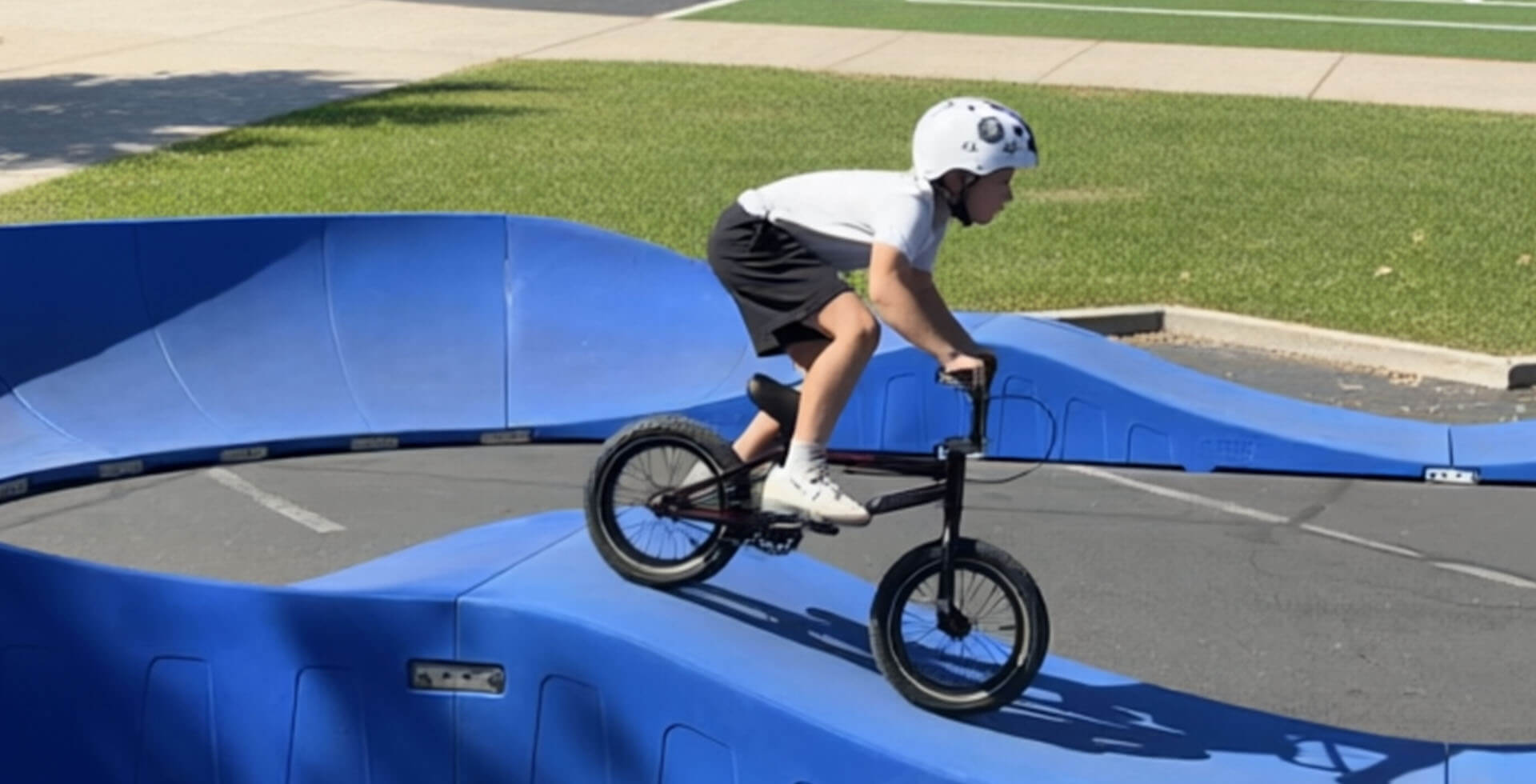
Pump track safety for schools depends on the operating plan as much as the track. Map how a class enters, where riders wait, who checks equipment, and how students leave the riding zone.
Useful rules include:
- Wear the required helmet and protective equipment
- Follow the posted riding direction
- Enter only when the first section is clear
- Never stop on rollers or inside turns
- Keep bags and spectators outside the track
- Remove leaves, sand, stones, and mud before use
The base should be flat, stable, and well drained. Check connections and the anti-slip surface after heavy use or severe weather. Pump track cost for schools should include groundwork, delivery, assembly, signage, inspections, and future parts.
ULTRAPUMPTRACK as a Modular Pump Track Supplier
ULTRAPUMPTRACK is a modular pump tracks supplier with a cycling background and experience building dirt and asphalt tracks. Its range includes 18 base configurations, with modules adjusted to suit a site and budget.
The tracks support bikes, BMX, scooters, skateboards, and balance bikes. School-relevant features include quick assembly, weather-resistant materials, an anti-slip riding texture, custom layouts, and later expansion or relocation.
Conclusion
The most suitable pump tracks for schools match student age, site shape, and daily management. Micro tracks work for young beginners and narrow areas. Compact modular loops fit many primary schools, while larger core or combination layouts suit secondary campuses and structured cycling programs.
Before requesting a proposal, record usable dimensions, base condition, rider ages, wheel types, class size, and future plans. Those details help suppliers recommend a school pump track that remains useful beyond opening day.
FAQs
What is the best pump track for a primary school?
A low, compact modular pump track is often a good fit. A straight micro track suits beginners, while a simple loop adds turns for students with basic balance and braking skills.
How much space does a school pump track need?
A straight model may fit a narrow strip, while a loop needs a wider area. Add clearance, stopping space, queueing room, and teacher access around the published dimensions.
Can scooters and skateboards use a school pump track?
Yes, when the track is designed for mixed wheels. The surface should be textured and anti-slip rather than smooth, and traffic rules should prevent conflicting lines.
Is a modular pump track better than a dirt track for schools?
A modular track is often easier for schools with limited maintenance staff because it does not need regular reshaping after rain or heavy use. Dirt may suit campuses with the land, drainage, equipment, and staff to maintain it.
What details are needed for a school pump track quote?
Provide usable site dimensions, photos, base material, drainage information, student ages, rider numbers, wheel types, budget range, preferred timing, and local planning or safety requirements.


