

How to Arrange Pump Tracks in a Large Bike Park
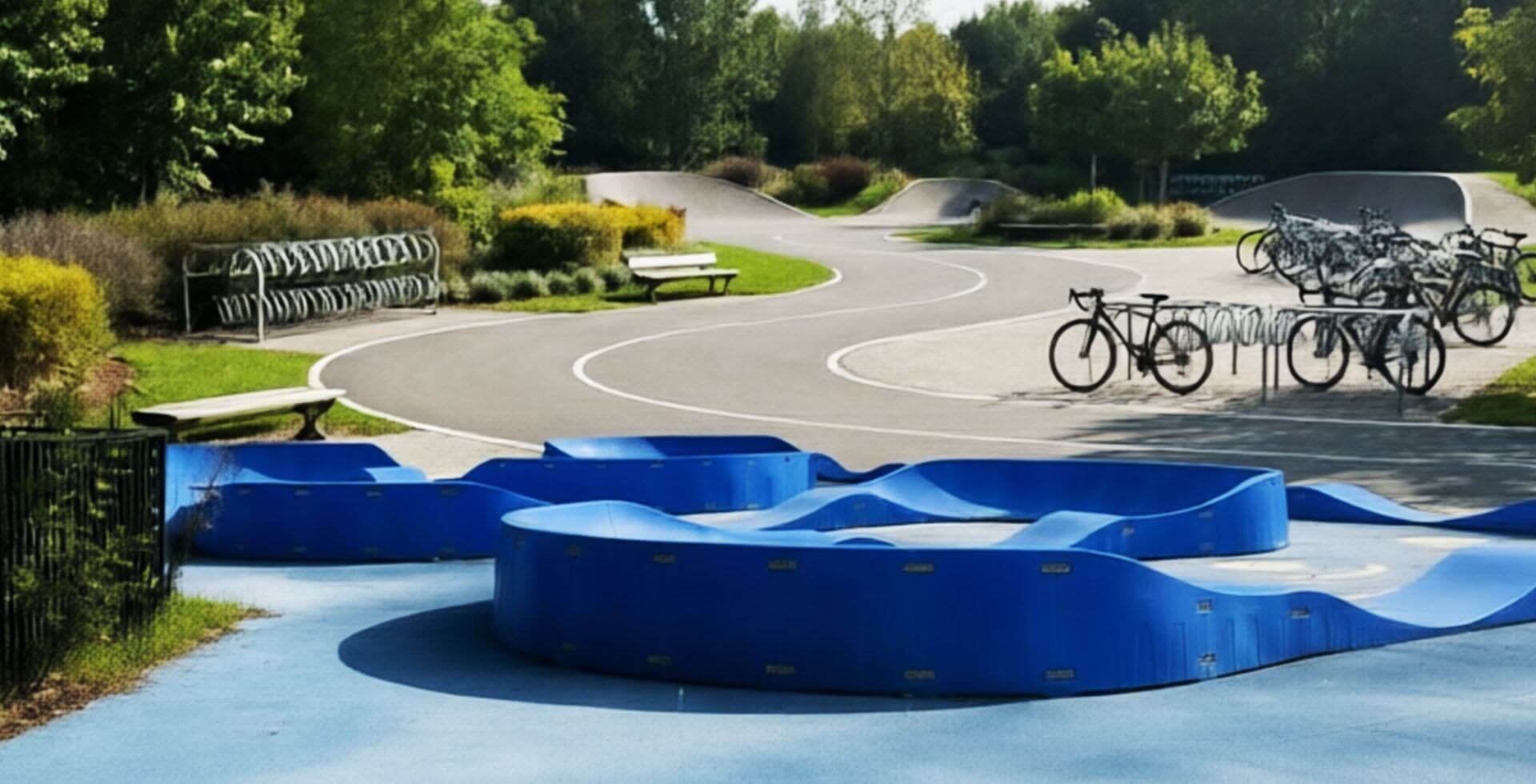
A large bike park works best when riders can quickly find a track matching their confidence and speed. Poor placement of Pump Tracks creates mixed-speed traffic, confused queues, and weak skill progression.
A strong large bike park pump track layout follows a clear sequence: beginner tracks near the entrance, a recreational loop in the center, an intermediate course beside it, and advanced layouts toward the outer zone. Paths, viewing areas, stopping space, and service access should connect the zones without crossing riding lines.
Start With Pump Track Zoning
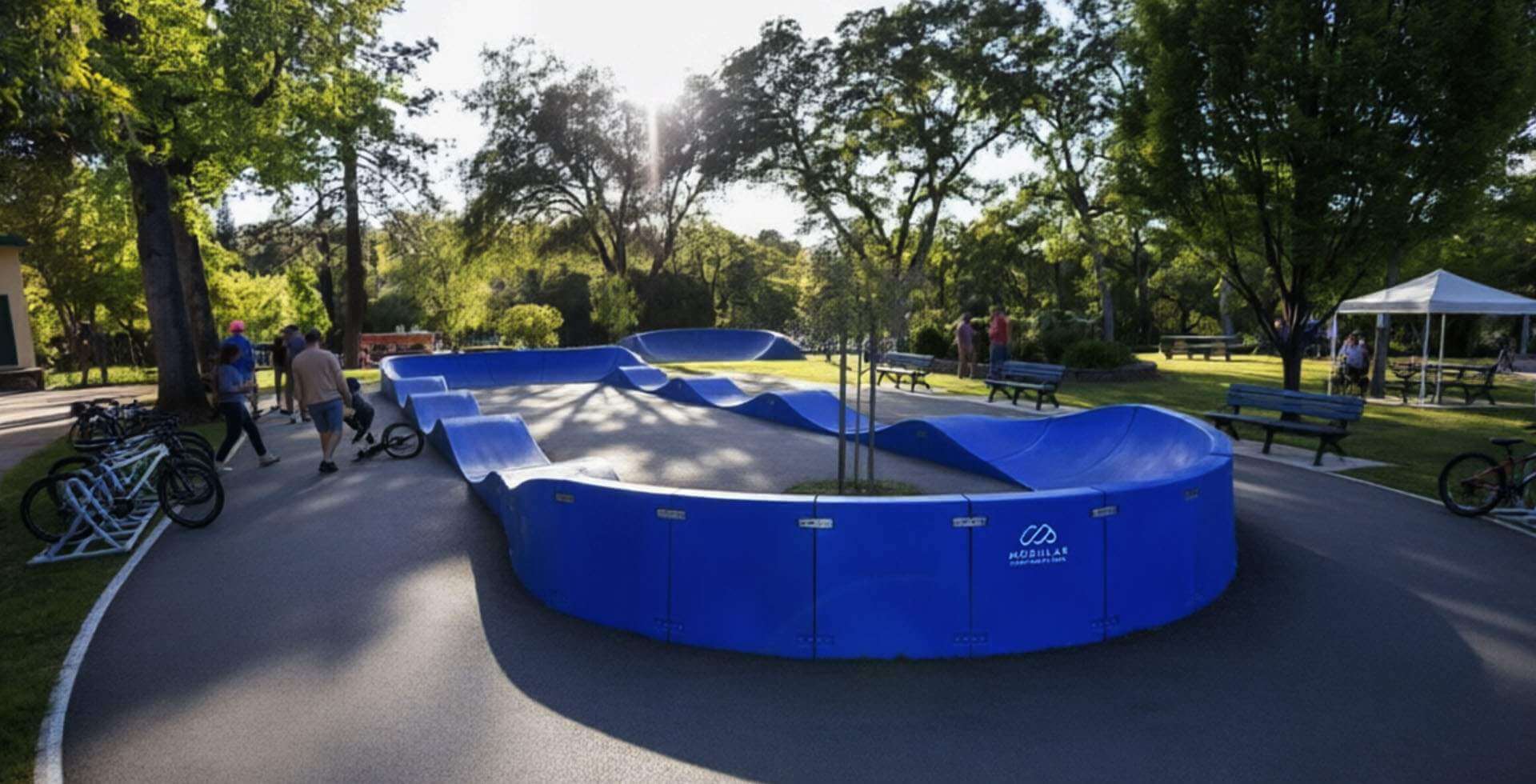
Pump track zoning should be based on rider behavior, not track length alone. A short course with tight turns may be harder than a longer loop with gentle rollers. Before selecting products, review rider skill levels, traffic, wheel types, and event needs.
A practical bike skills park needs three zones:
- A beginner zone for young riders, balance bikes, lessons, and first-time scooter users
- A central zone for families, BMX riders, MTB riders, skateboards, and daily mixed use
- An advanced zone for faster laps, technical lines, endurance, and events
This separation creates visible progression: riders can begin on a micro track, move to a basic loop, then try a technical course.
Put Beginner and Family Tracks Near the Entrance
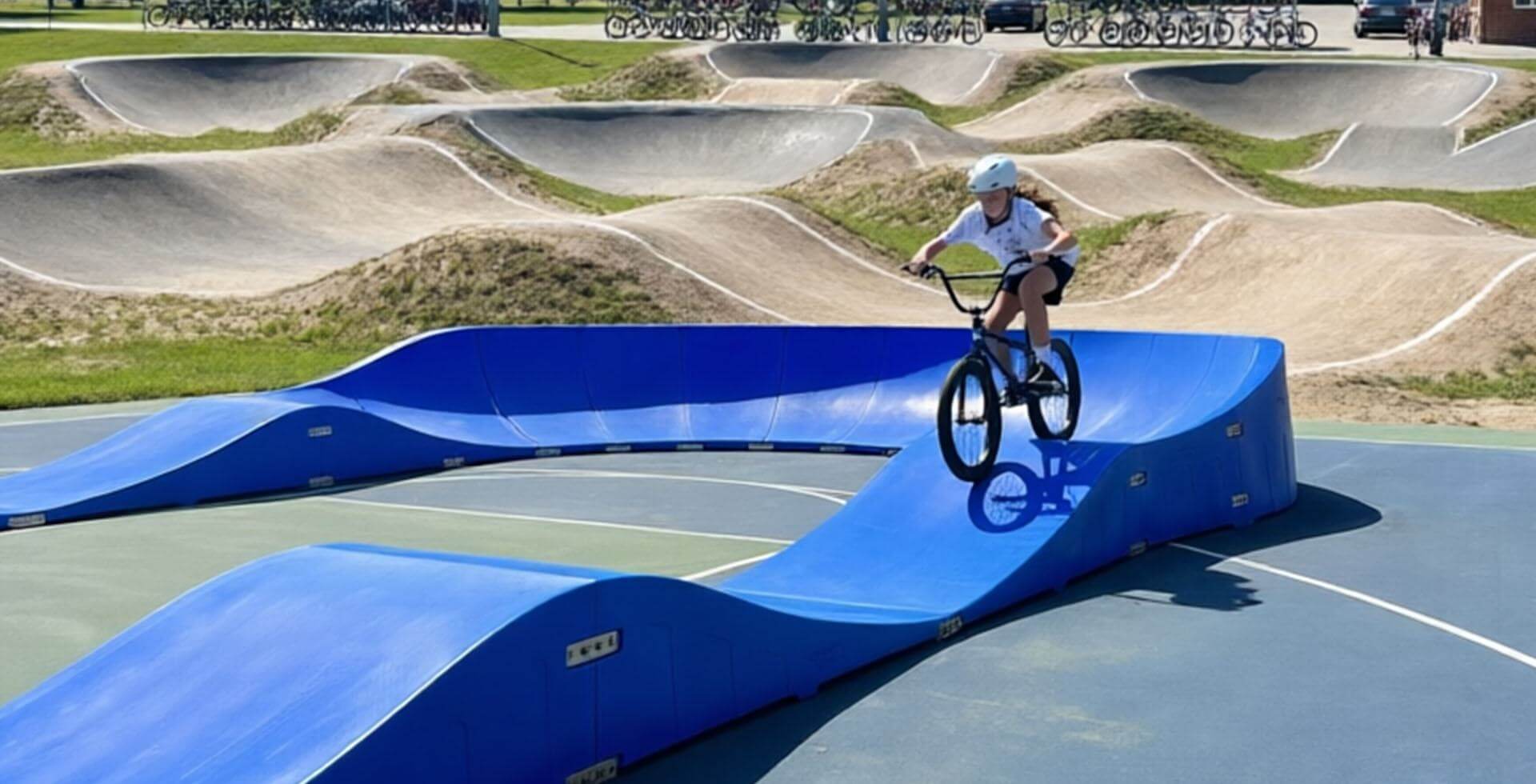
The beginner pump track should be visible from parking, rentals, toilets, shaded seating, and staff areas.
Build a Low-Speed Learning Area
A kids pump track or balance bike track needs simple rollers, open sight lines, and generous stopping room. It should not release riders into a busy walkway. One marked entry and one exit are easier to manage than several informal access points.
A nearby spectator area helps parents watch lessons. Seating, planting, or a low fence can form a buffer zone without making the track feel closed.
Make the Core Track the Main Hub
The core pump track should sit in the central activity area. It will usually carry the most laps and link the family zone with the advanced pump track.
Connect It to Park Services
Good pump track circulation links the loop to bike rental, drinking water, repair tools, seating, and information boards. Pedestrian paths should reach these services without crossing rollers, berm exits, or staging areas.
Pump track rider flow should be obvious. Riders enter at one point, follow a marked direction, leave through a slowing area, and return to the queue outside the riding line. If a layout supports two directions, staff can schedule one direction during crowded periods.
Add an Intermediate Progression Zone
Many parks provide easy and expert facilities but leave little for riders in between. That gap can push confident beginners onto technical lines too soon.
Increase Difficulty in Small Steps
An intermediate pump track may use more frequent rollers, direction changes, a tabletop, or longer sequences. Riders should learn to read terrain, carry momentum, and hold a line through connected features.
Place this rider progression zone beside the core track, with separate entry and exit points. A short walking connection is useful; a direct riding connection between different speed zones is not.
Move Advanced Tracks to the Outer Zone
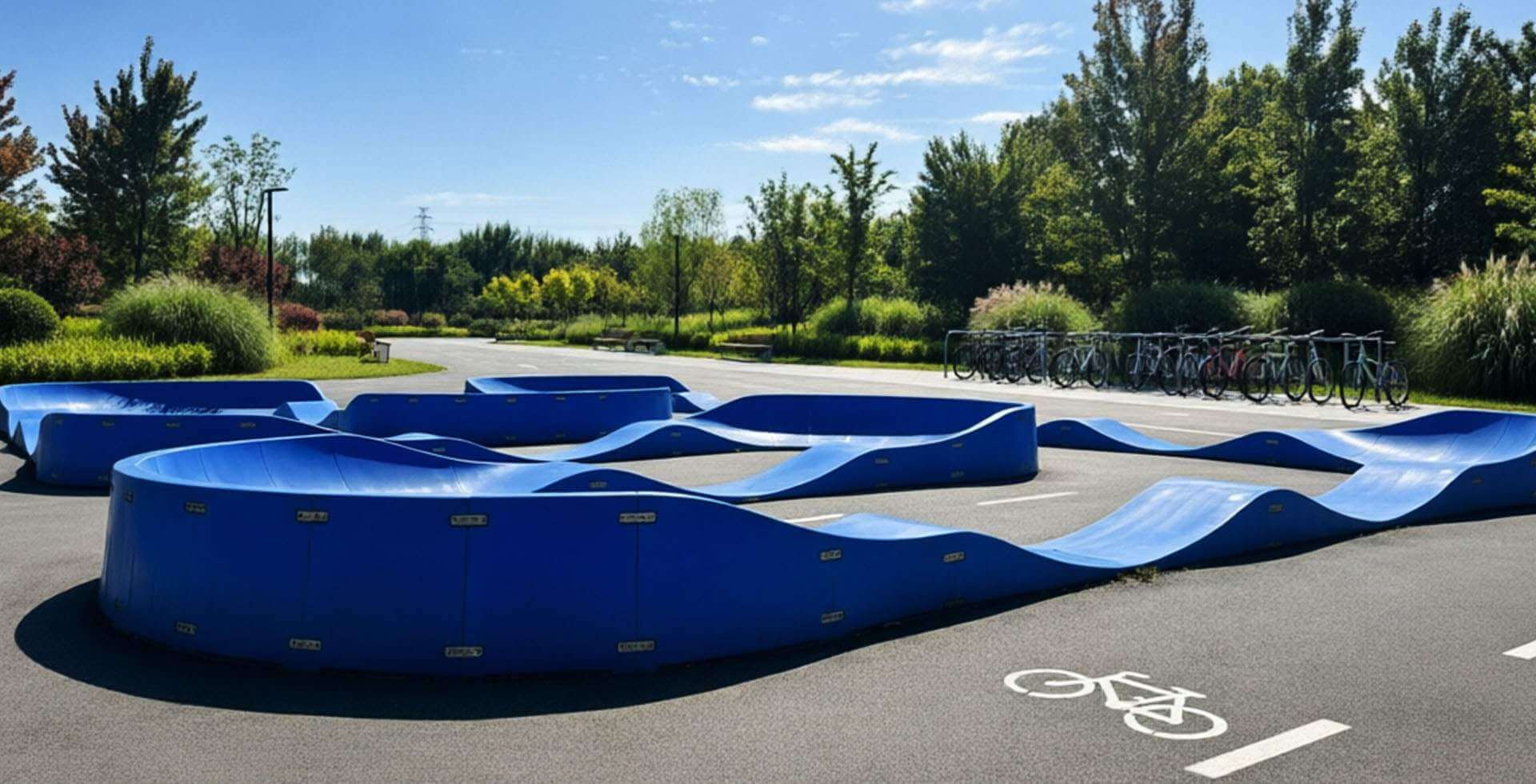
Advanced layouts create higher speeds and more complex decisions. They belong toward the rear or edge of the park, where queues and spectators will not block the entrance plaza.
Give Fast Riders Separate Space
An advanced modular pump track needs a staging area, visible track direction, and enough exit distance for braking. Event use may also require spectator barriers, emergency access, and maintenance access.
Trees, lawns, and rest spaces can support pump track spacing. Final distances should follow local rules, a risk review, and supplier drawings.
Match Track Models to Each Zone
A modular pump track layout lets a park combine teaching features, daily-use loops, and destination courses. These ULTRAPUMPTRACK examples show how different footprints can serve specific roles.
| Model | Size and main features | Suggested zone |
| Pump Cycle 1 | 12.5 m; 12.5 × 1.2 m; three rollers | Entrance, lessons, warm-up |
| Velocity Loop 2 | 46 m; 20.5 × 7.5 m; eight rollers, two turns | Central core track |
| Speed Dome | 44.5 m; 19.5 × 7.5 m; three turns and a tabletop | Intermediate zone |
| Stellar | 52 m; 20 × 14 m; four turns, ten rollers | Children’s and family zone |
| Nexus | 89 m; 22.5 × 17 m; two linked classic layouts | Outer advanced zone |
Pump Cycle 1 and Velocity Loop 2
Pump Cycle 1 is a micro pump track for narrow land. Its three rollers let new riders practice pumping without managing a full loop.
Velocity Loop 2 uses a familiar loop pump track layout. Eight rollers and two turns create rhythm for lessons and repeat laps, making it a practical central anchor.
Speed Dome, Stellar, and Nexus
Speed Dome adds three turns, two riding directions, and a tabletop. It suits an intermediate zone when direction is clearly managed.
Stellar combines ten rollers with a large interior space for planting, seating, or supervised activities. Nexus links two classic layouts into an 89 m large combination pump track for high-traffic parks.
Plan Safety Around the Whole Facility
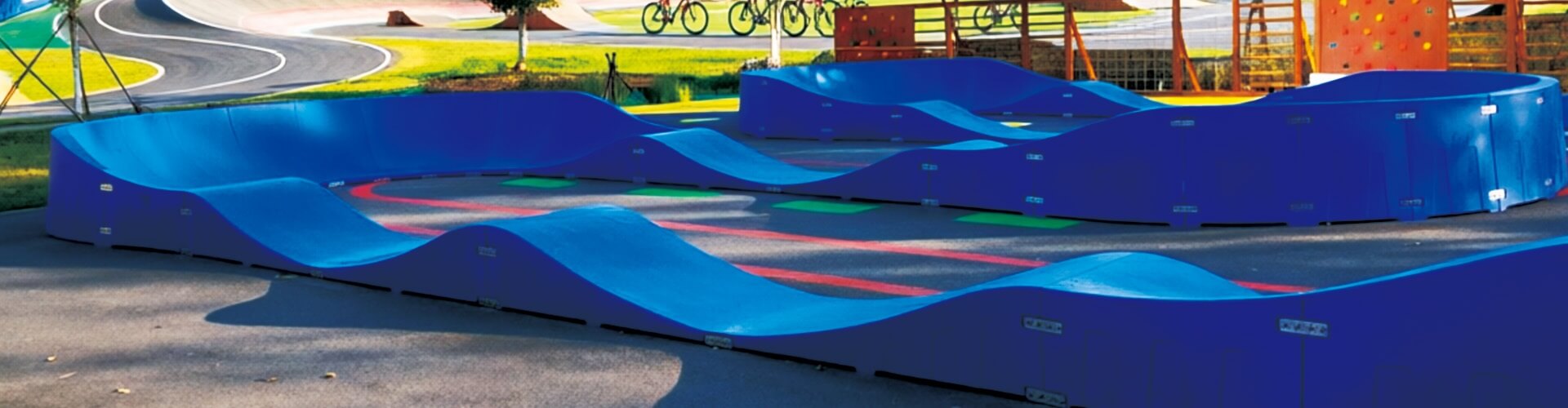
Pump track safety depends on the spaces between tracks as much as the features. A sound course can still operate poorly when queues, paths, drainage, or signs are misplaced.
The operating plan should cover:
- One-way circulation during busy sessions
- Difficulty, wheel type, helmet, and waiting rules at each entry
- Stopping zones that do not feed into footpaths
- Surface drainage that keeps water and debris off the riding line
- Lighting that avoids glare near turns
- Checks of modules, connections, signs, and the textured anti-slip riding surface
The surface should be described accurately. A pump track needs grip and wheel control; it is not meant to have a slick or glossy finish.
Reserve Space for Phased Expansion
Phase one may include a micro track and core loop. Phase two can add the intermediate course. A combination layout or second family track can follow when visitor data supports it.
Keep the future expansion zone beside existing service routes. Scalable pump track design should allow added modules or capacity without sending workers through an active course.
ULTRAPUMPTRACK as a Modular Pump Track Supplier
ULTRAPUMPTRACK developed its modular system after experience with dirt and asphalt tracks. Its range includes micro, core, creative, and large combination layouts for bikes, BMX, scooters, skateboards, and balance bikes.
The company provides base configurations and custom pump track design based on space and budget. The outdoor sections support quick assembly, layout changes, and phased expansion. Their riding surface uses a textured anti-slip finish for traction, not a smooth finish. This helps developers plan one coordinated park instead of buying unrelated features.
Conclusion
The most effective arrangement moves from low speed to high speed: entrance micro track, family zone, central core loop, intermediate course, and outer advanced track. Between them, provide clear circulation, stopping areas, viewing space, drainage, and service access.
Before choosing a layout, send the usable site dimensions, target rider groups, expected traffic, and expansion plan to a pump track supplier. Those details produce a better proposal than total land area alone.
FAQs
How much space does a pump track need?
A micro track may fit a strip only 1.2 m wide, while a large combination pump track needs a broader footprint plus queues, paths, buffers, and stopping space. Measure the usable area, not the full property.
Should beginner and advanced pump tracks be connected?
They can share services and pedestrian paths, but their riding lines should remain separate. A controlled transition path is safer than letting a beginner pump track feed directly into a fast course.
Which modular pump track is best for a public bike park?
The choice depends on rider skill levels, daily capacity, site shape, and programming. A public park often benefits from a learning track, a core loop, and a progression or combination layout.
Can bikes, scooters, and skateboards use the same pump track?
Yes, when track width, turn geometry, operating rules, and surface suit mixed wheels. Busy parks may schedule sessions or separate young balance-bike users from faster BMX and scooter riders.


