

Modular Pump Tracks: Rent, Test, Move and Scale Before Permanent Build
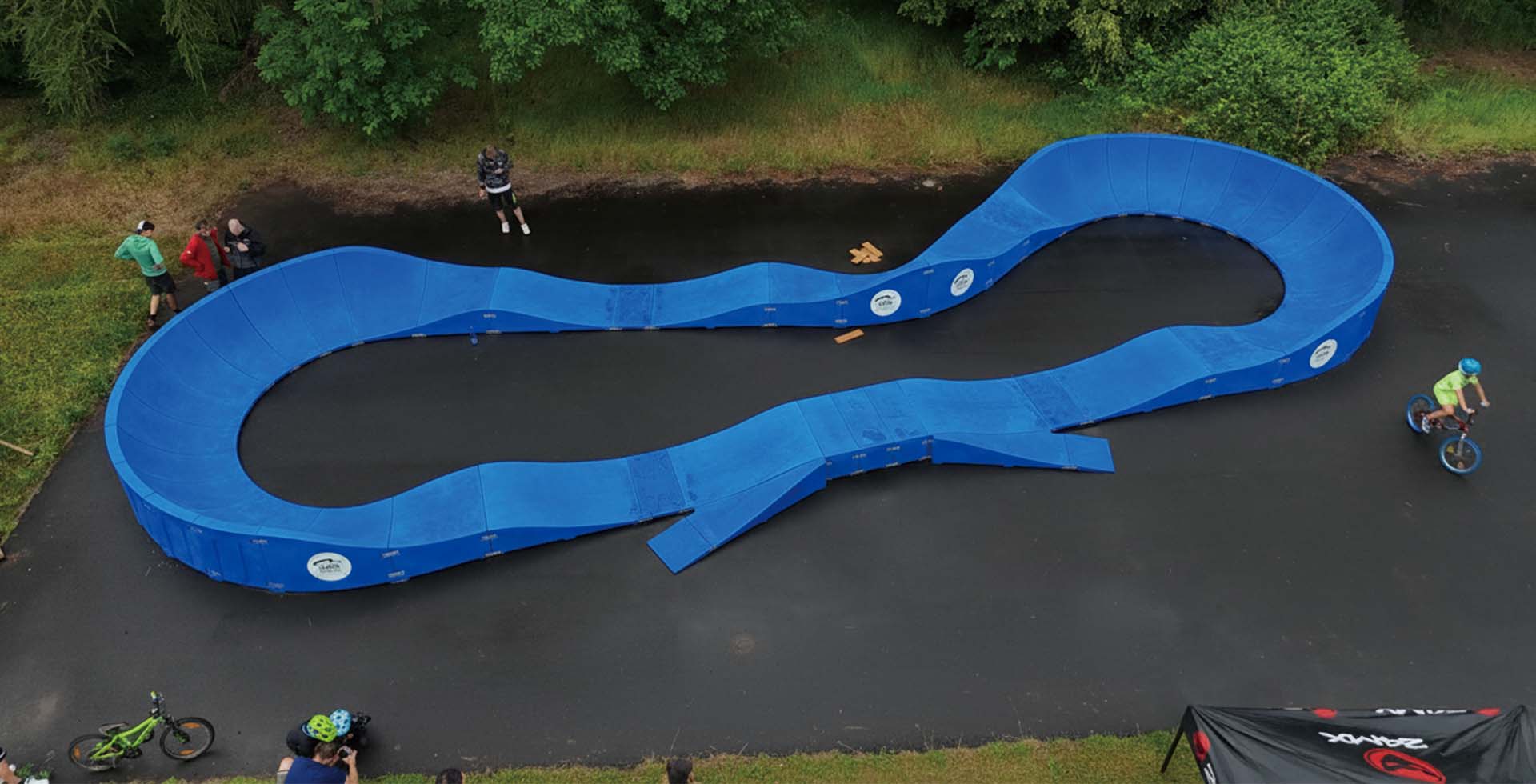
Historically planning a pump track would have involved very fixed groundworks, long lead times and strict budgets that would have to be approved before work could commence. Whilst this model of development does work for some locations there are many schools, parks and event operators who require more flexibility within their development plans as demand is unknown, space is limited and most importantly budgets are released in phases.
Instead of building a permanent pump track first, the modular concept changes the starting point: rent, test, move or even scale up and down as required. Decision makers get to see for themselves how the area can be used best by actual users before putting down long-lasting structures.
The riding experience itself stays consistent. A pump track uses rollers and banked turns designed for pumping motion rather than pedaling, and the surface is anti-slip rather than smooth, giving controlled grip for bikes, scooters, and skateboards across different weather conditions.
What Is a Modular Pump Track?
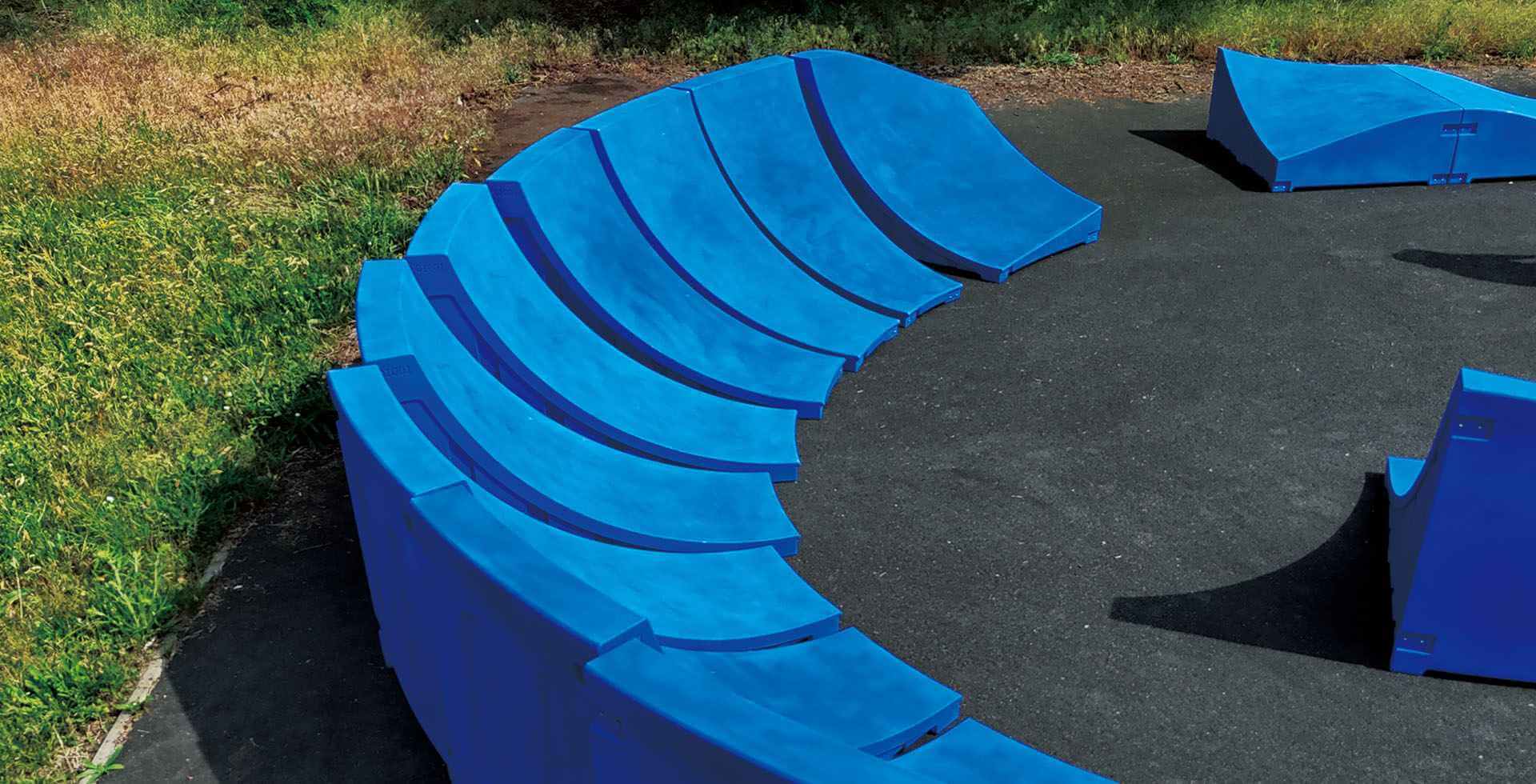
A modular pump track is a riding circuit made from modules or sections of pump track which can be joined together in a variety of configurations to form a riding surface within an allotted area. Each individual section or module is typically a complete unit in itself, forming elements of the track such as rollers, berms and rhythm sections which can be added or removed as necessary in the design.
Unlike a permanent asphalt or dirt racing circuit our modular racing circuit system is not buried in the ground. They can be installed on a flat surface of compacted ground, asphalt or even on sealed hardstand subject to design requirements.
The key idea is adaptability:
- Sections can be added or removed
- Layouts can be reshaped for different skill levels
- Entire tracks can be dismantled and relocated
- Surface remains anti-slip for safety and control
Modular pump tracks are features used by BMX, scooter, skate and even entry level road and mountain bikes. The common denominator with all of these features is continuous flow, or that the speed of the rider is generated by movement of their body as opposed to pedaling.
Why Choose a Modular Pump Track?
Most permanent pump tracks are designed as long-lasting community infrastructure. But not every site is ready for that when you first start building.
A modular system allows for a phased decision process. For public projects this is a particular advantage as evidence of usage, funding and community support is required before investment is committed.
Key reasons planners choose modular systems first:
- Reduces upfront construction risk
- Allows real-world usage testing before permanent build
- Supports temporary programs and seasonal events
- Helps validate location suitability
- Provides data on rider volume and behavior
| Decision Factor | Modular Pump Track | Permanent Pump Track |
| Initial cost risk | Low | High |
| Installation time | Fast | Long |
| Flexibility | High | None |
| Relocation ability | Yes | No |
| Testing capability | Yes | No |
In many cases modular buildings are used as a pilot until the permanent buildings have been approved.
Rent: Temporary Pump Tracks for Events and Short-Term Programs
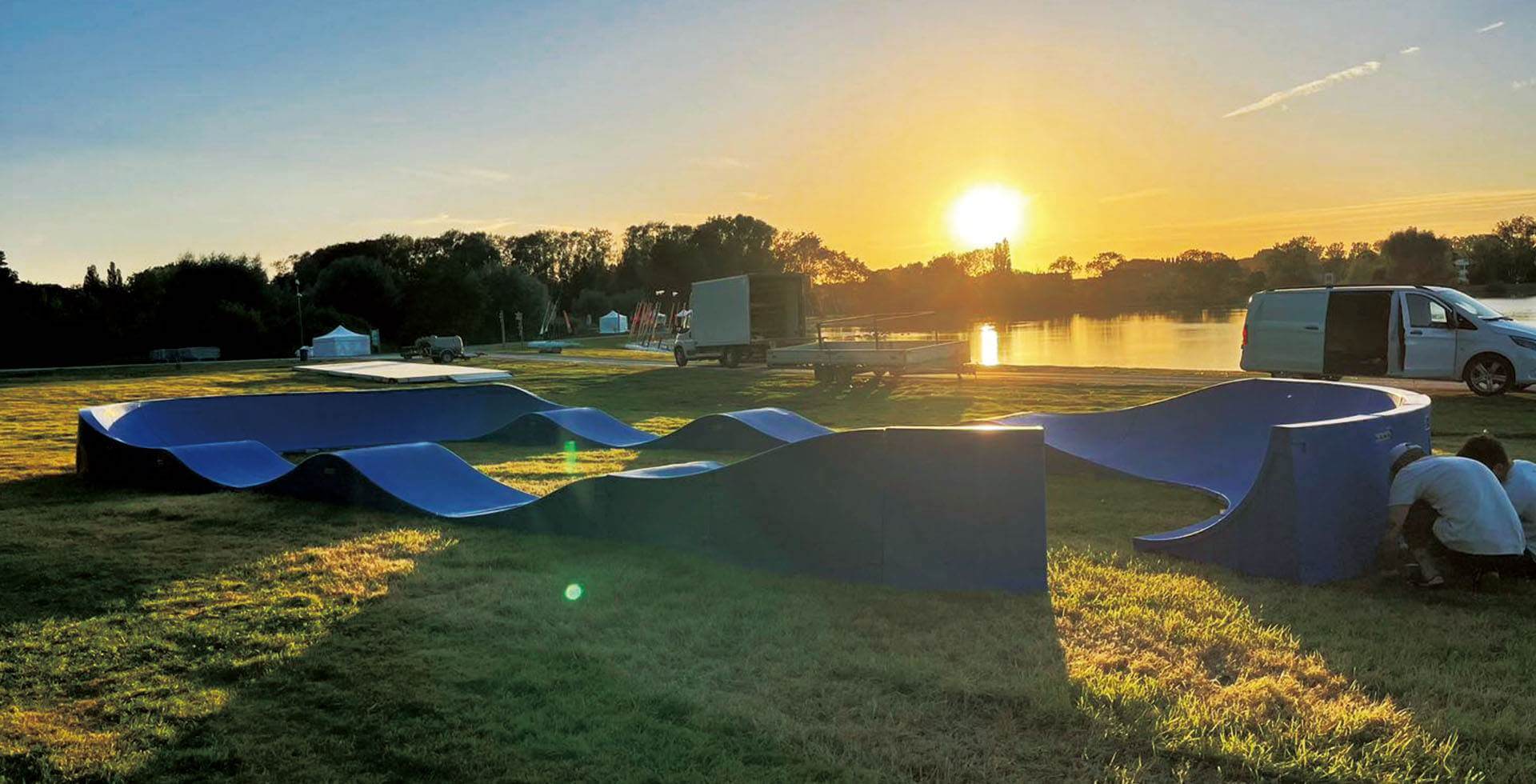
Modular pump track can be used for short-term purposes. The goal is to be visible, to generate traffic and to allow for test rides.
Typical rental scenarios include:
- School sports days and activity weeks
- City festivals and public space activations
- Youth cycling programs during holidays
- Brand or community outreach events
- Seasonal tourism attractions
A temporary pump track can stay in place for a few days up to several months, depending on your project goals. A temporary track is a modular structure, so it goes up way faster than a permanent one.
Rental projects can be used to test whether a project will actually be used.
An example of data being collected from community park’s temporary summer design could be riding volume statistics collected on weekdays and weekend days. Should riding numbers remain constant throughout the season then the numbers can reinforce a need for long-term development.
Test: Validating Demand, Location and User Behavior
Test runs with a modular pump track are one of the most valuable uses of such a system. Instead of elaborate surveys and assumptions about users’ behavior, real behavior can be observed and plans can be adapted accordingly.
A test phase typically focuses on three variables:
- Location performance
- Different areas within a park or campus can produce very different usage levels depending on visibility, access, and surrounding activity.
- User demographics
- A track may attract younger riders during school hours and older riders in evenings or weekends. This helps define programming needs.
- Flow and layout response
- Some layouts encourage faster flow, while others support beginners. Modular sections allow adjustment during the test phase.
Common findings during testing include:
- Higher-than-expected usage in visible central areas
- Strong uptake from scooter riders in urban zones
- Increased participation when beginner-friendly layouts are used
Testing also helps to identify overestimating or underestimating demand for a permanent build.
Move: Relocating the Pump Track Across Sites
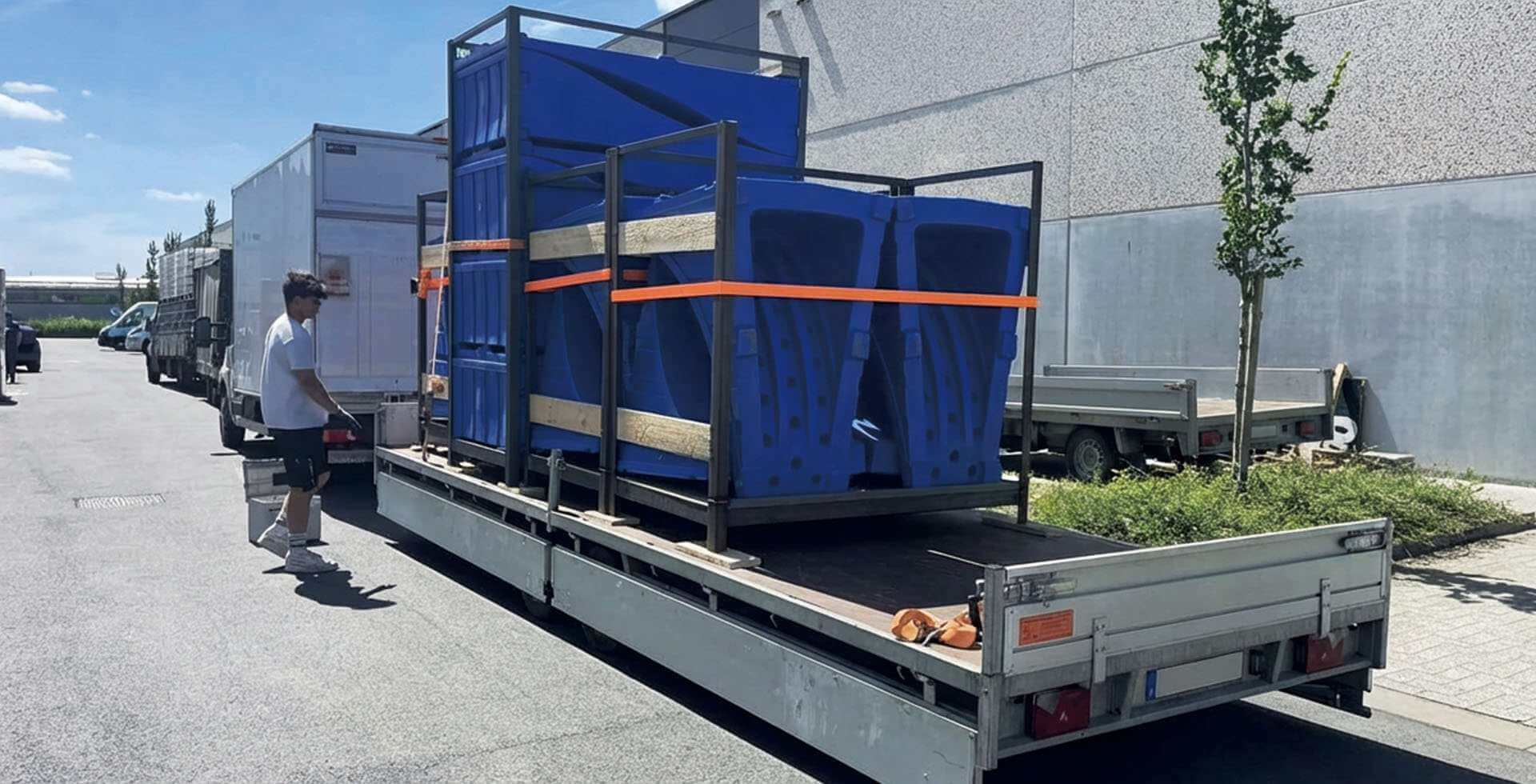
One of the advantages of modular systems is mobility. A track which is installed in a site does not have to be fixed to that site for all time.
Relocation is often used in:
- School districts sharing equipment between campuses
- Event operators rotating installations across cities
- Parks undergoing renovation or phased upgrades
- Temporary land use agreements
A movable pump track can be deconstructed, moved and re-assembled without having to start from scratch. This option is ideal for large organizations with multiple sites or that are subject to changes in land availability.
Common relocation patterns:
- Campus A → Campus B during school term rotation
- City center plaza → waterfront park during seasonal events
- Temporary site → permanent park after approval phase
This flexibility extends the lifecycle of your investment and reduces idle time with your equipment.
Scale: Expanding from Small Layouts to Full Circuits
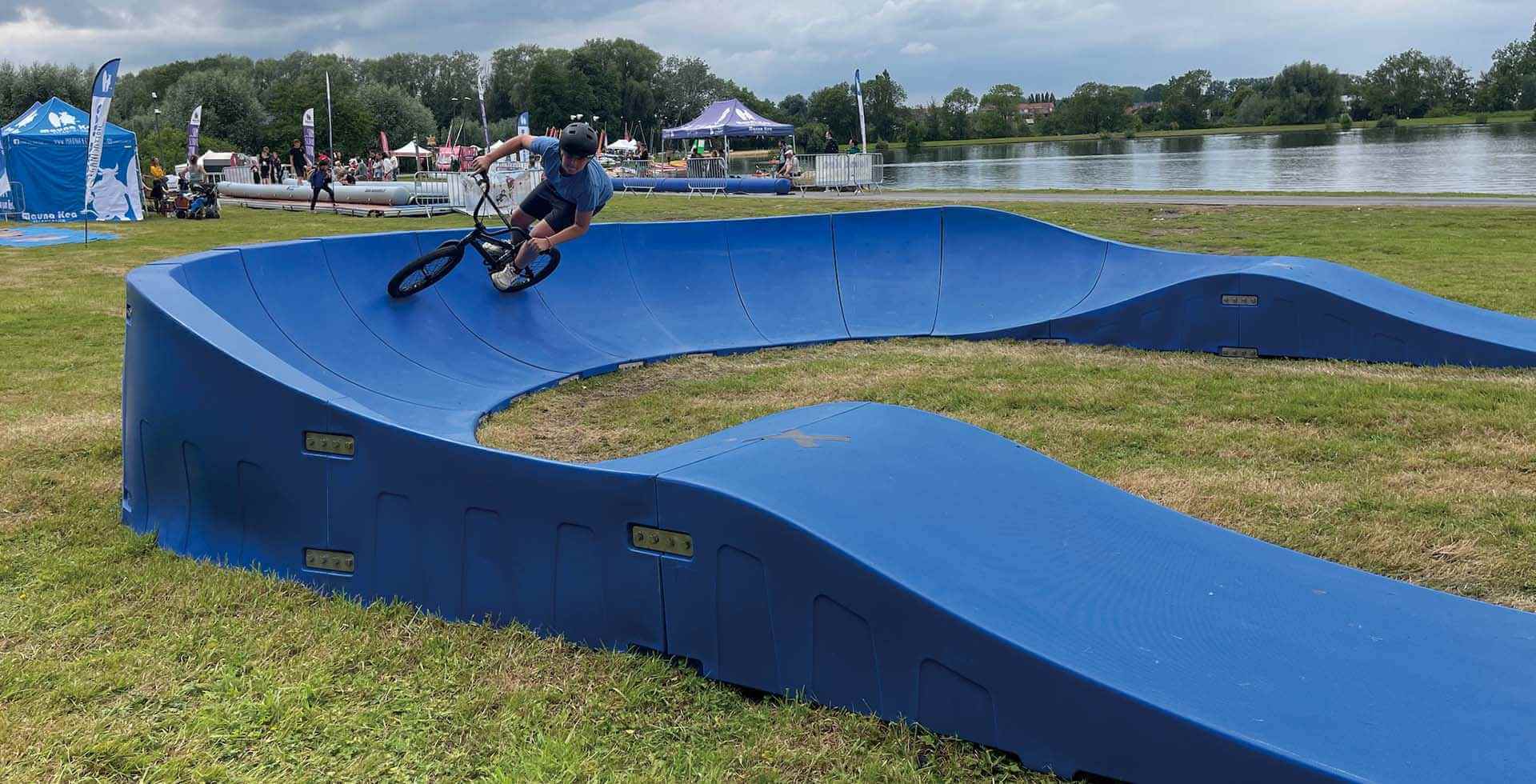
Modular Railways support staged growth. You don’t have to build a large track all at once. First set up a small layout and extend it as required.
Scaling options typically include:
- Adding more roller sections for speed variation
- Extending straight sections for flow continuity
- Introducing tighter berms for advanced riders
- Expanding total circuit length as space allows
The initial set of play components can be set up to form a small play area of dimensions suitable for a school or small park. As usage increases, additional modules can be added to create a larger community play area in the future.
The staged approach also generally aligns with public funding cycles which are often released in a number of funding tranches rather than in full for the whole period at the start.
Where Modular Pump Tracks Are Commonly Used
Each environment requires different design aspects. In public and semi-public spaces, modular systems are often used.
- Schools: physical education programs, skill development, after-school activities
- Parks: community recreation and family-friendly cycling spaces
- Events: temporary attractions to increase visitor engagement
- Resorts and camps: recreational amenities for guests
- Urban plazas: short-term activation of unused public space
All of the riding areas benefit from the same core advantage: A riding area with a fixed riding flow on a stable, anti-slip surface for all weather.
Installation Planning and Practical Considerations
Before you can install a modular pump track, a number of practical points need to be considered to ensure effective use of the facility.
Key planning points:
- Available flat space and load-bearing surface
- Expected user skill levels and age range
- Entry and exit flow design for safety
- Weather exposure and drainage conditions
- Storage and relocation logistics if temporary
- Future expansion potential
The anti-slip surface of modular pump tracks is particularly important when riding in mixed-use environments, and is designed to give traction in light rain or dust. This enables riders to corner and make transitions safely.
About ULTRAPUMPTRACK: Modular Pump Track Specialist
ULTRAPUMPTRACK is modular Public or Private Pump Track Systems. Quickly and easily built for Maximum Usage in a variety of configurations, capable of use by multiple users on Bicycles, Scooters and Skateboards.
We work on practical use cases and abandon the idea of fixed infrastructure. First a temporary installation for testing or an event and then a larger arrangement of spaces or a permanent recreational offer as the project develops and the site is prepared for development.
The modular design enables municipalities, schools and other recreational planners to meet changing community needs without committing to full construction at the start.
Conclusion
Modular pump tracks are designed to decrease uncertainty in recreational infrastructure planning. Unlike permanent constructions, modular projects can launch in phases. For example, you can start by offering rental or temporary tracks to test interest. Next, you can analyze and then move the track as needed. Finally, you can add more tracks to meet demand.
By aligning the physical infrastructure with the real data of how people actually use public spaces, as opposed to assumptions about how people might use them, flexible design allows for layout changes over time to improve accessibility and to increase space productivity.
For many projects the question of building a pump track is replaced by the question of how such a facility can be designed to have longevity and to be adaptable in the long term.
FAQs
What is a modular pump track?
A modular pump track is a flexible riding system made up of connecting sections, to be able to set up, reorganize or to move it. It is suited for using with bikes, scooters and skateboards on an anti-slip surface.
Can a modular pump track be rented for short-term use?
Modular pump tracks are rentable for one-off occasions like events, school activities, and for community-based projects and events to gauge interest before permanent investment.
Is a modular pump track suitable for schools and public parks?
Yes, this equipment is widely used in both schools and parks. In schools it is generally used for physical education and for helping children to develop their skills, in parks it is used for a variety of community recreation and leisure activities, including family cycling.
Can the same pump track be moved to another location?
Our Modular Pump Tracks can be dismantled and re-established at another location should required change. Modular Pump Tracks are ideal for multi-site programs, short term events or where land use changes.


