

From Community Spaces to Global Racing: The Rise of Pump Tracks
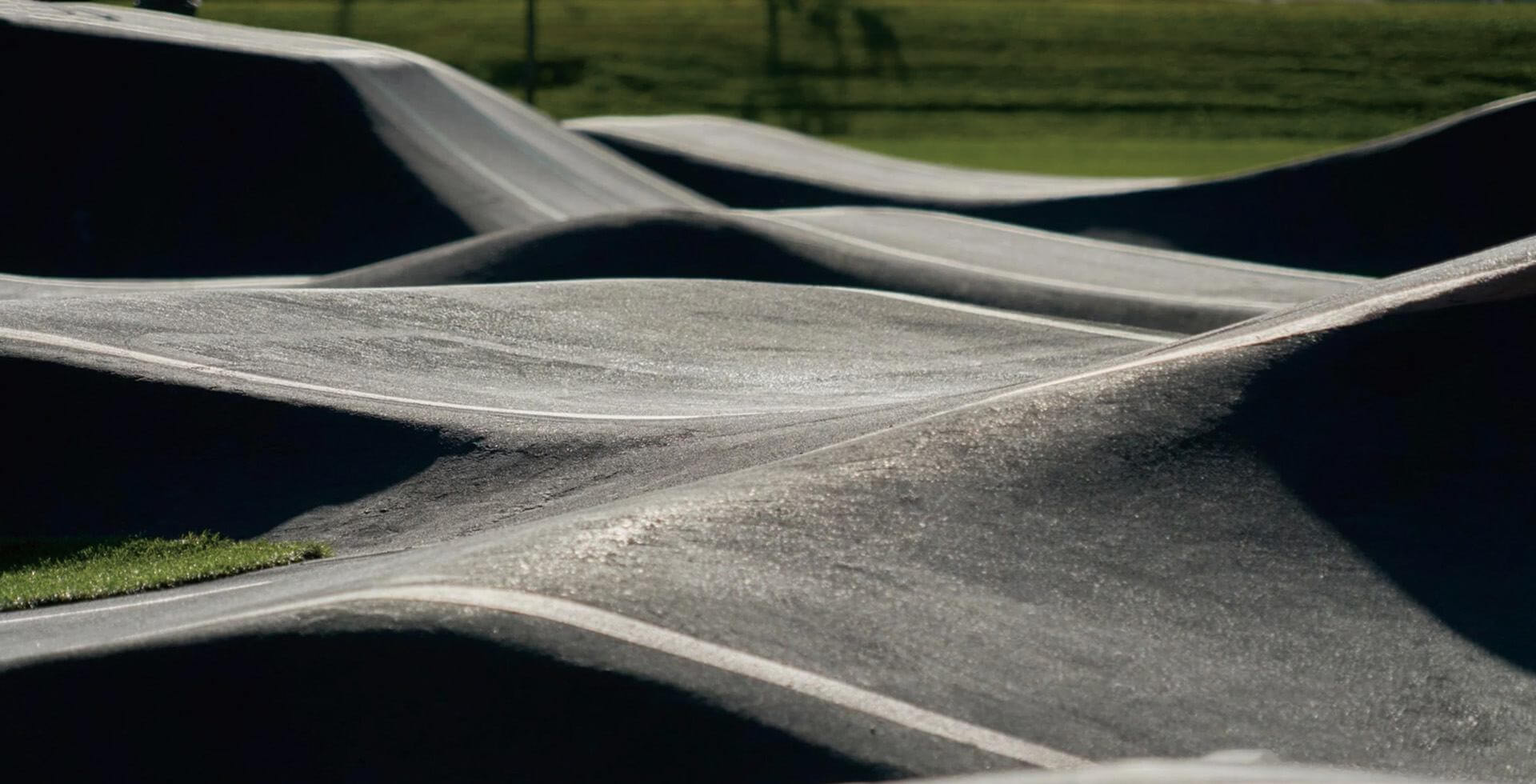
Pump tracks have shifted from small neighborhood riding loops into widely adopted public sport infrastructure and even international competition venues. What was once a feature in many back yards of neighborhoods around the world and used for casual fun by the occasional rider, is today incorporated into Bike Parks, school yards and organized competitions all over the globe.
The core transformation that the new pump track brings is that of a space to ride, transformed into a multi-use movement space where people can generate speed through physical motion on a continuous loop of rollers and turns. The surface of a pump track is designed to be anti-slip and durable, for use in all weather, and suitable for use with bikes, scooters and skateboards.
From park development, school grounds and urban renewal, pump tracks are proving to be an ideal solution for providing active outdoor sport for all in a safe, fun and healthy environment. What begins as skills development on a local track can now become part of a global competition series within the framework of an international racing format.
What Is a Pump Track and How Does It Work?
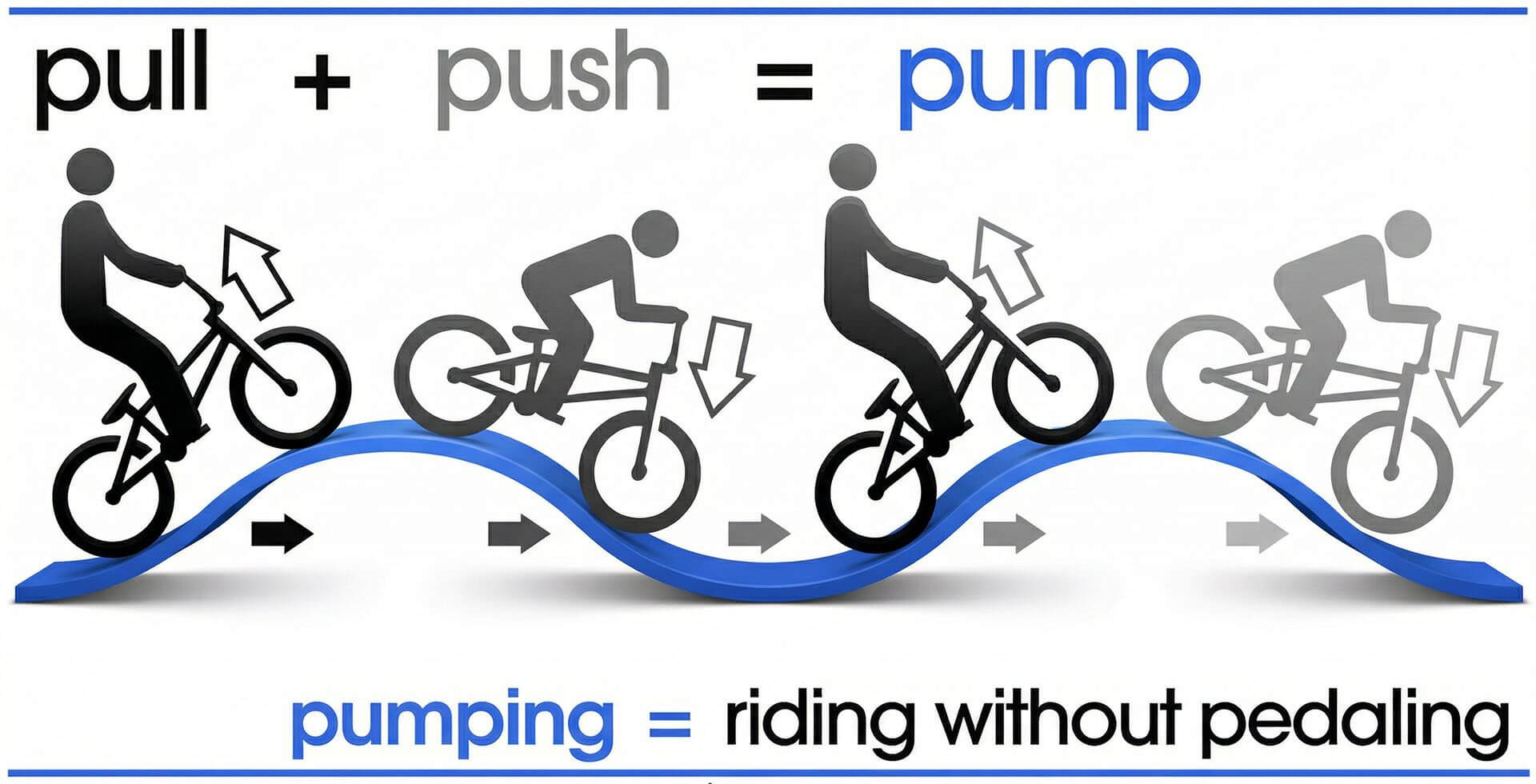
A pump track is a course made up of a series of rollers, berms and features all connected together in a loop. The course is designed to allow riders to continuously move down the track without having to pedal constantly. As the rider goes down the track, their speed is increased by ‘pumping’ the features – by compressing and then stretching their body as they go over ups and downs.
As opposed to normal cycling routes, pump tracks are developed for use with various wheeled sports. At a typical track, you can find BMX-riders, mountain-bikers as well as riders on scooters and skateboards. The design allows for new riders to hone their balance as well as for more experienced riders to work on their technique while performing advanced tricks and combos in high motion.
Key riding mechanics
The riding principle is simple but technical:
- Downward force on rollers generates forward momentum
- Bermed corners maintain speed through direction changes
- Continuous rhythm reduces the need for pedaling
- Anti-slip surface ensures traction in wet or dry conditions
Pump tracks are highly accessible due to their design. You can start slow on a balance bike and go to the advanced racing lines within the same track.
Why Pump Tracks Became Popular in Community Spaces
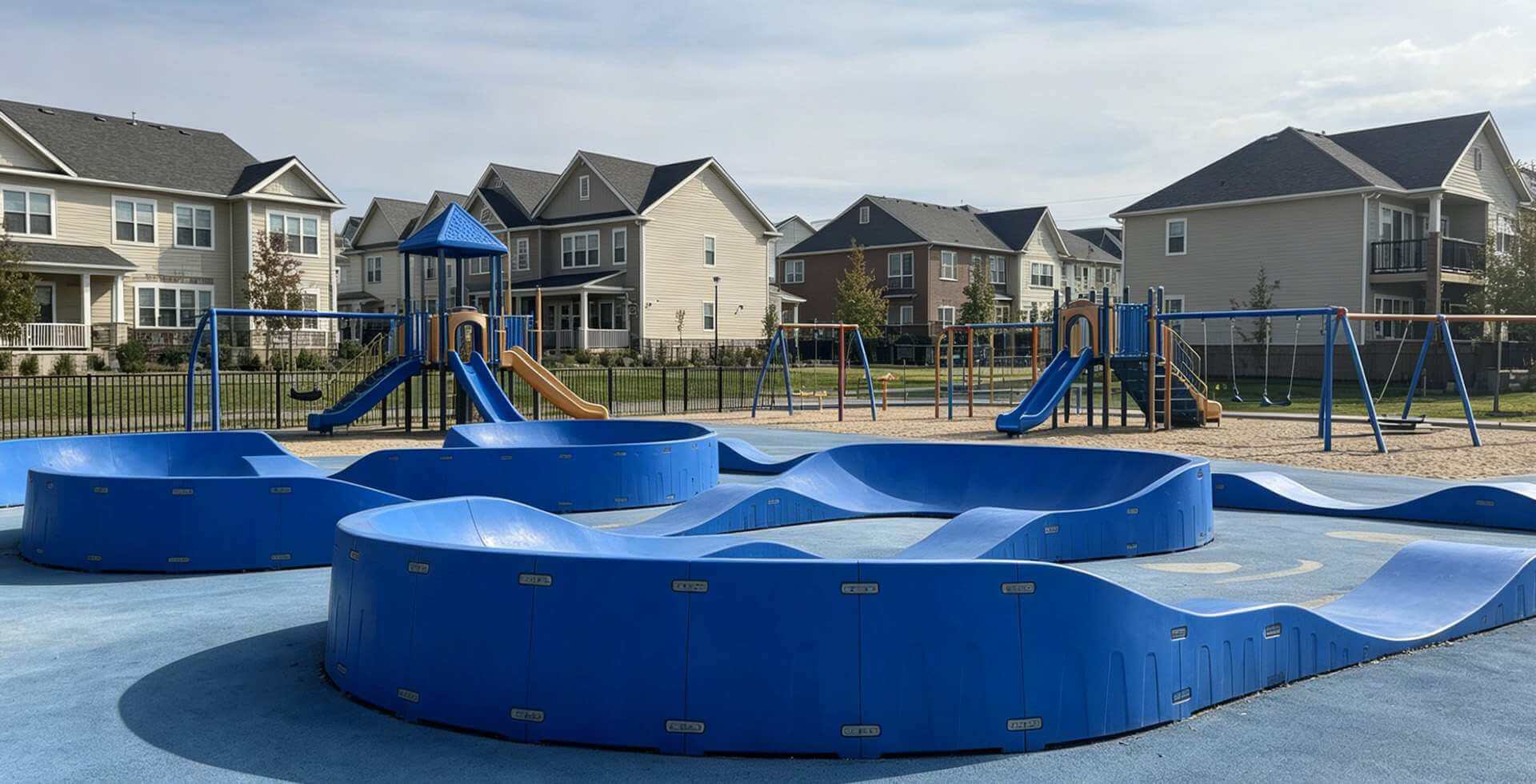
Pump tracks have grown in popularity over the last decade largely through community recreation planning. Rather than developing large expensive sports facilities, cities have looked to develop compact riding facilities using underutilized land.
In real-world examples of community pump tracks, they are typically found in:
- Local parks near residential districts
- Schoolyards used after class hours
- Waterfront redevelopment zones
- Sports parks shared by multiple user groups
The community pump track at the weekend is a mixed-use area where children play on scooters while older kids and groms practice their BMX flow lines. It is an active all-day area as opposed to being a strictly timetabled sports area.
Why communities adopt pump tracks quickly
Several practical factors explain the rapid adoption:
- Low barrier to entry for riders of all ages
- No need for mechanical propulsion or special equipment
- High visibility encourages spontaneous participation
- Supports social interaction between different age groups
- Works as a safe alternative to street riding
Many of the visits to features in a neighborhood park are for those that support continuous motion-based play. A pump track is typically one of the features most visited within such a park.
Modular Pump Track Systems and Flexible Urban Design
By switching from fixed infrastructure to modular pump tracks, the possible locations for a pump track have greatly increased. Because of modular construction, modules can be pre-fabricated, transported and assembled in different possible ways in the end.
Versatile systems enable both temporary setups and long-term park development.
Temporary vs permanent installation use cases
| Type | Typical Use Case | Example Duration |
|---|---|---|
| Temporary pump track | City festivals, school events | 2–8 weeks |
| Permanent pump track | Public parks, bike parks | 5–15 years |
| Modular expansion track | Upgraded community parks | phased development |
These temporary setups are used as pilot projects and the user’s reaction is tested before going into full construction. The permanent version is then included in the long-term concept of the park.
Why modular design matters
Modular pump tracks are increasingly used because they:
- Adapt to irregular land shapes
- Allow phased investment by municipalities
- Support relocation for seasonal events
- Reduce construction downtime in public areas
A parking lot, a vacant plaza or even an under used park can quickly be turned into a riding facility within a couple of days as opposed to months.
Pump Tracks in Schools, Parks, and Youth Programs
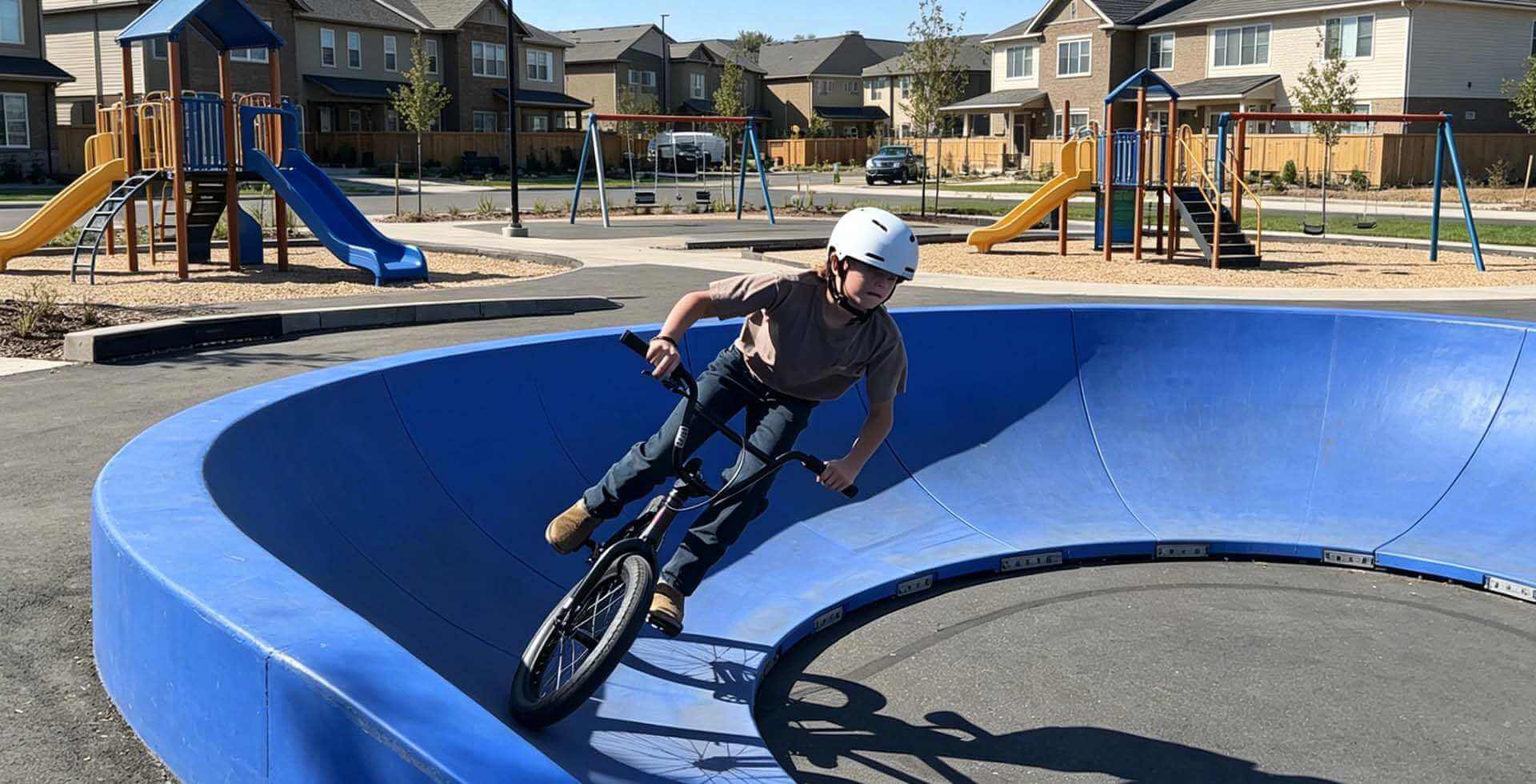
Schools and public park systems are two of the fastest growing groups of users of pump tracks, because they offer a means to develop fitness in a sport, without needing a coach for structured lessons.
School pump tracks are typically used for physical education lessons, after school programs and for cycling safety training. On a pump track students learn to balance and to coordinate while they manage their speed in a real live situation and not on a flat surface.
In local parks, pump tracks are hubs where many different users can be participating in a wide range of activities at the same time. Parents can watch their kids using scooters to do repeat circuits of the track whilst also watching teenagers carving up the inside corners on their bikes & attempting more & more advanced lines as they progress.
Common usage scenarios
- Primary schools introducing cycling safety programs
- Public parks hosting weekend family cycling activities
- Youth sports centers offering beginner training zones
- Community centers organizing small riding challenges
The anti-slip surface allows for use in all weather, all year round.
From Local Events to Structured Pump Track Racing
Most community events are first steps into competitive action. The local pump track event for example usually is a timed runs contest, small races for beginners and skills contests.
As participation grows in these events they naturally evolve to become more formalized racing events.
Common event formats
- Time trial competitions on a single loop
- Head-to-head sprint races
- Kids’ beginner race categories
- Open practice and demo sessions
- Community festival race days
As spectators can see the entire track from one location pump track racing is particularly suited for public events. Here the visibility and the spectator’s engagement play an important role.
BMX and mountain bike gradually get enough regular riders so that there is a regional qualification system and fixed competition schedule.
International Pump Track Racing and Global Expansion
What starts as a local development can eventually lead to international competition formats. The global pump track racing system consists of races that take place in countries all over the world. Riders qualify for the Big Final through a fixed number of races and semi-finals.
The events at this level of competition are timed over fixed courses. They demand great accuracy, high acceleration and top flow. They are not endurance events.
International events draw together elite riders from around the world and local champions in single events to generate interest and exposure amongst local communities and media.
As pump track racing continues to grow globally, cities are beginning to design facilities with a focus to standardized track designs that can support competitive racing.
Design and Construction Considerations for Pump Tracks
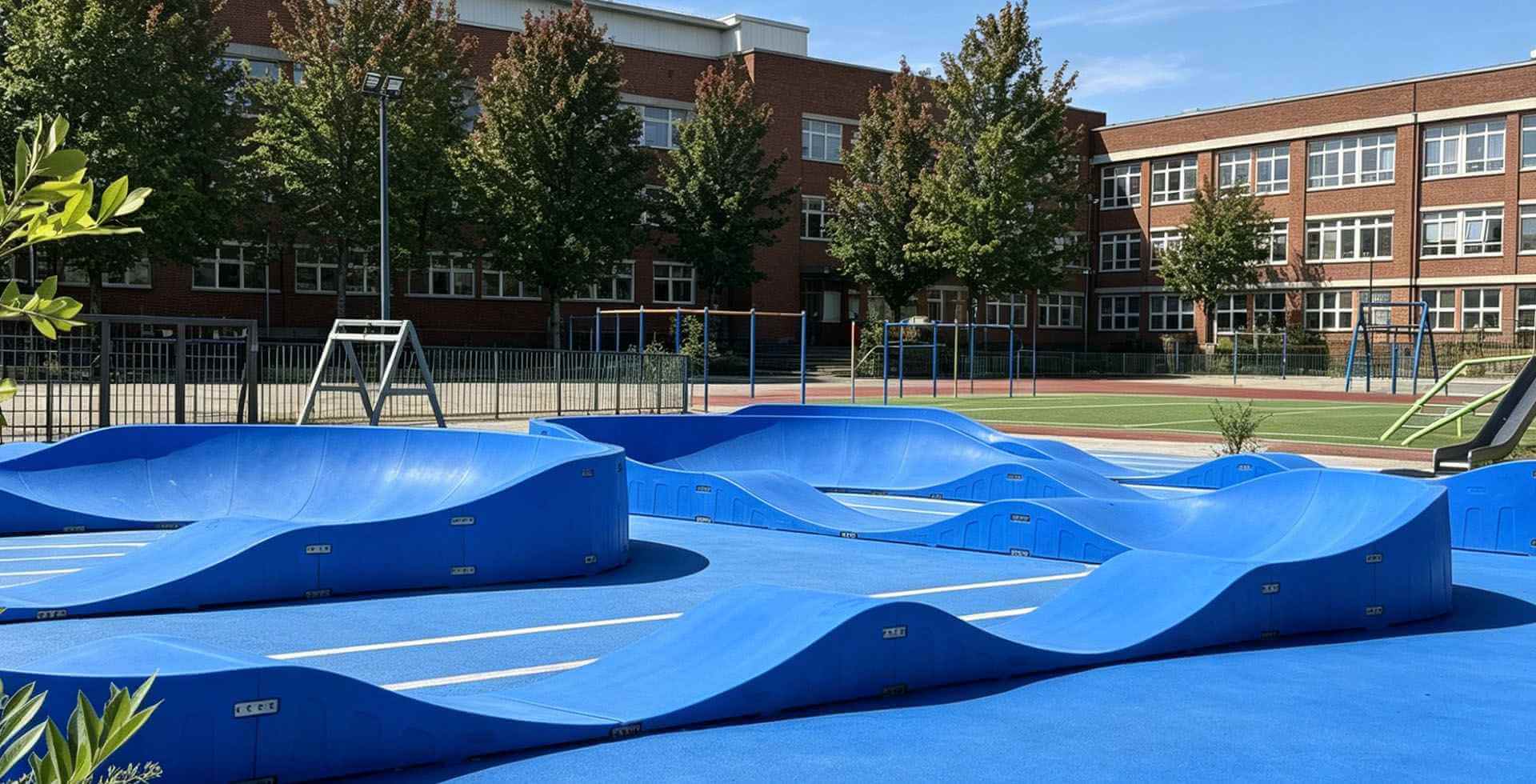
When designing a pump track one must try and balance the three main components: speed flow, safety and accessibility. The well designed pump track allows the user to smoothly transition from one roller to the following, while going through turns to create a consistent rhythm.
Core design factors
- Layout flow and rider direction
- Roller height progression for speed control
- Berm angles for corner stability
- Visibility for safety supervision
- Surface grip for anti-slip performance
Construction methods for various projects are generally based on the individual site. Small urban parks that have limited room may demand very compact designs to efficiently utilize the available land. In contrast, bike parks may consist of larger loops of complex features which can challenge the more advanced rider.
Typically, professional builders adjust the geometry of their designs based on who the intended user of the home is rather than using a single template for all designs.
Why Pump Tracks Deliver Long-Term Value for Cities
Municipal planners are starting to see pump tracks as more than just a recreational feature and are classifying them as multi-functional infrastructure.
They support:
- Active lifestyle participation without ongoing supervision
- Continuous usage across age groups
- Event hosting opportunities without large infrastructure changes
- High engagement in small spatial footprints
Pump tracks do not need to function like most other sports facilities. In contrast to these venues, no team booking system or rental of specific pieces of equipment is required. Each single athlete can arrive at the park at any time to use the track.
About ULTRAPUMPTRACK
ULTRAPUMPTRACK is a supplier of modular pump tracks, designed for riding in public and private spaces. We develop and deliver complete riding systems for municipalities, schools, bike parks as well as for temporary use at events. We design our riding systems to be suitable for any available space and for any intended use.
Our core approach is to design modular settings on the plot of land which can then be changed depending on the circumstances of the land and user. Modular settings can be permanent such as park facilities and temporary for events and seasonal activities.
ULTRAPUMPTRACK designs have been utilized in a variety of community based recreation, school programs and open cycling events around the world. ULTRAPUMPTRACK’s focus for these projects has centered on safe, durable and user friendly design to effectively function in real world environments over extended periods of time.
Conclusion
From small local ride loops, pump tracks have evolved into a formalized piece of sports infrastructure used for both education and play as well as now competing at a international level. The rise in popularity of pump tracks is largely down to their use in providing accessible outdoor sports in a flexible urban setting that communities are demanding.
As cities are shifting their focus towards active public spaces, the pump track is becoming a normal part of park design, schoolyards and bike parks. Because of modular designs it is now possible to open up riding areas quickly and to make changes to them after a while.
Things are already moving to the next phase of development with more organized events, more standardization of formats for the races that do take place and more integration into broader public space planning.
FAQs
What is a pump track used for?
A pump track is a training facility for cycling, but it is also used for scooter, skateboarding and just for fun. A pump track allows users to improve their balance, coordination and riding speed without constantly pedaling.
Are pump tracks suitable for beginners?
Yes. They are commonly used by new riders. The nature of a pump track is for low speed and progressive skills on an anti slip surface.
Can pump tracks be installed in schools?
Yes. Schools with pump tracks use them for PE, for cycling safety programs and for after school programs with bikes and scooters etc.
Why are pump track events becoming more popular?
Pump track races are easy to organize, lots of fun to watch for the spectators and therefore perfect for community races as well as for international competitions for amateur and professional riders alike.


