

Pump Tracks Help Students Ride, Grow, and Believe
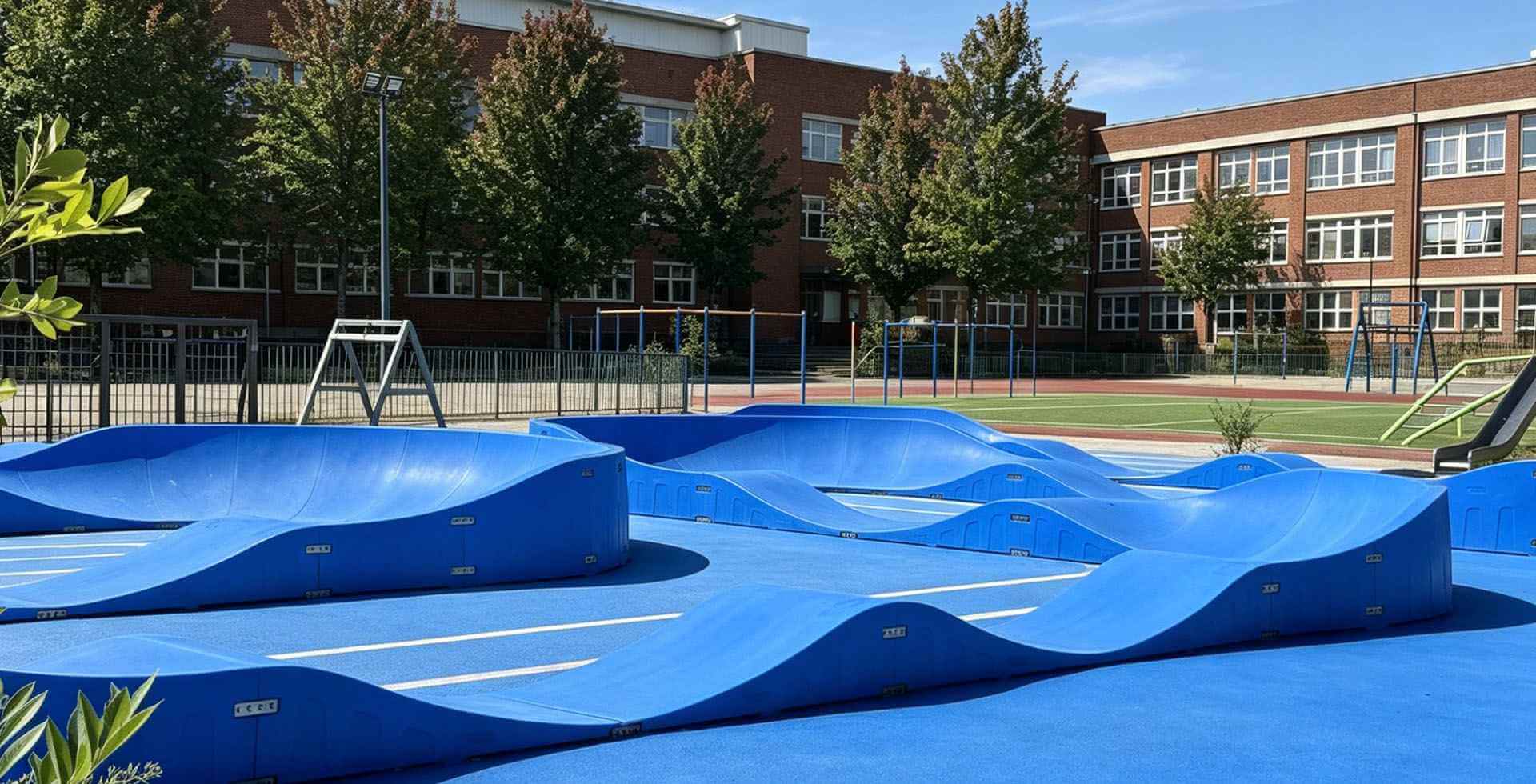
A school pump track offers more than just a fun spot to ride. It provides a regular activity area. There, kids can develop balance, coordination, bike handling, social skills, and better routines through fun. Schools, parks, and youth centers can change a basic outdoor space into a useful learning spot for wheeled activities.
Kids do not have to be athletes to gain from it. A new rider on a balance bike can join. So can a child on a scooter or a sure rider on a BMX. They all use the same path at their own speed. This blend of choice, practice, and clear improvement makes a pump track very helpful for kid growth.
What Is a Pump Track?
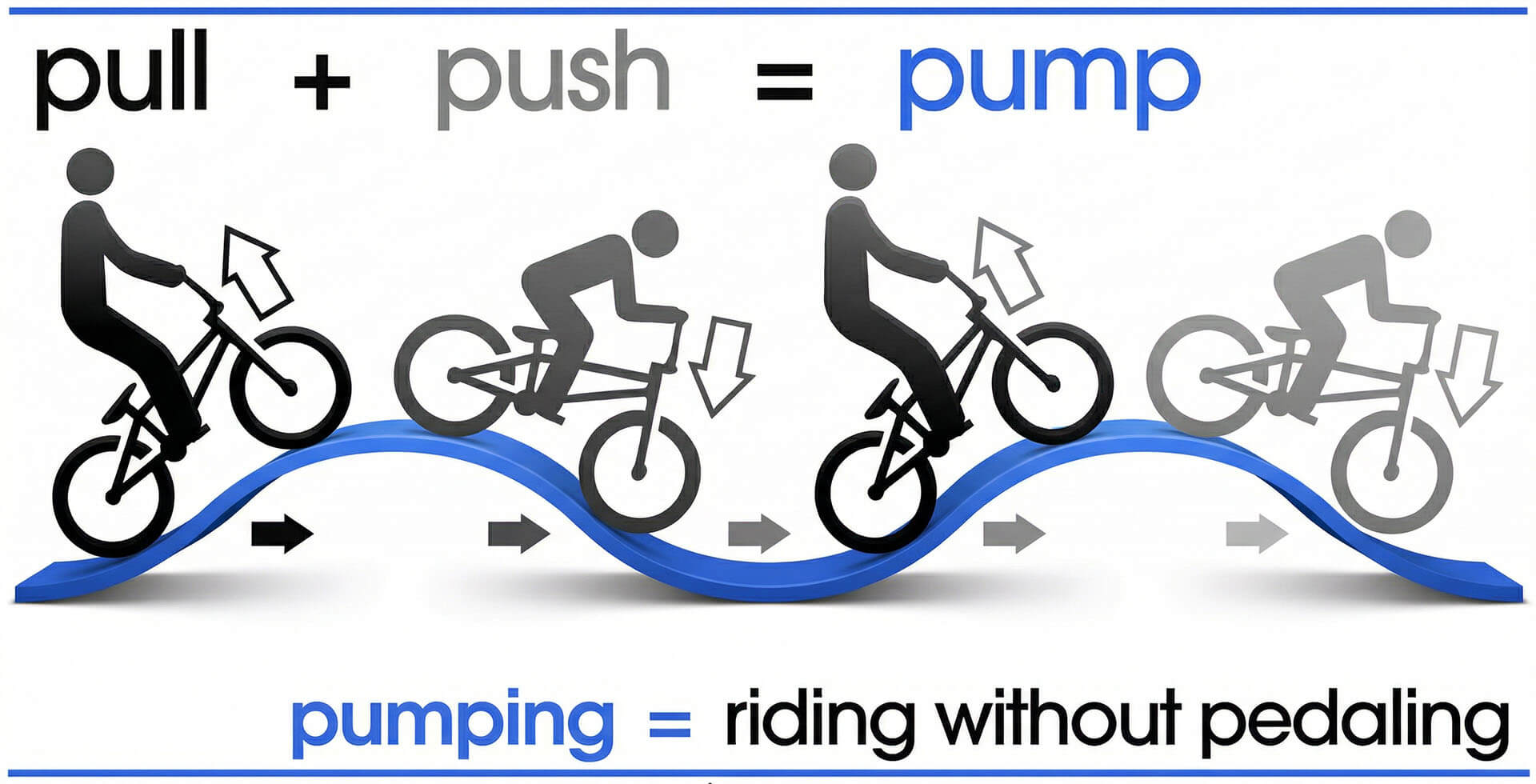
A pump track is a circular riding path. It has rollers, sloped turns, and smooth bends. Riders go around by moving their body weight. They bend their knees and push into the rollers. They follow a rhythm instead of always pedaling.
This basic motion is strong. Kids learn to look forward. They stay relaxed and manage speed. They respond to each shift in the path. A pump track differs from a straight playground trail. It requires the full body to move as one.
The riding area needs the right description. A good pump track surface grips well and prevents slips. It suits steady riding. It is not a slick, smooth area. This point is key for school settings. Grip aids safe stops, turns, and starter practice.
Why Schools Are Looking at Pump Tracks
Schools face demands to improve outdoor spaces. A grassy field is not always ready. A basketball area might seem too plain for some kids. Standard playground gear often suits young ones best. But it may not thrill older students.
A school pump track closes that space. It offers an action-based task that seems like play. Yet it builds real body skills.
Typical school uses include these:
- Morning arrival sessions where kids ride before lessons
- PE class spots for cycling, scooter handling, and body control
- Recess zones that cut down on idle time
- After-school groups for riders of various abilities
- Community days where families access the school area
For a PE instructor, the gain is plain. One path serves many skill levels. A shy student can go slow on the first bends. A skilled rider can focus on sharp paths, good timing, and even pumping. Both learn something new.
How a Pump Track Builds Balance
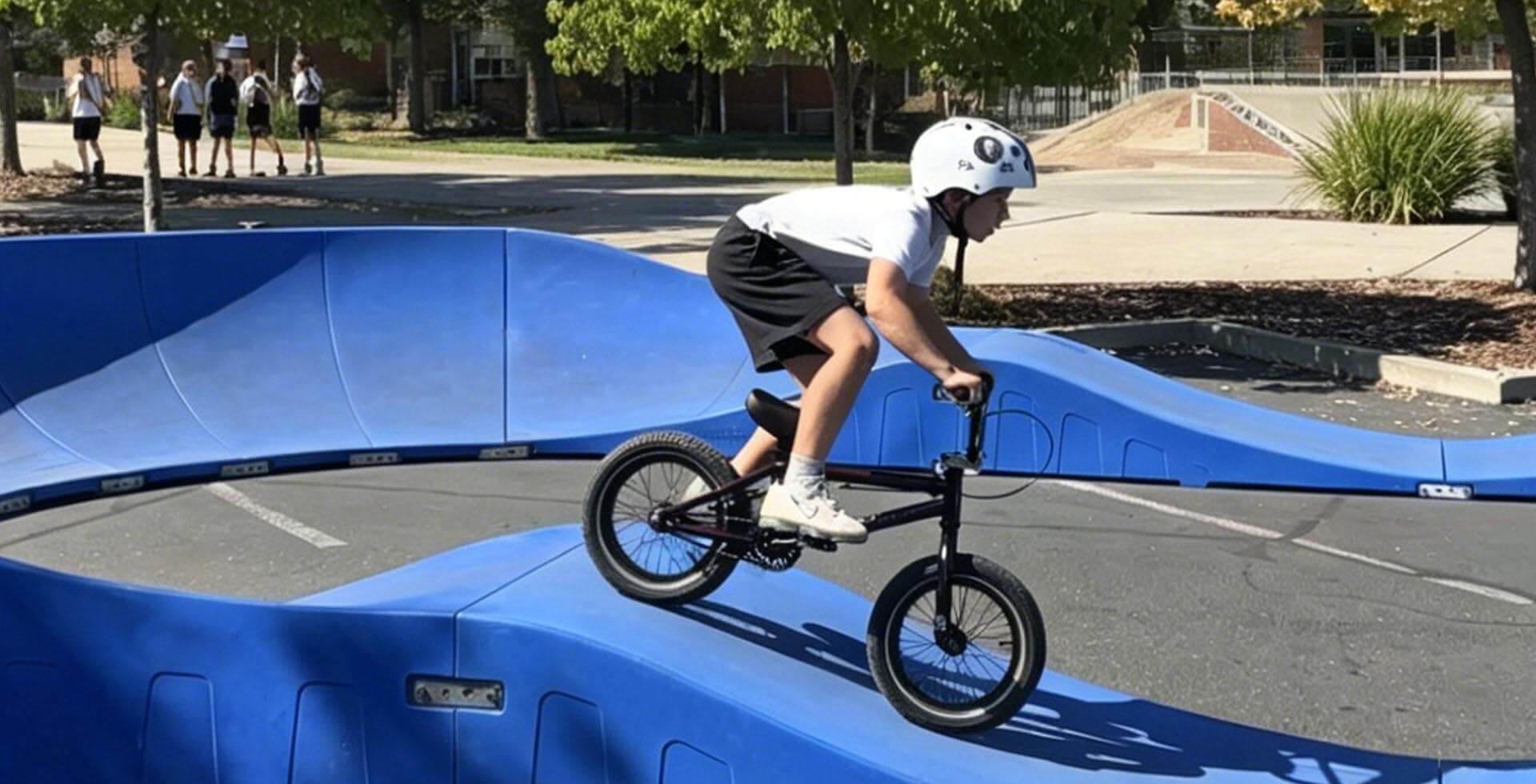
Balance goes beyond just not falling. On a pump track, kids learn active balance. This means staying steady as the ground tilts, speed shifts, and body spots change.
A kid entering a sloped turn leans a bit. They keep eyes ahead and adjust force through feet and hands. On a roller, the rider crouches before the hill and straightens in the low part. These minor body shifts occur often in one round.
Weight Shifting Becomes Natural
Kids often begin with tight arms and straight knees. After a few rounds, they relax. They sense when the bike or scooter lifts. They know when to push down or let the body match the path.
This ongoing weight move builds body sense. The kid does not just hear “bend your knees” once from a teacher. Instead, they feel why it counts every few moments.
Core Strength Grows Through Play
A pump track also strengthens the core in a simple way. Riders use the middle body, hips, and legs to remain over the bike or scooter. They skip counting sets or set drills. The path offers quick response. Better stance leads to an easier ride.
For young kids, this helps a lot. A brief ride time can work on balance, steadiness, and response. It feels like fun, not strict workout.
How a Pump Track Improves Coordination
Coordination involves body parts working together at the proper moment. Pump track riding grows this skill. Kids must link sight, turning, stopping, stance, and beat.
Before a turn, eyes check the route. Hands guide. Feet hold steady. Knees flex. Upper body remains calm. Then the kid leaves the turn and readies for the next roller. It is a complete body chain.
Gross Motor Skills Get Repeated Practice
Big body skills grow through wide moves like pressing, tugging, steadying, curving, and shifting. A pump track gives kids many such chances in one go.
The table below links common pump track moves to kid growth.
| Pump Track Action | Skill Developed | School Benefit |
|---|---|---|
| Riding over rollers | Balance, rhythm, leg control | Better movement confidence |
| Entering banked turns | Spatial awareness, steering | Safer wheeled-sport control |
| Pumping without pedaling | Timing, body coordination | Stronger whole-body movement |
| Following the loop | Focus, decision-making | Better attention during activity |
| Riding with classmates | Social awareness, patience | Improved turn-taking |
This turns the pump track into a real aid for body skills. Kids are not merely circling. They learn how their bodies travel through areas.
Confidence Comes From Small Wins
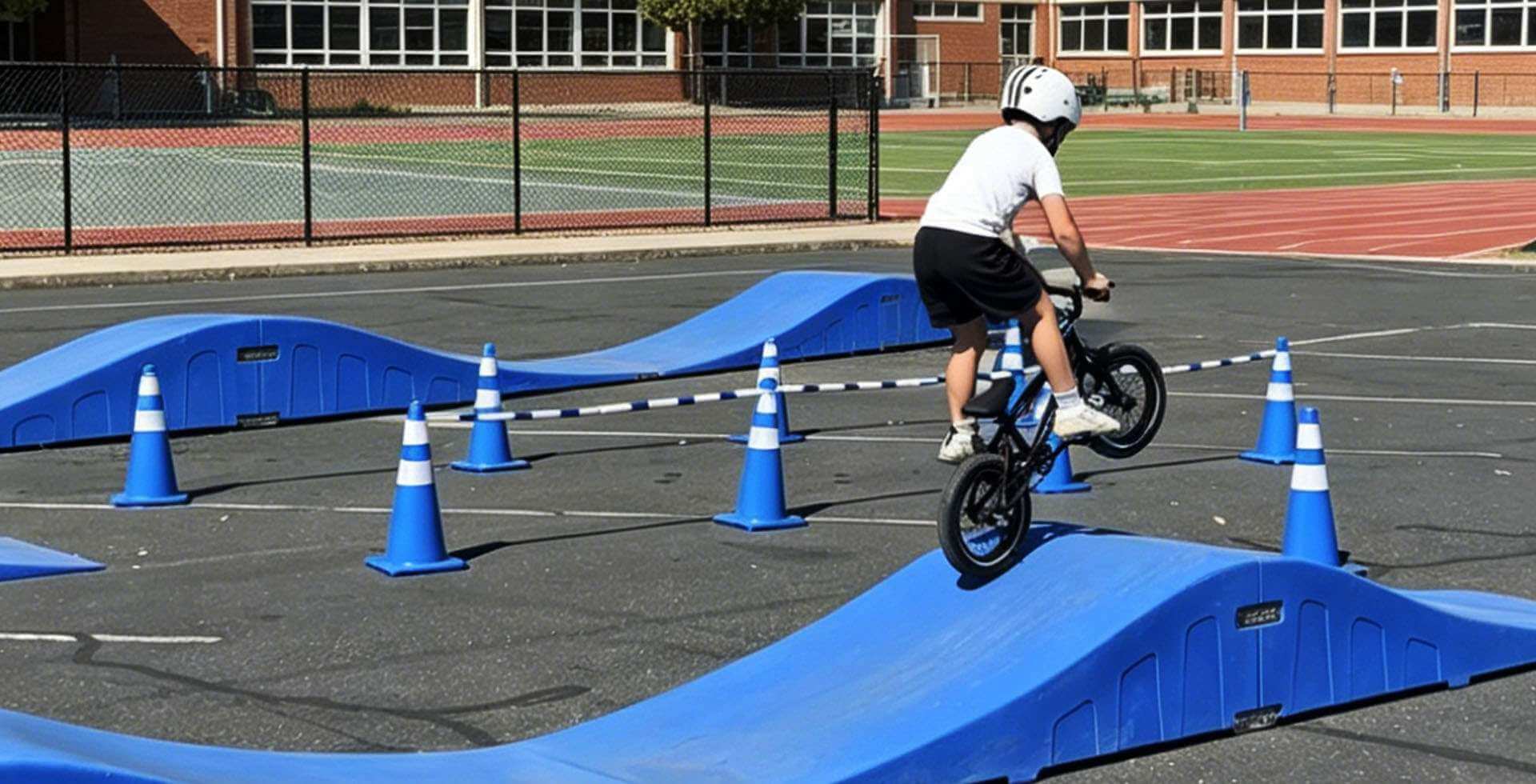
Many kids skip sports due to worry about mistakes. Group games can seem open. A wrong throw or lost match shows to all. A pump track differs. Progress feels private and at one’s speed.
A starter might do one easy round. Next time, that kid handles a full turn without stepping off. Soon, the rider keeps speed over two rollers. Each tiny gain boosts self-trust.
The Track Rewards Practice
Pump track riding proves that work leads to change. A kid who looks ahead rides smoother. One who flexes knees gains more hold. A student who retries after a shaky round often does better next.
This cycle counts. Self-trust grows not just from words of praise. It grows when kids sense their own steps forward in the body.
A Low-Pressure Space Helps More Students Join
Not all kids seek races. Not every one wants a coach eyeing each step. A pump track lets them practice quietly. They can ride, stop, observe others, and retry.
This aids varied groups. Sure riders, careful starters, young kids, and those who skip PE can share the spot.
Better Social Play Without Heavy Competition
A school pump track can better how kids interact. Riders pick up waiting turns, giving room, noting travel paths, and honoring varied paces.
These minor social points aid in a full school yard. A solid pump track shape guides kids in a plain circle. This cuts chance crossings and mix-ups. With basic guidelines, the area backs free fun and set classes.
For instance, a PE teacher could split a group into three. One rides. One views path picks. One checks helmets and start methods. After five minutes, they switch. The class keeps moving, ordered, and clear.
Why Modular Pump Tracks Work Well for Schools
Fixed asphalt or concrete builds need big funds, long plans, and set land. A modular pump track offers schools a better option. It shapes to fit the open area. Then it tweaks for kid ages, flow, and skill.
For school planners, the main plus is adaptability. A modular pump track suits a yard, court, play zone, or group area. It also handles bikes, scooters, skateboards, and BMX.
Practical Points for School Buyers
Before picking a pump track for kids, leaders should check the site’s true needs:
- How many kids might use it in recess?
- Which age sets will ride often?
- Will it serve PE, after-school groups, or open events?
- Is the space long and thin, square, or odd?
- Where will riders start, end, wait, and keep bikes or scooters?
- What watch rules and helmet plans will the school follow?
A fine pump track plan should not just appear fun. It must ease daily tasks for teachers, guard starters, and hold interest for ongoing rides.
Safety Starts With Design and Daily Habits
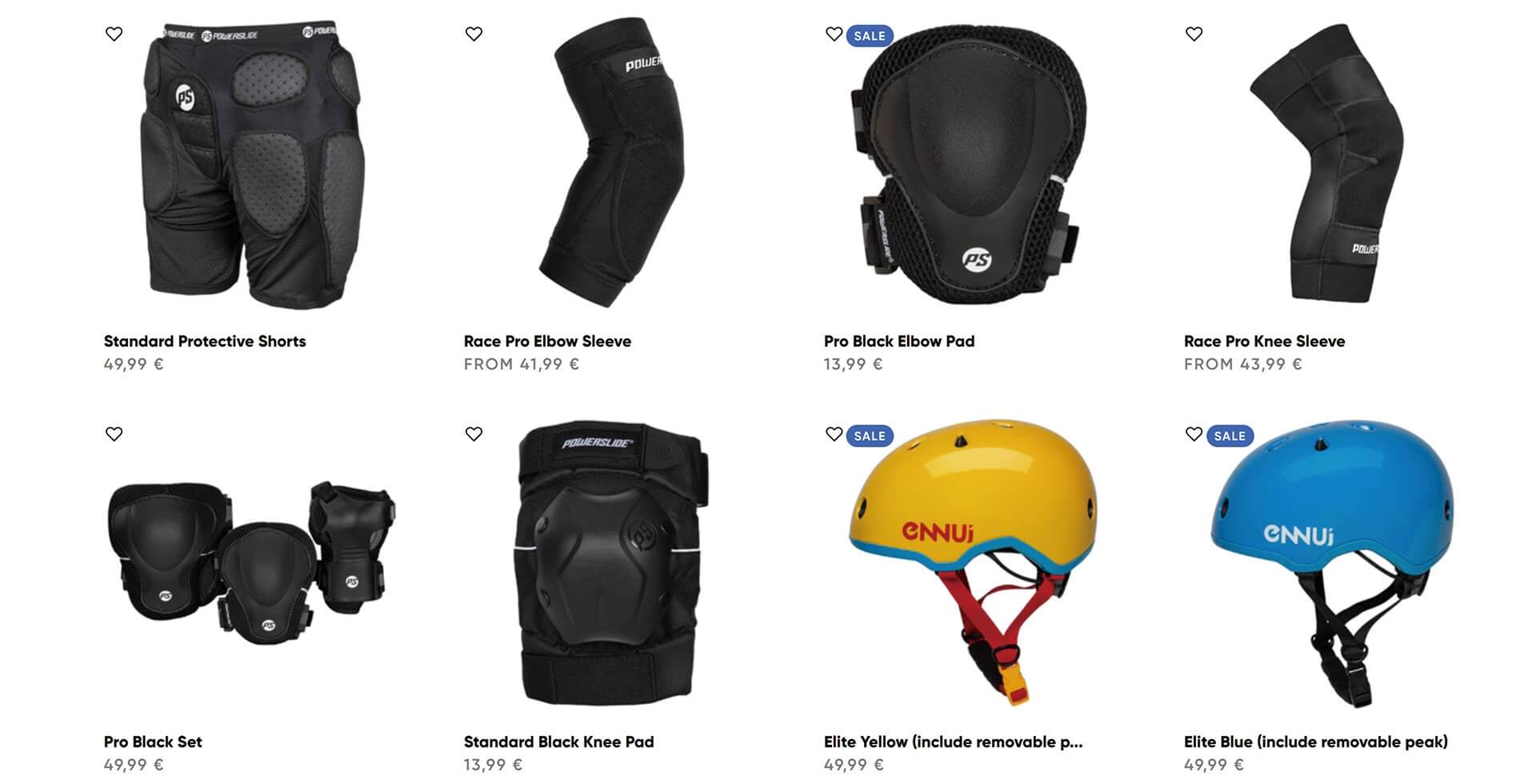
A pump track must back steady riding from day one. Grip on the surface, clear path direction, right entry spots, and space to wait all build kid trust.
Schools can set easy rules kids recall:
- Helmet on before the track.
- Ride one way only.
- Wait till the front rider passes the first bend.
- Match speed to ability.
- Walk off if halting.
These ways make the pump track simpler to handle in breaks and PE. They also show kids care for group action areas.
About ULTRAPUMPTRACK
ULTRAPUMPTRACK supplies modular pump tracks. It aims to build adaptable riding spots for schools, parks, groups, sports sites, and play projects. The firm has a real sense of pump track use in daily spots. Its modular setup aids easy shaping, setup, and lasting care.
For schools and project leads, this counts because sites vary. Some have tiny yards. Some need paths for young riders. Others seek shared spots for bikes, scooters, skateboards, and BMX. ULTRAPUMPTRACK aids custom shaping based on space, funds, rider skill, and wheel kind. It helps buyers make a pump track that matches the site, not the other way.
Conclusion
A pump track gives kids a spot to act with aim. It grows balance via body hold, coordination via steady moves, and self-trust via tiny gains kids sense alone. For schools, a modular pump track makes outdoor spots more lively, open, and handy in PE, breaks, and after-class plans.
When shaped with grip surface, plain layout, and fit flow for ages, a pump track goes beyond yard gear. It turns into a daily aid for kid advance.
FAQs
How does a pump track help students improve balance and coordination?
A pump track aids kid growth in balance and coordination. It does this by having them shift body weight, guide through bends, flex over rollers, and reply to path changes. These acts build body sense, beat, and big motor skills in a plain manner.
Is a school pump track suitable for beginners?
Yes. A school pump track fits beginners if the shape suits ages and kids ride at easy speeds. Starters can begin slow on a bike, balance bike, or scooter. Then they gain trust over time.
Can students use scooters, skateboards, and BMX on a pump track?
Yes. Many pump tracks suit various wheels like bikes, scooters, skateboards, and BMX. Schools should set plain ride rules and link gear to path shape and kid ages.
Why choose a modular pump track for a schoolyard?
A modular pump track aids a schoolyard. It fits varied spaces, backs custom shapes, and serves many age sets. It is a smart pick for schools seeking lively outdoor spots without fixed concrete or asphalt work.
Is the pump track surface smooth or anti-slip?
A pump track surface should count as anti-slip or strong-grip, not smooth and slick. Grip lets kids keep better hold in turns, stops, and over rollers.


