

Pump Track Base Guide Grass, Concrete, or Sand
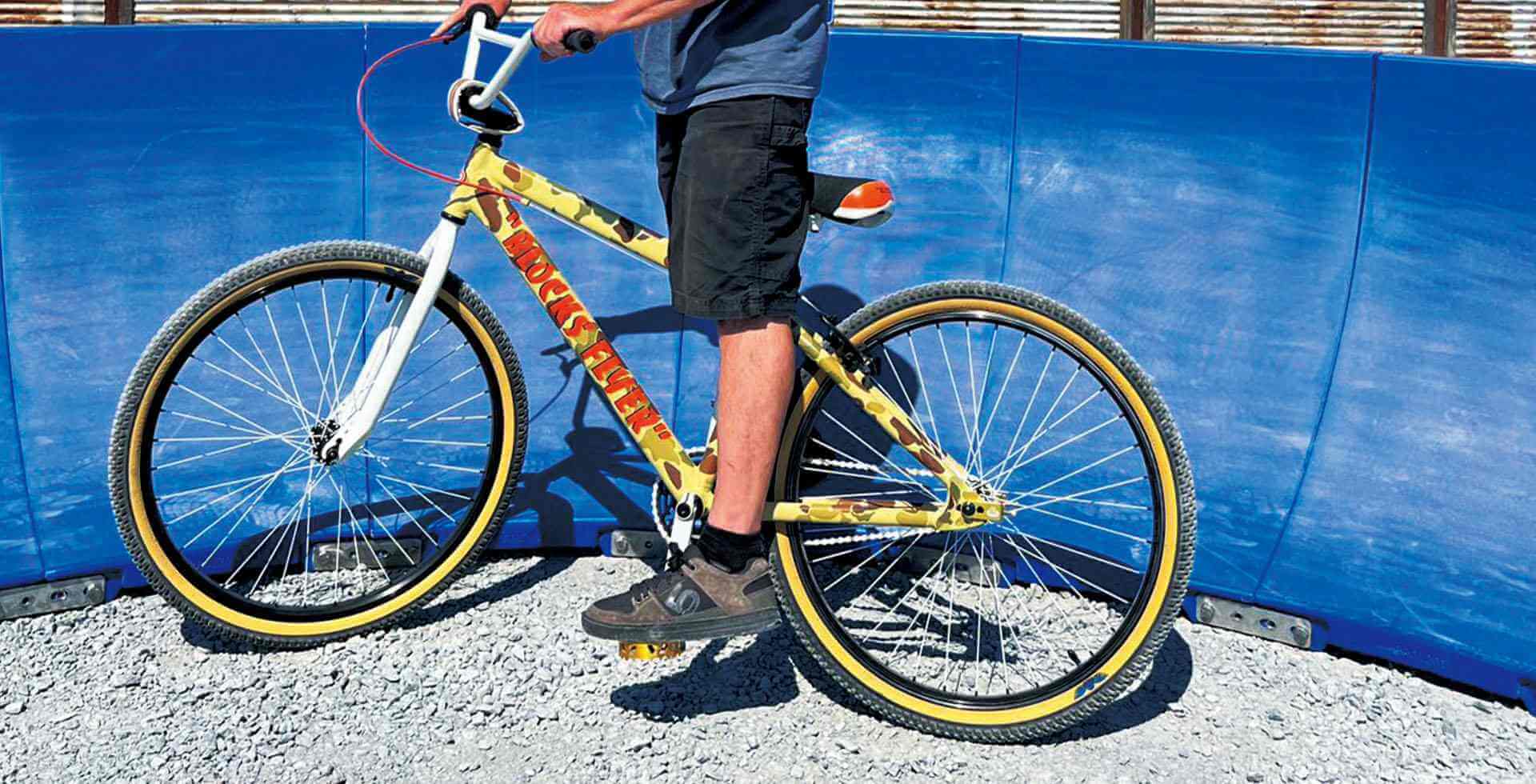
Picking the proper ground is among the initial issues shoppers raise before a modular pump track shifts from plan to setup. A pump track might seem light next to a cast concrete effort. Yet the base counts a lot. Ground setup influences ride sense, water flow, lasting steadiness, upkeep, and the amount of site ready work before launch day.
The quick reply is yes. A pump track can go on grass, concrete, or sand. The stronger reply is that each ground brings varied dangers, expenses, and ready steps. Concrete often serves as the simplest base for a lasting modular pump track setup. Grass can suit fine if the dirt is firm and the spot is evened out well. Sand stands as the toughest pick. It moves, handles water in odd ways, and calls for a sturdier base layer before setup.
For parks, schools, camps, sports spots, and home shoppers, the main aim is not just spotting a place where a pump track fits. It is selecting a site that rides nicely in damp and dry weather. It should remain safe with steady use. And it must avoid needless upkeep down the line.
What kind of surface does a pump track need?
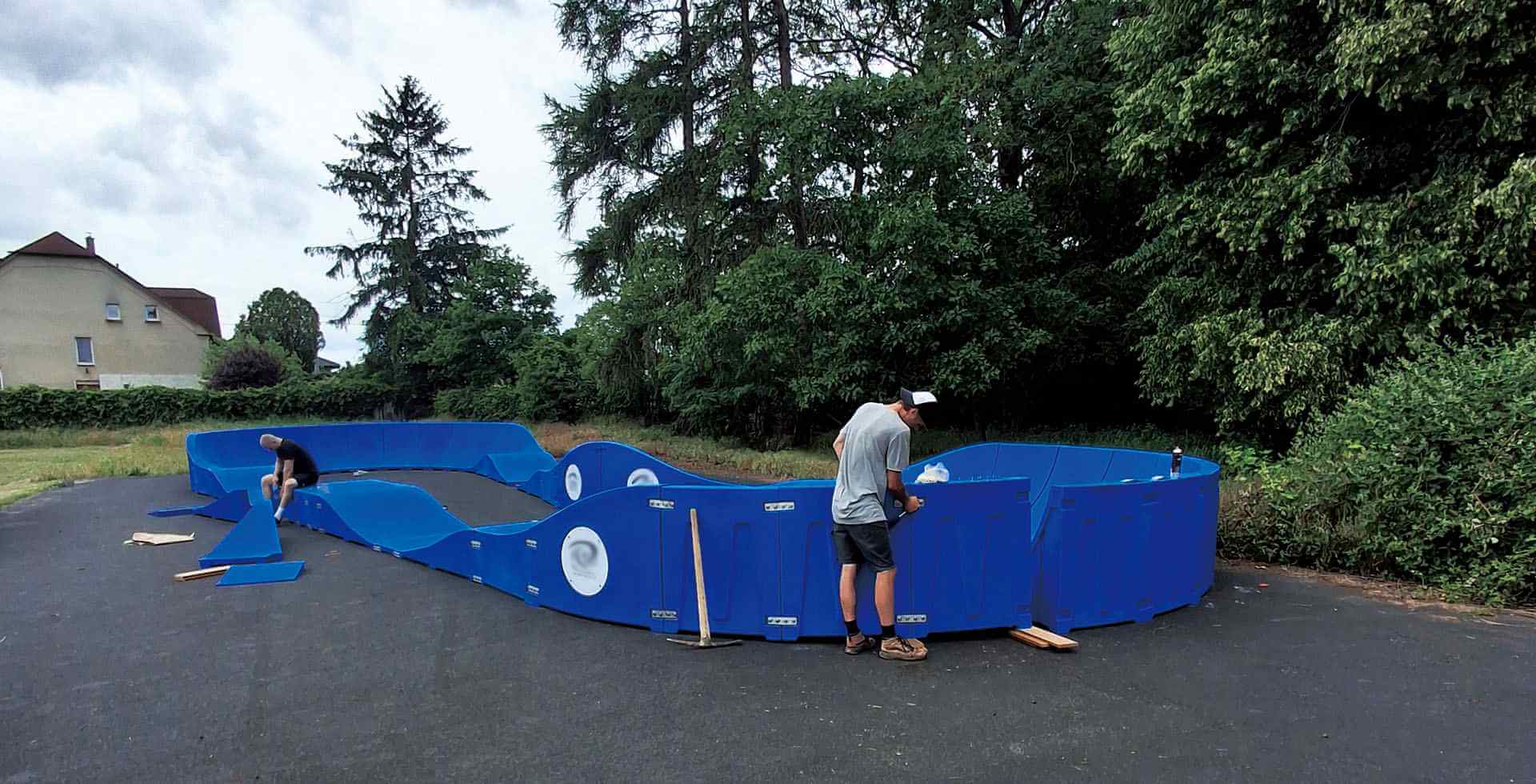
Before weighing grass, concrete, and sand, it pays to see what a modular pump track truly requires from the ground below it.
A solid pump track base ought to be even for steady setup. It needs to be hard enough to fight sinking. And it should drain well to skip pooled water after showers. It must also offer ample clear area around the track for rider flow, watch, and safe drop zones.
This does not imply every job demands a big civil effort. But it does mean treating the site as a key part of the ride setup, not a side note. Even the top modular pump track can ride badly if one edge sinks. Water might gather under a dip. Or loose dirt could shift after ongoing use.
Here is a simple way to think about site selection:
| Surface factor | Why it matters for pump track installation |
| Level ground | Helps modules sit evenly and keeps the ride consistent |
| Stable base | Reduces movement, sinking, and joint stress |
| Good drainage | Limits water buildup, mud, and erosion |
| Clear surroundings | Improves safety and day-to-day access |
| Easy maintenance | Cuts future repair work and downtime |
For most buyers, the best surface for a pump track is not just the hardest one. It is the one that gives the right mix of stability, drainage, budget control, and ease of construction for the site.
Can you install a pump track on grass?
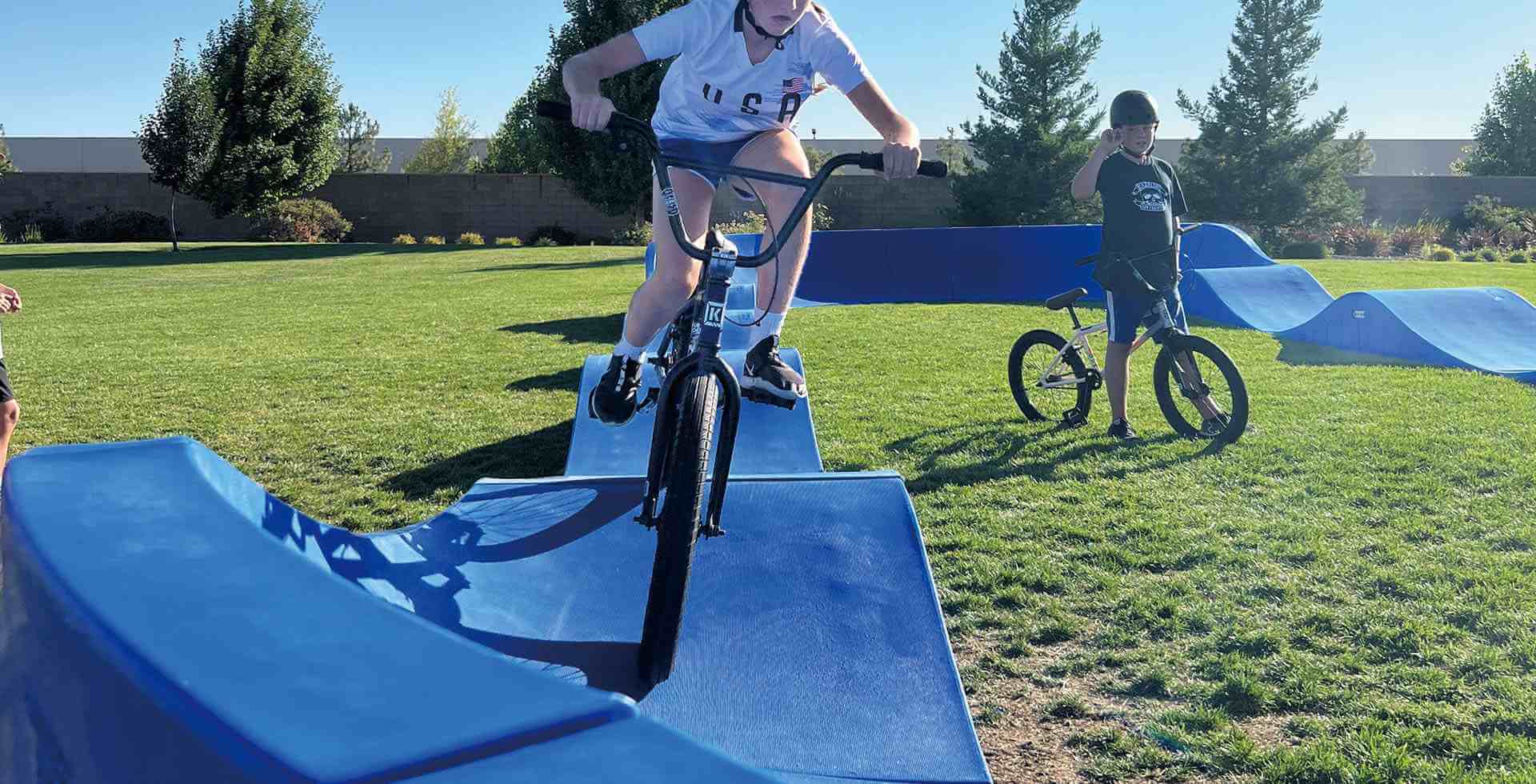
Grass is often the first surface people think about, especially for schools, backyards, camps, and community parks. Open grass areas are easy to find, usually already owned, and often large enough for a modular pump track layout. That makes grass a practical option, but not a plug-and-play one.
If the ground under the grass is solid, relatively flat, and not prone to ponding, a pump track on grass can work very well. This is especially true for projects that want lower disruption than a full poured-in-place build.
When grass works well
A grass spot usually fits when the under dirt is packed tight. The area does not hold damp for days after rain. And the slope is easy to handle without big dirt shifts. In lots of school and park cases, a grass zone near a set path or play field turns into a smart spot. It already offers entry, clear view, and space for watchers or waiting riders.
Grass also makes sense when a buyer wants flexibility. A modular pump track on grass can be easier to plan into a multi-use outdoor area than a permanent hard-built track.
Common problems with grass sites
A grass pump track setup can fail when the seen lawn appears tidy. But the base below is weak or uneven. That often appears later as minor sinking, odd backing, wet borders, or water in set low spots after each rain.
Typical issues include:
- soft spots under the turf
- drainage problems after heavy rain
- soil movement during freeze-thaw cycles
- muddy track edges from foot traffic
- extra maintenance around weeds and surface trimming
A grass site can still be a strong choice, but it usually needs more preparation than buyers first expect.
How to prepare grass for pump track installation
The usual process starts with stripping or trimming the top layer, checking grade, compacting the sub-base, and adding a more stable layer if needed. On some sites, compacted aggregate becomes the real working base, with the grass area acting only as the original location.
That is the key distinction. Installing a pump track on grass does not mean placing it on soft turf and hoping for the best. It means turning a grass site into a stable pump track base.
Can you install a pump track on concrete?
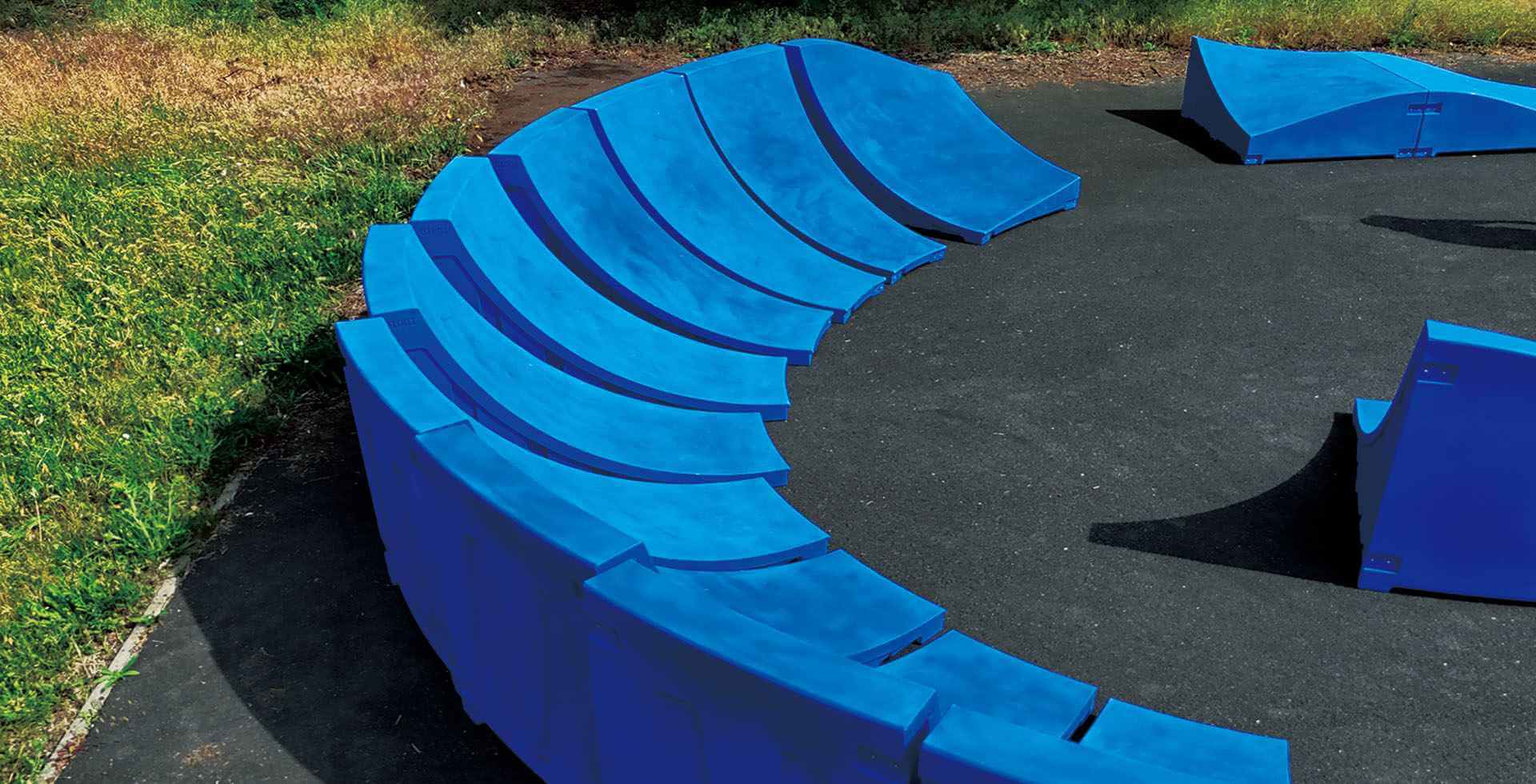
Concrete is often the most straightforward answer for modular pump track installation. It is stable, predictable, and easier to inspect before setup. For permanent or long-term use, concrete usually gives the cleanest base condition.
That said, concrete does not mean zero preparation. It simply removes many of the problems that show up on softer ground.
Why concrete is often the best surface
A pump track on concrete usually benefits from a firm, uniform base. That makes installation easier, reduces the risk of settlement, and helps preserve a consistent ride line. In busy public sites, that matters. A track used by children after school, teens on scooters, and adults on BMX bikes sees repeated loading. A solid base keeps the structure working the way it was designed to work.
Concrete also simplifies routine site care. There is no turf to cut, no muddy edge to patch, and less chance of surface distortion over time.
What should be checked first?
Even a concrete slab should be reviewed before installation. A cracked or sloped slab can create problems just as real as soft soil. The most common checkpoints are:
- whether the slab is level enough for the layout
- whether water runs away instead of collecting
- whether broken edges or lifted joints create hazards
- whether there is enough clearance around the track
Concrete is usually the best surface for a pump track when the goal is long service life with low site maintenance. That is one reason it is popular for schools, urban parks, recreation centers, and commercial activity zones.
Can you install a pump track on sand?
Sand is the most difficult of the three surfaces. It is not impossible, but it is rarely the best starting point without added ground work.
A pump track on sand raises two big concerns: movement and consistency. Sand shifts under load, changes with moisture, and can wash or drift over time depending on the site. That makes it harder to maintain a firm, even foundation.
Why sand is challenging
A modular pump track depends on stable support across the entire footprint. Sand does not naturally offer that. It may drain quickly, but it also migrates, compresses unevenly, and responds differently across one site if the grain size or moisture varies.
That creates a simple problem for riders: one section may feel solid, while another settles or loses support.
When a sand site can still work
A sand-based site may still be usable if the project includes proper ground preparation. In practice, that means the pump track is not installed on loose sand alone. The sand site has to be rebuilt into a more reliable base through compaction, containment, and added base material.
This can work in coastal recreation areas, resorts, or desert-edge projects, but only when the site budget allows for proper foundation work.
What extra preparation is usually needed?
The extra work for sand often includes geotextile separation, compacted aggregate, edge control, and careful drainage planning. Without those steps, the long-term riding quality usually suffers.
For most buyers comparing options, sand is the least efficient route. It can be done, but it usually demands more prep than grass and more ongoing attention than concrete.
Grass vs concrete vs sand: which surface is best?
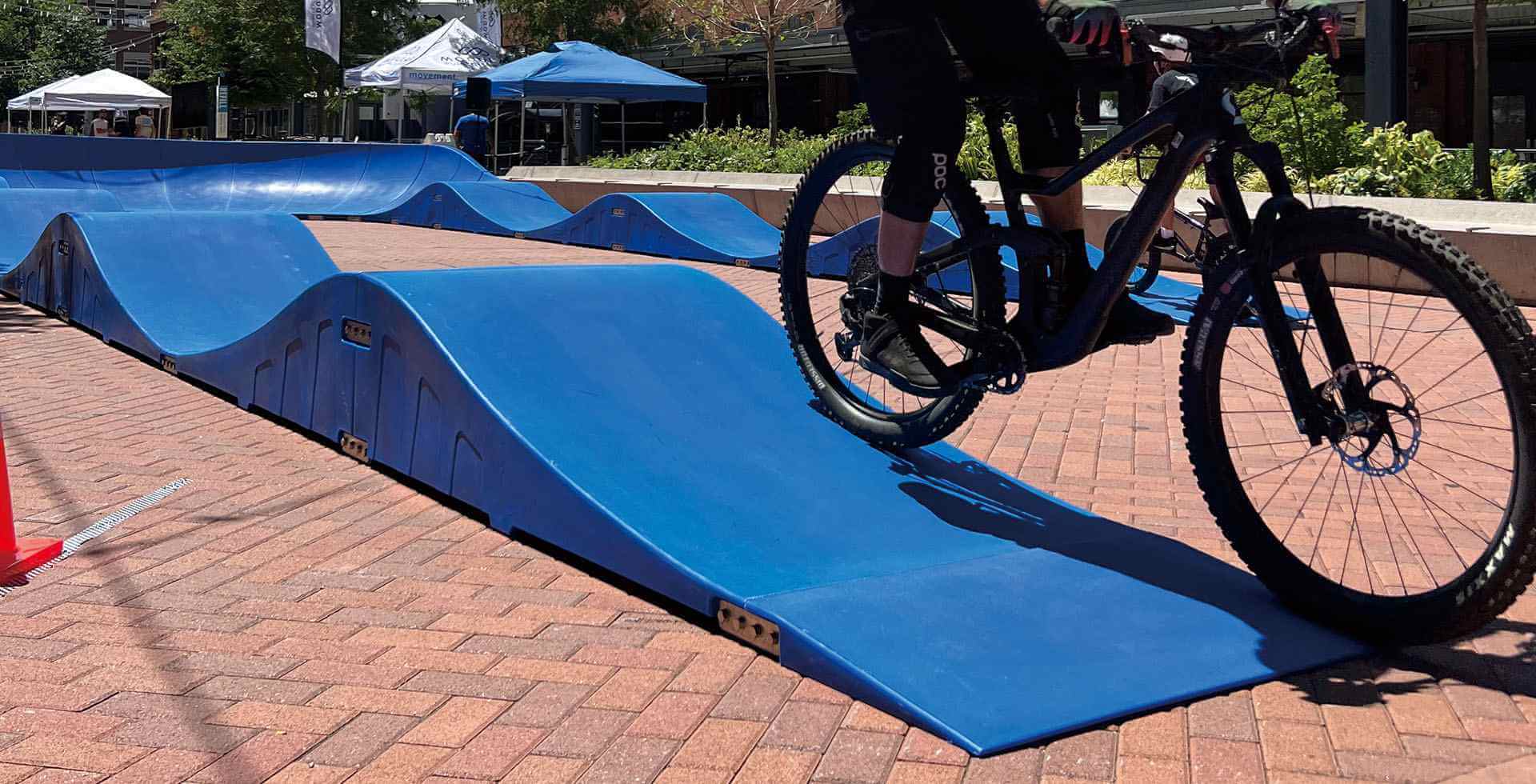
Each surface can support a modular pump track, but they do not perform the same way. The best ground for modular pump track installation depends on the project type, budget, and how permanent the installation is meant to be.
| Surface | Installation difficulty | Stability | Maintenance | Best use case |
| Grass | Medium | Medium after prep | Medium | Schools, parks, flexible outdoor sites |
| Concrete | Low to medium | High | Low | Long-term public or commercial installation |
| Sand | High | Low unless rebuilt | Medium to high | Special sites with engineered base prep |
In most cases, the ranking is simple. Concrete is the strongest all-around choice. Grass is a workable and often cost-friendly option when site preparation is done properly. Sand is the most demanding and should be chosen only when the location makes it necessary.
How to prepare the ground before installing a modular pump track
The success of a pump track installation often depends less on the track itself than on the quality of the site preparation before delivery. A clear process saves time, reduces surprises, and protects long-term performance.
A practical ground preparation checklist usually includes the following steps:
1. Check grade and drainage
Walk the site after rain if possible. Watch where water sits. Look for low corners, runoff paths, or soft edges. A pump track should not be placed in the part of the site that collects everything from the surrounding area.
2. Confirm the base condition
Find out what sits below the top surface. Grass may hide soft fill. Sand may hide deeper instability. Concrete may hide cracks or previous repairs. The visible surface only tells part of the story.
3. Level and compact where needed
Minor unevenness can become major riding inconsistency later. Spending more time at this stage usually saves repair work after installation.
4. Plan circulation and safety space
A pump track does not work as an isolated object. Riders need space to enter, exit, wait, and watch. Parents, coaches, or staff need clear sight lines. Service access also matters.
5. Match the surface choice to the project goal
A temporary activation project may accept more flexibility. A permanent school or municipal installation should usually start with a more stable foundation.
Why ULTRAPUMPTRACK fits this type of project
When site conditions vary, buyers usually need more than a standard product sheet. They need a supplier that can discuss layout, ground conditions, rider mix, and long-term use in practical terms.
ULTRAPUMPTRACK is positioned as a modular pump tracks supplier with experience rooted in earlier dirt and asphalt track building before shifting into modular plastic systems. Its website presents modular pump track solutions for different spaces such as parks, schoolyards, backyards, and community settings, with a focus on flexible layouts, low maintenance, and broad rider appeal. They provide a practical approach to customized layouts based on available space and budget, which is especially relevant when surface conditions differ from site to site.
For buyers planning a new project, that kind of background matters. Surface choice is rarely only a technical question. It is also a planning question tied to audience, location, upkeep, and future use.
Conclusion
So, can you install a pump track on grass, concrete, or sand? Yes. But the true reply rests on the base quality under that ground and the ready amount the spot gets before setup.
Concrete usually ranks as the top surface for a pump track when low care and lasting steadiness are key aims. Grass can suit quite well when the spot is evened, packed, and drained right. Sand is doable. But it is the hardest pick and often needs the most base effort before a modular pump track can act as riders hope.
For schools, parks, resorts, and home spots, the wise choice is not asking which ground costs least at first. It is asking which ground will still ride nicely, keep safe, and seem pro after years of use.
FAQs
Can you put a modular pump track on grass?
Yes. A modular pump track on grass works when the spot is firm, well-drained, and readied right. In many cases, the true work base is a packed layer made in the grass spot. It is not the grass layer.
Is concrete the best base for a pump track?
In many jobs, yes. A pump track on concrete often blends steadiness, low care, and sure setup best. It ranks as the simplest pick for schools, public parks, and lasting fun areas.
Can a pump track be installed on sand?
Yes. But sand is the toughest option. Setting a pump track on sand often needs extra footing work like packing, gravel base layers, and side hold to stop shifts over time.
What is the best surface for long-term pump track use?
Concrete often serves as the top surface for long-term pump track use. It gives a firm pump track base. It eases water plan. And it cuts sinking chance next to softer ground.


